


Yellow Glass Lamp
These yellow glass lamp examples bring a warm, amber glow to a room through period oil reservoirs, hanging shades, and electrified table lights.
Yellow Glass Lamp
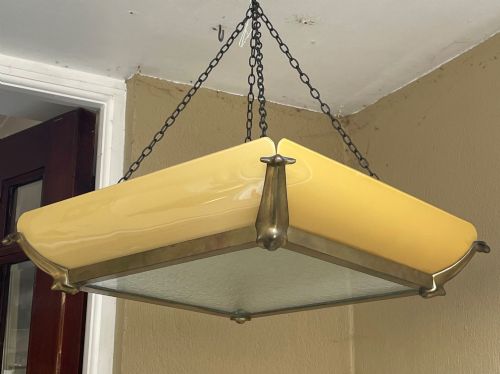
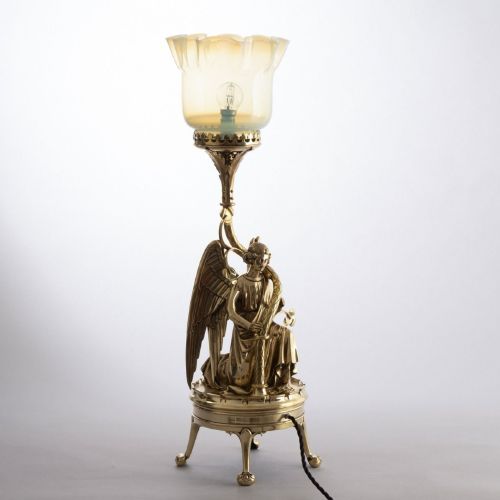
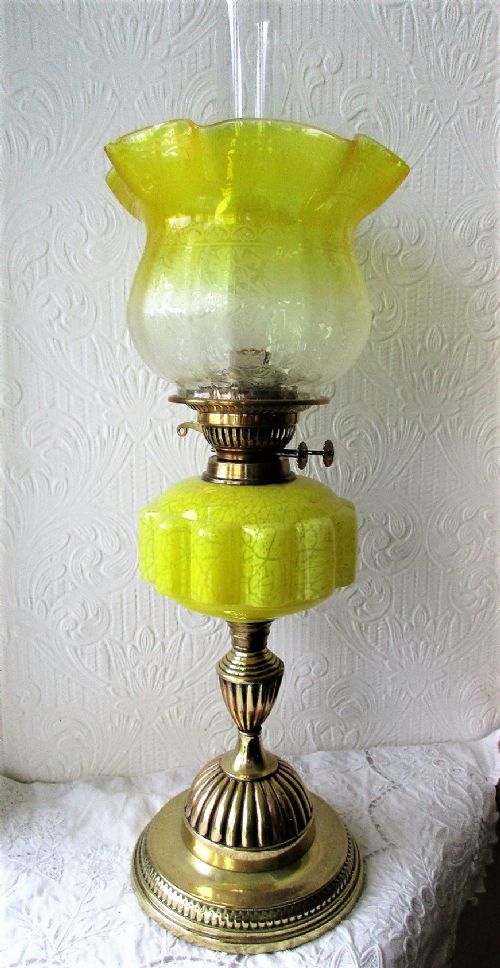
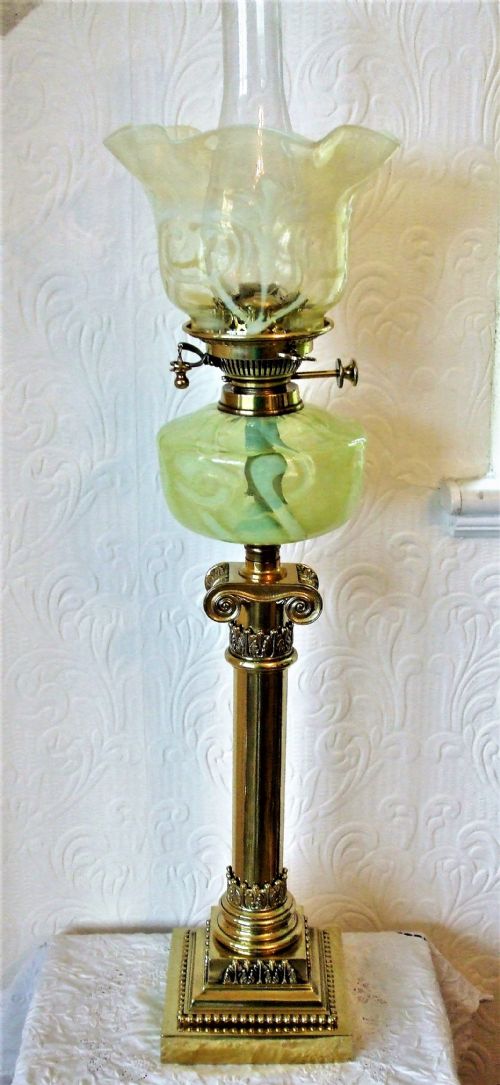
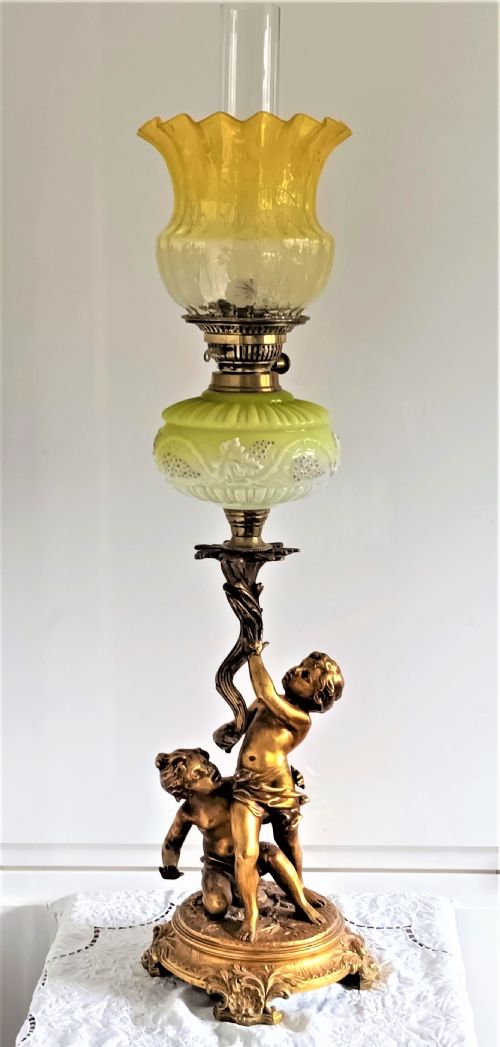
A yellow glass lamp brings together tinted reservoirs, shades, and bases from periods spanning the Victorian era through the 1930s. Buyers searching for a yellow glass lamp encounter everything from weighty Gothic Revival brass and vaseline glass designs to sleek Art Deco hanging lights and amber table pieces.
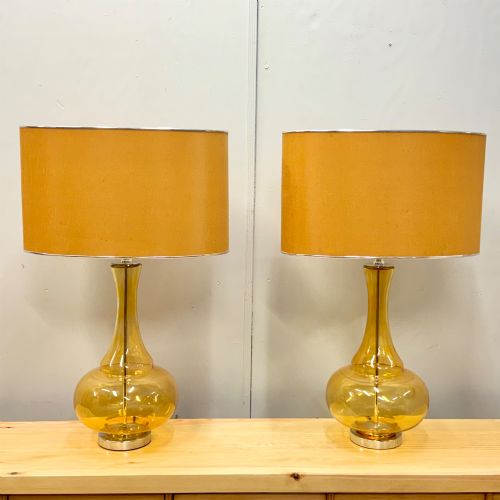
The selections available here range from tall ceramic and brass oil lamps to delicate silk-shaded pairs and wrought iron chandeliers. Most examples date from the nineteenth century up to the mid-twentieth century, showing how domestic lighting evolved from burning oil to electric power.
Victorian oil lamps dominate the field alongside Art Deco glass table lamps and French iron chandeliers. Whether you choose a satin glass peg lamp or a hanging ceiling light, each piece relies on coloured glass to soften and warm the light it casts.
Factors that define quality
Quality rests in the weight and clarity of the glass, the crispness of the metal casting, and the preservation of original mounts. Finer pieces display unblemished coloured glass with rich saturation, well-defined brass or ormolu chasing, and intact period fittings.
Lesser examples show surface wear, replacement hardware, or cloudiness in the glass that diminishes the warmth of the glow. The most successful pieces maintain a harmonious balance between the glass reservoir and its supporting metalwork.
Listings feature periods spanning the Victorian era, the 1860s, 1880s, 1900, 1920s, and 1930, utilising brass, glass, porcelain, fabric, and wrought iron.
Hinks Ionic Column·Degue Wrought Iron·Karl Palda·Muller Freres
The Yellow Glass Lamp Glossary
- Vaseline glass
- Pressed or blown glass containing uranium dioxide, which gives it a distinctive yellow-green colour that glows under ultraviolet light. It appears frequently in nineteenth-century and Victorian lighting.
- Peg lamp
- A small oil lamp fitted with a narrow lower metal or glass peg designed to drop directly into the top socket of a larger candlestick or base. These allow for flexible placement around a room.
- Ormolu
- Gilded bronze mounts and decorative elements used to adorn fine nineteenth-century and twentieth-century table lamps. The technique involves applying a gold amalgam to a bronze base.
- Pate de verre
- A glass-casting method where finely crushed glass is mixed with a binder and fired in a mould to create richly textured, multicoloured translucent objects.
Yellow Glass Lamp: Frequently Asked Questions
How do I date a yellow glass lamp?
Examine the construction of the burner mechanism, the weight of the metal base, and the manufacturing technique of the glass body. Victorian pieces often feature heavy brass columns and hand-blown fonts, while 1930s examples lean towards geometric Art Deco silhouettes and streamlined glass shades.
Look for registration marks, maker signatures on the metalwork, or specific threading on the burner collars that correspond to known nineteenth and twentieth-century manufacturing periods.
Were these lamps converted to electricity?
Many antique oil lamps undergo careful conversion to electricity to make them practical for modern domestic use. Wiring is typically routed through the original central column without destroying the antique burner components or the glass font.
Collectors can find both professionally converted electric table lamps and intact, un-converted oil lamps that retain their original wicks and brass burners.
How do I clean an antique glass lamp?
Use a soft, dry microfibre cloth to remove dust from the glass surface and delicate metal mounts. Avoid submerging vintage metal components or using harsh chemical cleaners that can strip the patina from brass and silver plating.
For the glass shade or reservoir, warm water and mild soap applied with care will lift grime without damaging the surface or any painted decoration.
What is the difference between vaseline glass and amber glass?
Vaseline glass contains uranium, giving it a bright yellow-green tone and a distinct fluorescence under UV light. Amber glass presents a warm, brownish-yellow or honey-coloured hue without the characteristic uranium glow.
Both materials were utilised extensively across the Victorian and Edwardian periods for oil lamp fonts and decorative hanging shades.