




Twisted Brass Column Lamp
A twisted brass column lamp brings sturdy architectural presence and bright metallic warmth to a room.
Twisted Brass Column Lamp
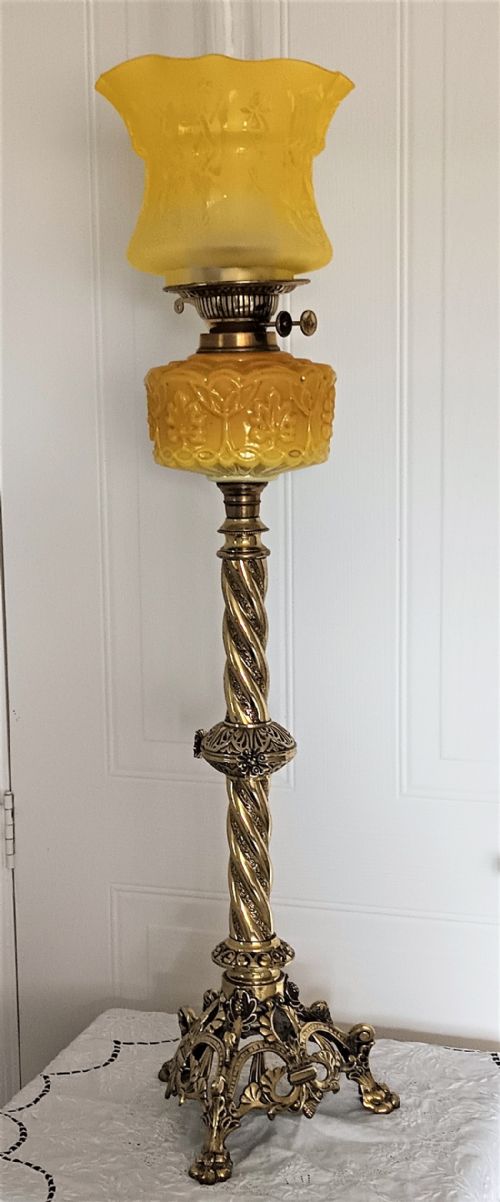
A twisted brass column lamp uses spiral fluting or twisted stems to catch the light, drawing from Victorian and Edwardian domestic lighting traditions. These sturdy floor and table lamps often began life as oil lamps before later conversion to electricity, bringing authentic period weight and proportion to modern interiors.
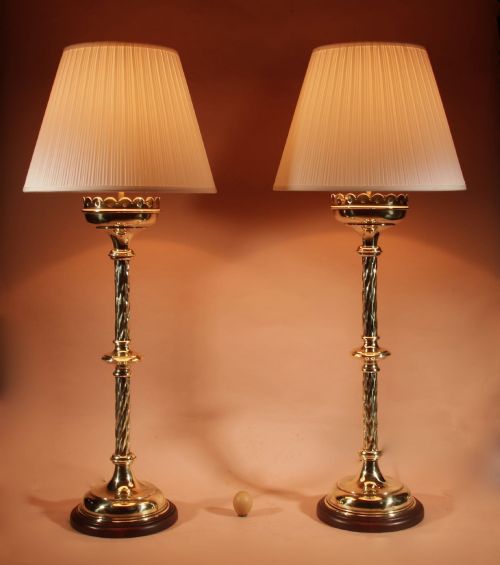
The pieces on this page span table and floor formats, drawing on Victorian, Edwardian and 1920s eras. You will frequently encounter brass paired with glass or dark wood elements, reflecting traditional English and continental tastes from the nineteenth and early twentieth centuries.
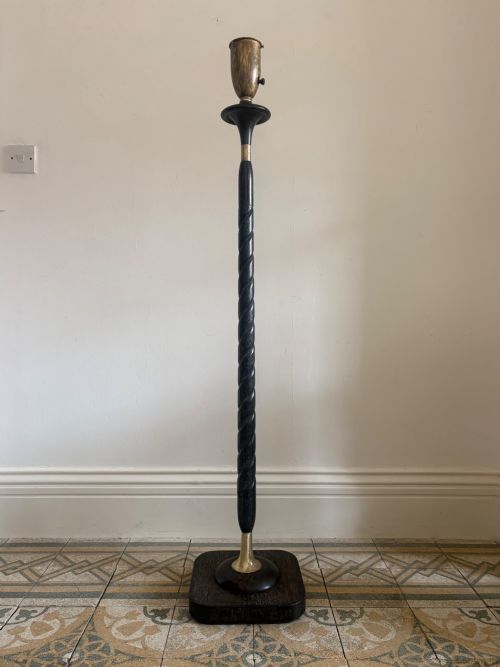
Forms range from compact table models to tall floor stands, sometimes incorporating ebonised wood or mahogany alongside the main metal structure. Gothic Revival and Neoclassical influences appear in the heavier column designs, offering decorative variety across the surviving examples.
How they were made
Makers shaped the metal columns through casting, turning and embossing, creating crisp spiral twists and detailed bases that support the weight of the lamp. Brass provides the primary metallic structure, often combined with tinted or clear moulded glass reservoirs and shades.
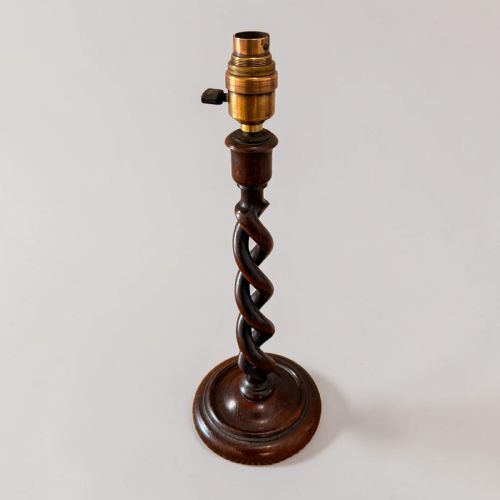
Structural variety comes from the integration of timber bases, with ebonised wood and mahogany appearing alongside the turned brass shafts. These mixed media constructions balanced the heavy metal upper sections with stable wooden platforms.
Twisted Brass Column Lamp Retail Price Guide 2026
Typical asking prices for twisted brass column lamp among the pieces listed under this phrase on Sellingantiques today, from the lower quarter to the upper quarter. They describe what is for sale here now, not the wider market.
The current selection spans pieces from the 1860s through to the 1920s, utilising brass, glass, and mahogany.
What varies in quality
Quality rests in the crispness of the twist and the heft of the metal column, separating solid cast pieces from lighter alternatives. Heavier gauges of brass and well-defined barley twist fluting indicate superior workshop production during the Victorian and Edwardian periods.
The integrity of the original components, such as intact tinted glass shades or well-fitted wooden bases, determines the overall character of the piece. Proportion and balance between the column height and the base footprint dictate how successfully the lamp occupies a room.
The Twisted Brass Column Lamp Glossary
- Barley twist
- A spiral carving or shaping resembling a barley sugar stick, found on both wooden and brass lamp columns. This decorative turning technique gained immense popularity during the Victorian and Edwardian eras.
- Column lamp
- A lighting standard designed to mimic classical architectural orders with a defined base, shaft and capital. These pieces bring formal proportion to domestic interiors.
- Ebonised wood
- Timber treated with a dark stain or finish to imitate ebony. It provides a sharp, dark contrast against polished brass in nineteenth-century designs.
- Oil lamp
- A lighting fixture that burned liquid fuel via a wick before conversion to electricity. Many surviving twisted brass column lamps originally functioned as oil-burning units.
Twisted Brass Column Lamp: Frequently Asked Questions
Are these lamps converted from oil?
Many nineteenth and early twentieth-century examples began life as oil-burning fixtures before receiving modern electrical fittings. This heritage accounts for the substantial weight and robust construction of the metal columns.
Conversion work is standard for period lighting, allowing these functional antiques to operate safely in contemporary homes while retaining their original aesthetic character.
How do I clean polished brass?
Maintenance requires gentle dusting with a soft cloth to protect the surface sheen from accumulating grime. Avoid harsh chemical polishes that strip away the aged patina built up over decades.
Allowing the brass to retain its natural darkening adds depth and character to the twisted fluting and detailed column bases.
Where should I place a floor lamp?
Tall column stands suit corners or beside reading chairs where their vertical height can fill empty wall space. Their architectural proportions anchor a room without dominating the surrounding furniture.
Ensure the floor surface is level to maintain stability given the substantial weight of the metal and glass construction.
How do I identify the period?
Dating relies on examining the weight of the metal, the style of the base, and associated materials like tinted glass or ebonised wood. Victorian and Edwardian examples often display distinct Neoclassical or Gothic Revival detailing.
Comparing the manufacturing techniques and column proportions helps narrow down whether a piece originates from the nineteenth century or the early twentieth century.