

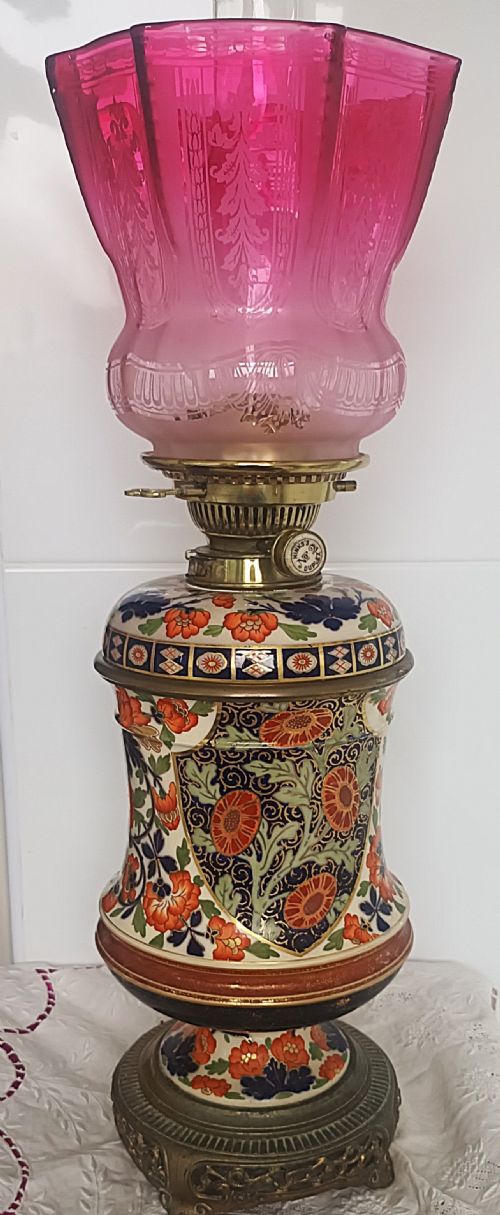


Duplex Brass Burner
These duplex brass burner assemblies and the oil lamps they power bring nineteenth-century illumination into a room with genuine weight and bright metalwork.
Duplex Brass Burner
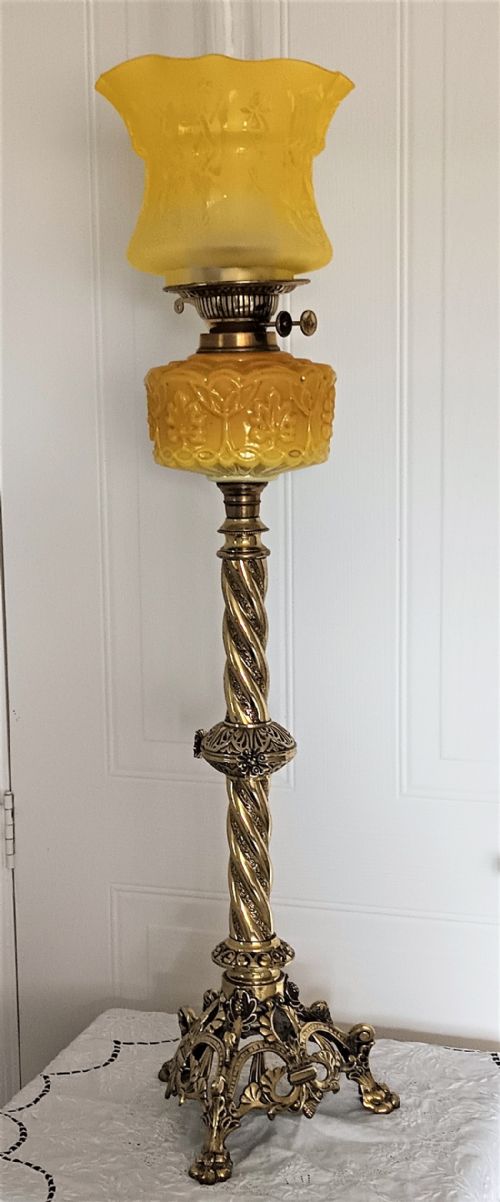
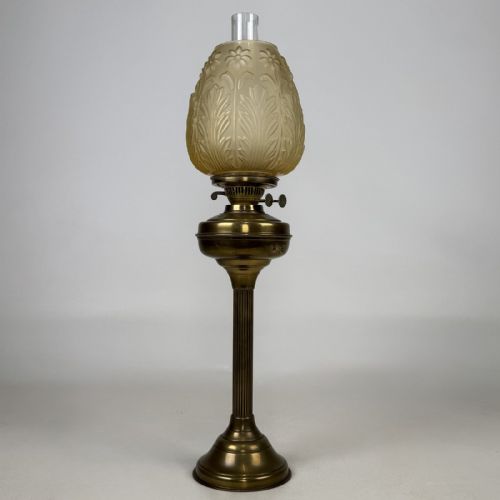
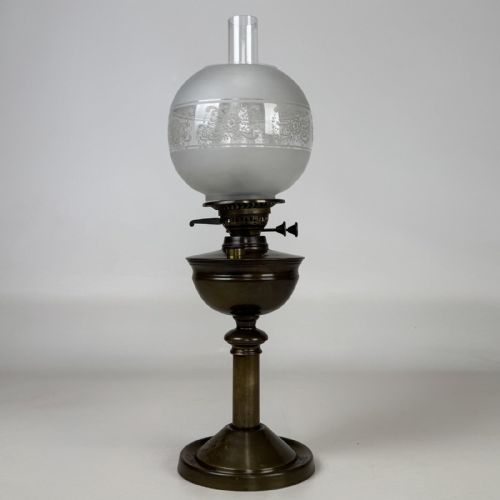
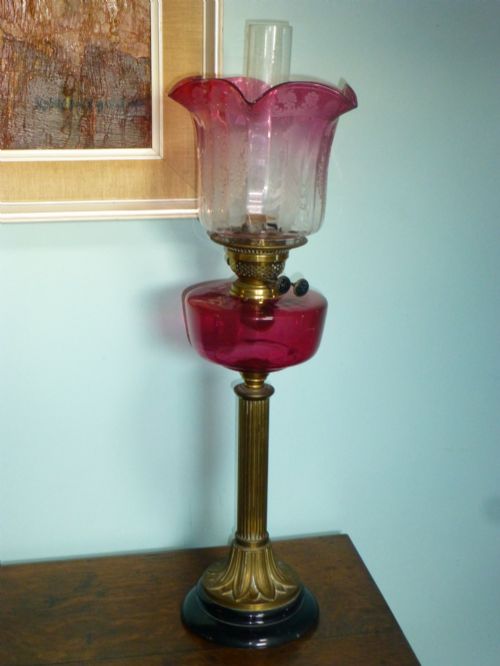
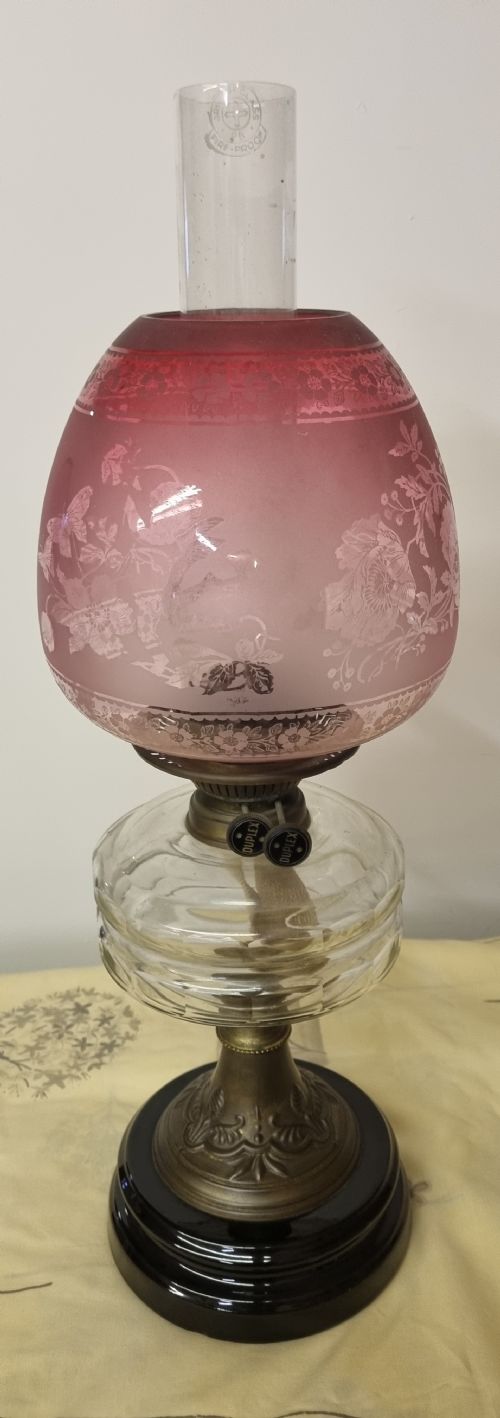
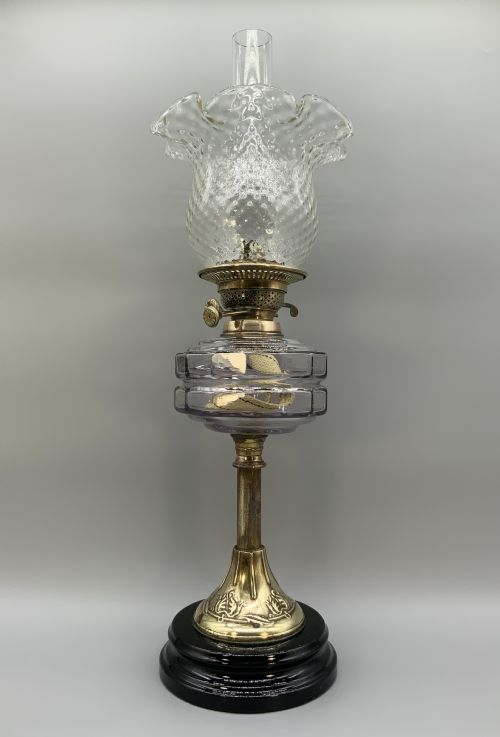
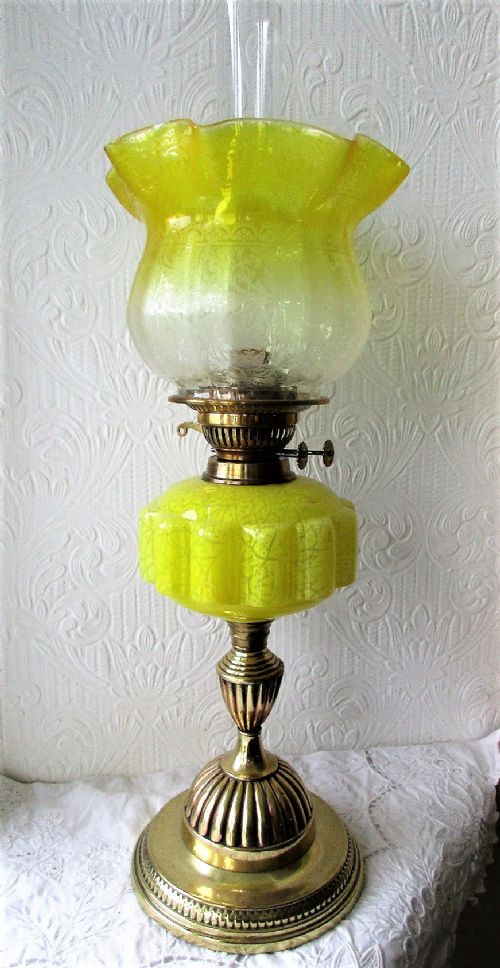
A duplex brass burner sits atop nineteenth-century and early twentieth-century oil lamps, designed to hold two parallel wicks that produce a brighter, wider flame than single-wick designs. You will most commonly encounter these burners mounted on tall Victorian or Edwardian brass standards, often paired with glass fonts and decorative shades.
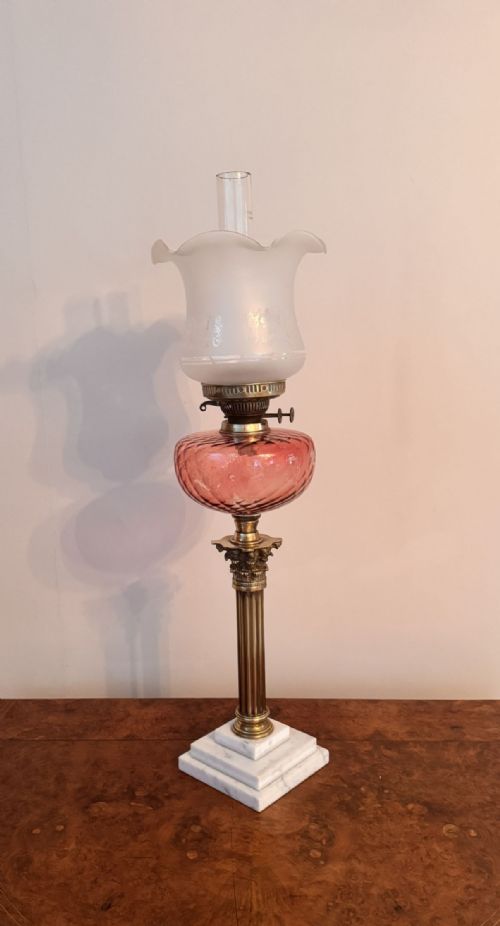
The physical forms span plain reeded columns, telescopic stands, and elaborate combinations of brass with ceramic, marble, and coloured glass. Most examples date from the Victorian period through to the early decades of the twentieth century, reflecting an era when oil lighting reached its mechanical peak before widespread electrification.
Materials and Manufacture
The core components utilise cast and spun brass, engineered to hold fuel securely while supporting heavy glass shades. Burner mechanisms require precise machining of the twin wick carriers, flame spreaders, and thumb wheels to ensure an even draw of paraffin.
Reservoirs and shades incorporate hand-blown or pressed glass in cranberry, opaline, frosted, and crystal finishes, occasionally resting on marble or ceramic bases. Some taller pieces feature adjustable telescopic mechanisms that allowed users to alter the height of the light source.
Duplex Brass Burner Retail Price Guide 2026
Typical asking prices for duplex brass burner among the pieces listed under this phrase on Sellingantiques today, from the lower quarter to the upper quarter. They describe what is for sale here now, not the wider market.
Some Victorian burners feature tiny extinguishing caps attached by minute chains, ready to snuff out the twin flames with a gentle pull.
Evaluating Quality
Quality rests on the crispness of the brass casting, the thickness and clarity of the glass font and shade, and the smooth operation of the burner mechanism. Superior examples display substantial weight in the metal standards and fine detailing in reeded columns or ormolu mounts.
The presence of undamaged, period-matching glass shades - particularly hand-blown cranberry or opaline varieties - distinguishes finer decorative assemblies from standard utility lighting. Maker-marked mechanisms, such as those by known patent holders, add a further layer of distinction.
Hinks·Taylor Tunnicliff·Messenger·Young
The Duplex Brass Burner Glossary
- Duplex burner
- A lamp burner utilising two flat wicks running parallel to each other to generate a significantly larger and brighter flame. This dual-wick system requires a matching double-slot gallery.
- Font
- The oil reservoir of the lamp, which sits below the burner and above the stem or base. Fonts are frequently fashioned from coloured glass, crystal, or ceramic.
- Gallery
- The metal ring atop the burner that holds the glass chimney in place. On better examples, this component is pierced or patterned.
- Reeded column
- A vertical lamp stem carved or cast with parallel convex mouldings resembling classical architectural columns. This style is typical of Victorian brass standards.
- Telescopic lamp
- A floor or table oil lamp featuring an adjustable sliding brass stem that allows the height of the burner to be altered. These heavier stands provide stable elevation.
Duplex Brass Burner: Frequently Asked Questions
How does a duplex burner work?
A duplex burner uses two flat wicks fed through dual slots, controlled independently or by a linked mechanism. This setup draws more paraffin and oxygen to create a wider, brighter flame than standard single-wick lamps.
The mechanism typically includes twin thumb wheels to raise or lower the wicks, alongside a removable gallery that secures the glass chimney and shapes the combustion air flow.
Were these lamps used for reading?
Yes, their dual-wick output and adjustable heights made them principal reading lamps in Victorian and Edwardian sitting rooms before electric lighting took over.
Tall telescopic models allowed households to position the light source directly beside a desk or armchair for optimal illumination during evening hours.
How do I clean brass lamp parts?
Brass components benefit from gentle dusting and occasional cleaning with a mild, non-abrasive metal polish to maintain their finish without removing historic patination. Harsh chemical dips should be avoided on vintage brass.
Glass fonts and shades can be washed separately in warm soapy water, taking care to protect delicate hand-blown rims and painted details from thermal shock.
Can I still burn oil in them?
Many period oil lamps remain mechanically sound and can burn liquid paraffin or lamp oil if the wicks are trimmed and the font is sound. Modern lamp oil reduces smoke and odours compared to nineteenth-century fuels.
Safety checks are essential to ensure the brass reservoir holds liquid without leaks and the burner mechanism grips the wick firmly before lighting.