



Yellow Flower Artwork
Yellow flower artwork brings warmth and botanical study into rooms through paintings created across the nineteenth and twentieth centuries.
Yellow Flower Artwork
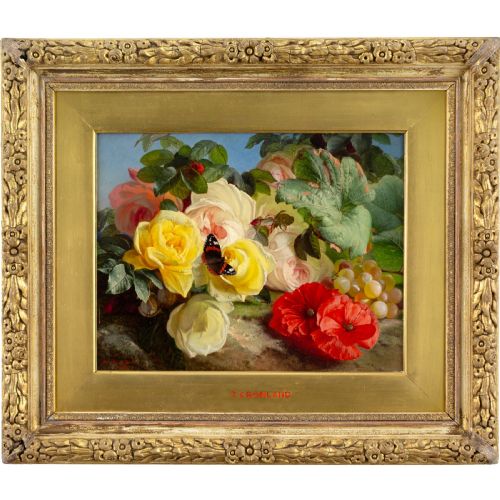
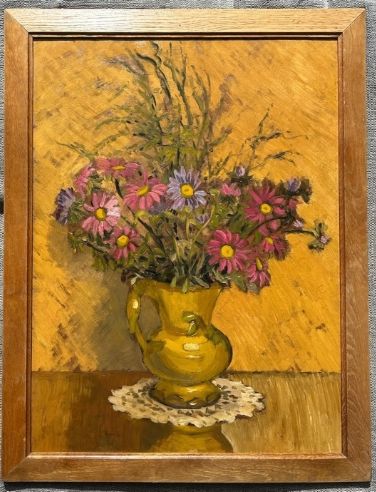
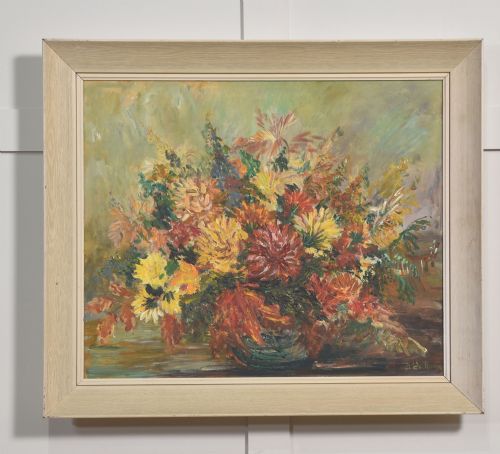
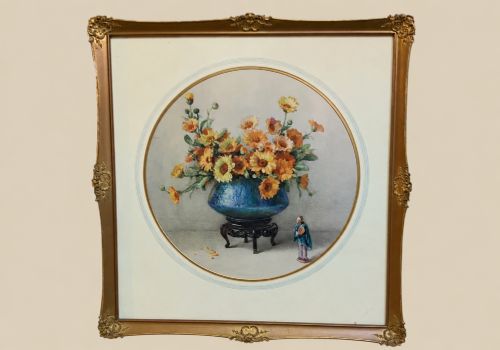
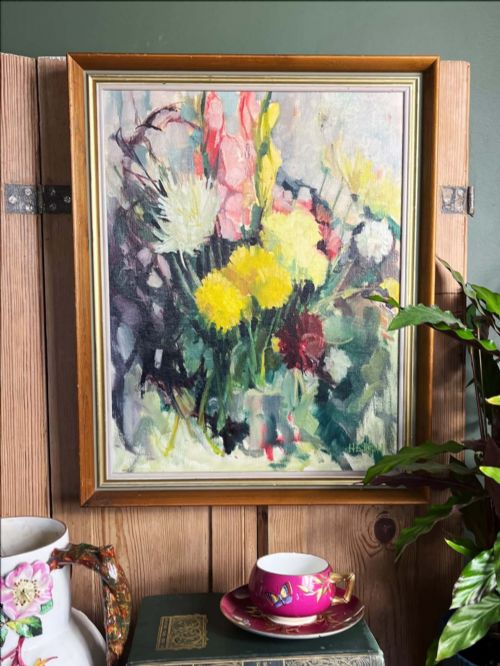
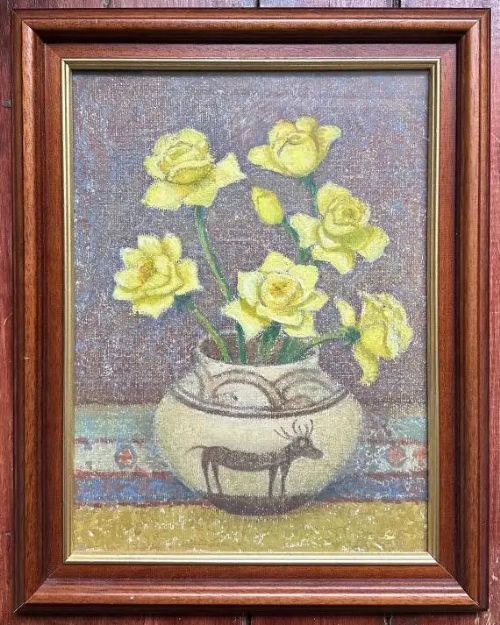
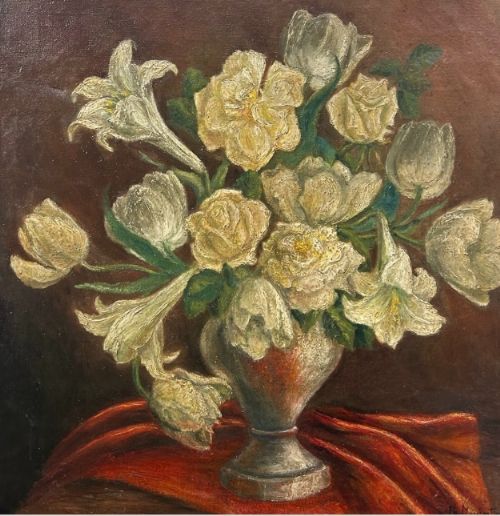
When searching for yellow flower artwork, collectors encounter a diverse selection of wall art, paintings, and fine art spanning from the late nineteenth century into the mid-twentieth century. The category comprises framed watercolours and oil paintings depicting floral still lifes, garden landscapes, and botanical studies.
Pieces frequently emerge from Victorian, Edwardian, and mid-century periods, capturing subjects such as roses, wallflowers, marigolds, and chrysanthemums. Works range from detailed nineteenth-century watercolours to mid-century impressionist oil paintings on canvas and board.
How they were made
Artists utilise traditional mediums including oil paint and watercolour applied to canvas, paper, wood boards, and metal grounds. Many pieces incorporate delicate gilt framing that complements the painted floral subjects.
Techniques vary from precise botanical observation to looser impressionist brushwork, capturing light and texture within vases and garden settings.
The selection includes British and continental European artists working in styles ranging from realism to mid-century impressionism.
What varies in quality
The sophistication of brushwork and the artist's ability to render light, depth, and botanical accuracy distinguish the finer works from simpler decorative studies. Hand-signed pieces by established painters carry distinct authorship that elevates their standing.
The preservation of the paint surface, canvas tension, and original paper integrity also influence the overall character and longevity of each piece.
Theude Grönland·Kenneth Cozens·Emma Fordyce MacRae·Harry Wanless·Henrietta Creswell·Amile Coppieters·Sir Matthew Smith·Robin MacKertich·Freda Marston·Rowland Henry Hill·Phyllis I Hibbert·Marian Chase·Alice Macallan Swan·James Stuart Park·Ernest Higgins Rigg·Beatrice Parsons·Julien Stappers·Bertoldo Taubert·Louisa Mary Bancroft·Owen Bowen
The Yellow Flower Artwork Glossary
- Oil Paint
- A slow-drying medium consisting of pigments suspended in a drying oil, typically linseed, allowing for rich colour blending and texture on canvas or wood.
- Watercolour
- A painting method in which the paints are made of pigments suspended in a water-soluble vehicle, traditionally applied to absorbent paper.
- Still Life
- A work of art depicting mostly inanimate subject matter, typically commonplace objects which may be either natural or man-made, including flowers and fruit.
- Impressionism
- A nineteenth-century movement characterised by relatively small, thin, yet visible brush strokes and an emphasis on accurate depiction of light.
Yellow Flower Artwork: Frequently Asked Questions
What periods do these artworks span?
The pieces available range from the late nineteenth century through the Edwardian era and into the mid-twentieth century.
This timeline encompasses Victorian watercolours, early modernist studies, and mid-century impressionist canvases.
How are these paintings typically framed?
Many examples retain period frames, frequently featuring gilt wood mouldings suited to the style of the era.
Framing helps protect the edges of canvases and works on paper while completing the presentation of the artwork.
What surfaces do artists use for these works?
Painters apply their pigments to stretched canvas, wooden panels, heavy paper, and occasionally metal substrates.
Watercolour works utilise paper supports, whereas oil paintings are predominantly found on canvas or prepared board.
How do I choose between oil and watercolour?
Oil paintings generally offer heavier texture and deeper colour saturation, making a stronger visual statement on a wall.
Watercolours provide a lighter, more transparent quality that suits delicate botanical subjects and traditional interiors.