
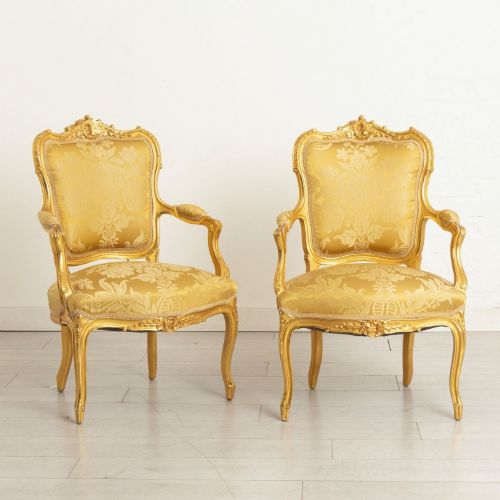


Yellow Fabric Side Chairs
Yellow fabric side chairs bring bright textile upholstery and traditional wooden frames together to lift a room.
Yellow Fabric Side Chairs
Yellow fabric side chairs cover an array of seating forms dressed in textile upholstery, spanning periods from the nineteenth century into the nineteen-thirties. You meet dining chairs, open armchairs, carver chairs, and side chairs constructed during the Victorian, Edwardian, and Art Deco eras. Styles range from Regency rope-back ebonised designs to French Rococo giltwood pieces and decorated faux birdseye maple.
The frames underneath the yellow fabric employ traditional hardwoods such as mahogany, oak, walnut, rosewood, and giltwood. Many examples appear in matched sets of four, six, or eight, while others survive as pairs or individual seating options. The textiles themselves often feature new upholstery work applied to older wooden structures.
How they were made
Makers shaped the structural timber frames of these chairs using solid woods like mahogany, rosewood, oak, and walnut, often applying ebonising, inlay, or giltwood finishes for decorative effect. Some pieces utilise specialist techniques such as faux birdseye maple decoration across the wooden components.
Upholstery techniques secure textile coverings to the open armchairs, carver chairs, and side chairs, combining traditional padding with silk and other fabrics. Frame construction relies on classic cabinet-making methods suited to dining and occasional seating.
Listings feature frames in mahogany, oak, rosewood, walnut, giltwood, and faux birdseye maple, paired with diverse textile upholstery.
What varies in quality
The refinement of the wooden frame dictates much of the distinction, from simple turned oak to intricate Regency rope-back ebonised details, inlaid mahogany, or carved French giltwood. Faux birdseye maple decoration and gilt finishes demand high skill from the maker.
The selection of textile for the upholstery creates another layer of distinction, particularly where newly applied silk or patterned fabric meets antique rosewood, walnut, or mahogany frames.
The Yellow Fabric Side Chairs Glossary
- Carver chair
- An armchair, usually with arms designed to match a set of dining chairs. These often stood at the head of a dining table.
- Side chair
- An upright chair without arms, built for dining or occasional use around a room. They slide easily beneath tables when not in use.
- Giltwood
- Wood that has been covered with a thin layer of gold leaf or gold paint. This finish appears frequently on decorative French seating.
- Ebonised
- Wood treated to imitate ebony, usually through dark staining or painting. This technique creates a striking contrast with lighter upholstery.
- Inlay
- Contrasting materials set into the surface of the wood to form decorative patterns. Edwardian mahogany pieces often feature this detail.
Yellow Fabric Side Chairs: Frequently Asked Questions
Are these chairs suitable for daily dining?
Many of these pieces originate as dining chairs or sets built for regular use around a table. Their robust wooden frames in oak, mahogany, or walnut support everyday seating.
At the same time, the inclusion of delicate silk or decorative textile upholstery means some pairings benefit from more careful placement in a home.
How do I identify an Edwardian chair?
Edwardian seating often displays lighter timbers such as mahogany enhanced with delicate inlay work. These pieces tend to prioritise slender proportions and refined comfort.
Comparing them against heavier Victorian rosewood or walnut examples reveals a distinct shift towards airier forms.
What is a rope-back chair?
A rope-back design incorporates carved wooden elements that mimic the twisted appearance of rope, most notably seen in Regency style seating. This sculptural detail adds texture to the top rail of the frame.
Combined with ebonised wood, it creates a striking visual profile.
Can I mix these chairs with modern tables?
The varied timber tones and bright textile upholstery allow these chairs to sit comfortably alongside contemporary furniture. Mixing period seating with modern dining tables creates a layered interior.
Sets of four, six, or eight provide enough uniformity to anchor a modern dining space.