
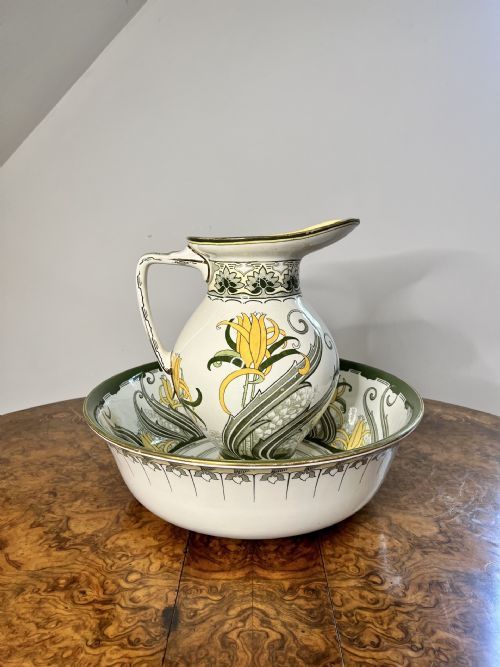
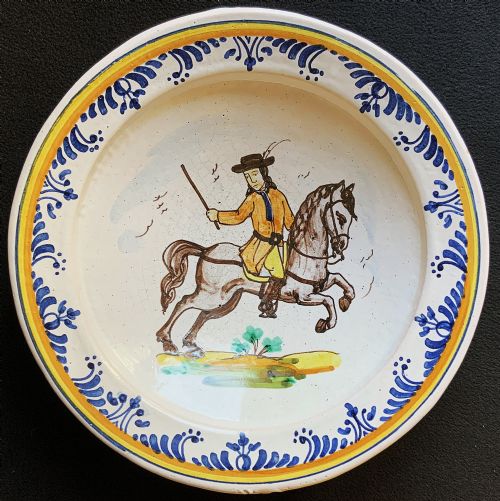
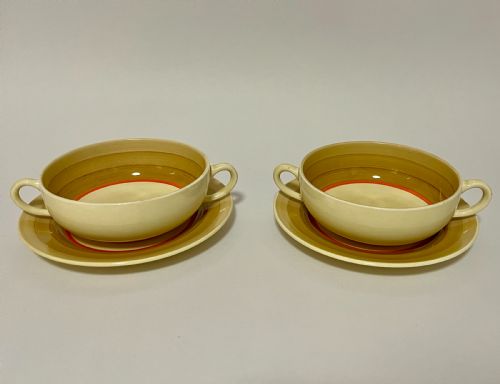


Yellow Earthenware Bowls
Yellow earthenware bowls bring warmth and rustic charm to a room, offering historic character through diverse periods and styles.
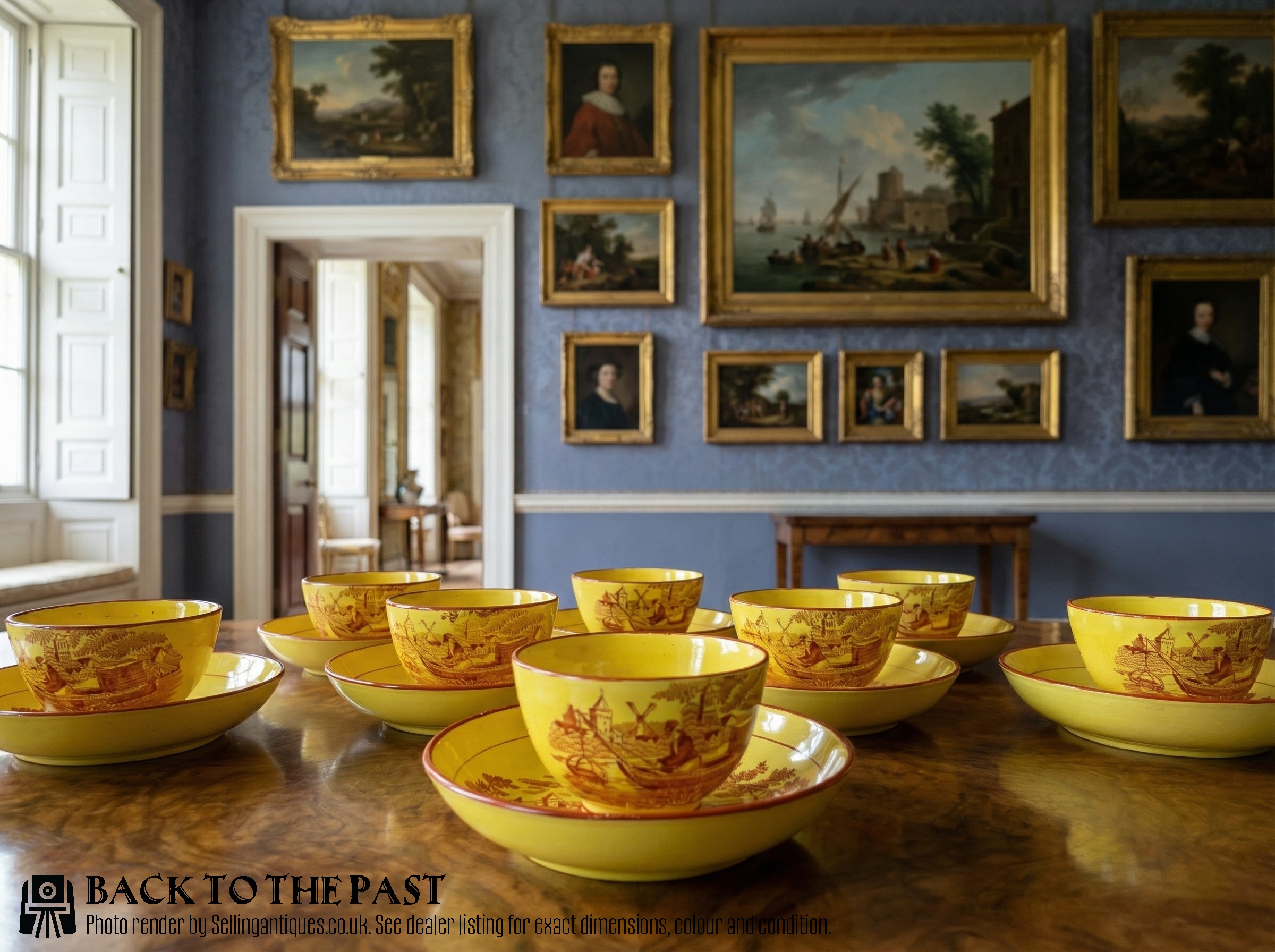
Yellow Earthenware Bowls
Yellow earthenware bowls encompass a wide variety of domestic and decorative vessels produced across several centuries, ranging from early medieval pottery to twentieth-century art ceramics. When you search for yellow earthenware bowls, you encounter diverse regional traditions and functional forms, including dairy vessels, wash basins, soup bowls, and tea sets.
The pieces available span multiple eras, notably featuring nineteenth-century English country pottery alongside continental European works and earlier Islamic pieces. Forms range from simple utilitarian dairy bowls to elaborate majolica centrepieces and Art Deco powder boxes.
Materials and construction methods
These pieces are constructed primarily from earthenware clay, which is shaped and then finished with various glazes to create the characteristic surface appearance. Potters utilised techniques such as tin-glazing and applied coloured lead glazes, seen on majolica and Delftware examples.
Makers shaped the clay into functional forms like wash bowls, chargers, and tea bowls, often decorating the surfaces with polychrome pigments, slip, or moulded sculptural details such as cupids.
Materials represented across the selection include terracotta, tin-glazed earthenware, and slip.
Assessing quality in earthenware
Quality in these ceramics often rests upon the finesse of the modelling and the complexity of the glaze work, distinguishing simple utilitarian wares from high-status decorative items. The precision of painted polychrome decoration or the sharpness of moulded relief details indicates the skill of the original maker.
Condition and completeness also define the piece, particularly for sets such as jug and bowl combinations or tea bowls with matching saucers where uniformity across the group matters.
Doulon Burslem·Clarice Cliff·Sewell·Minton
The Yellow Earthenware Bowls Glossary
- Earthenware
- Porous pottery fired at relatively low temperatures and typically covered with a glaze to render it waterproof. It forms the structural base for most traditional country pottery and majolica.
- Majolica
- A type of earthenware coated with an opaque tin glaze and painted with metallic oxide colours, producing vibrant hues. It gained popularity during the Victorian era for ornate centrepieces and tableware.
- Slip
- Liquid clay used for decorating pottery surfaces before firing, either by trailing lines or coating the entire vessel. It provides contrasting colour and texture on traditional country wares.
- Charger
- A large decorative plate or shallow bowl typically displayed on a wall or dresser rather than used for dining. These often feature elaborate hand-painted polychrome designs.
- Buffware
- Pottery characterised by a pale buff-coloured clay body, frequently associated with early Islamic and medieval ceramic traditions. These pieces often feature historic slip-painted ornamentation.
Yellow Earthenware Bowls: Frequently Asked Questions
What are yellow earthenware bowls?
Yellow earthenware bowls are ceramic vessels shaped from porous clay and finished with glazes, encompassing utilitarian kitchenware and decorative Victorian or Art Deco objects.
They appear in various forms throughout history, serving practical roles like dairy work or decorative functions such as centrepieces and chargers.
How were these bowls used?
Many examples served utilitarian household purposes, such as dairy bowls for milk processing or large wash basins and jug sets for personal hygiene.
Other pieces were purely decorative, functioning as centrepieces, chargers, or powder boxes within period interiors.
How do I date an earthenware bowl?
Dating relies on stylistic markers, manufacturing techniques, and materials characteristic of specific eras, such as nineteenth-century majolica or twentieth-century Art Deco designs.
Pottery marks and regional potting traditions also help narrow down the period of manufacture.
How should I care for antique earthenware?
Antique earthenware requires gentle handling due to the porous nature of the clay body and the potential fragility of historical glazes and painted surfaces.
Displaying them away from moisture and extreme temperature fluctuations helps preserve the integrity of the ceramic and its glaze.