



Wrought Iron Planter
A wrought iron planter brings sturdy metal scrollwork and garden structure to patios and conservatories, shaped by centuries of estate craftsmanship.
Wrought Iron Planter
When searching for a wrought iron planter, buyers encounter garden urns, plant stands, and strapwork window boxes designed to hold greenery. These pieces emerge primarily from the Victorian and Edwardian eras, alongside earlier Georgian iterations.
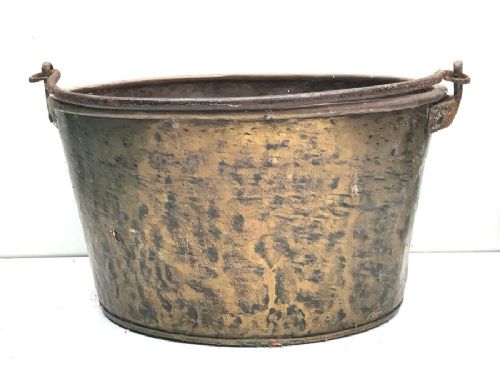
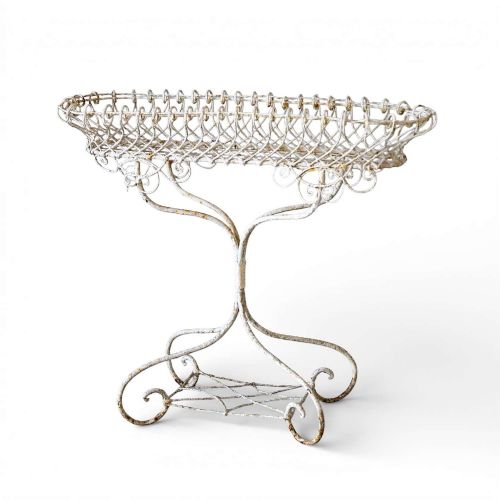
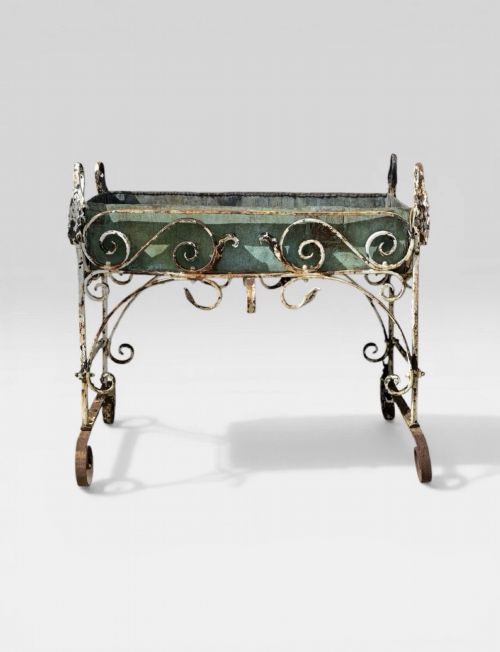
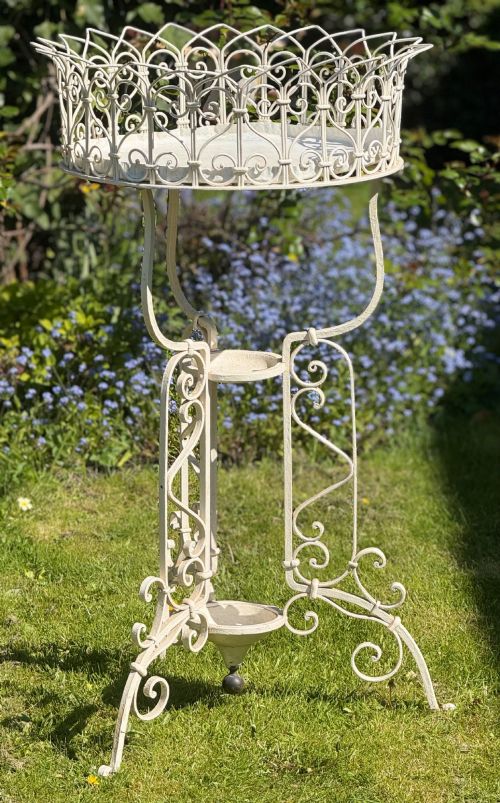
The most common version met on this page is the nineteenth-century plant stand or garden jardiniere, often featuring scrollwork and lattice basket tops. Many examples combine iron frames with copper bowls or terracotta pots.
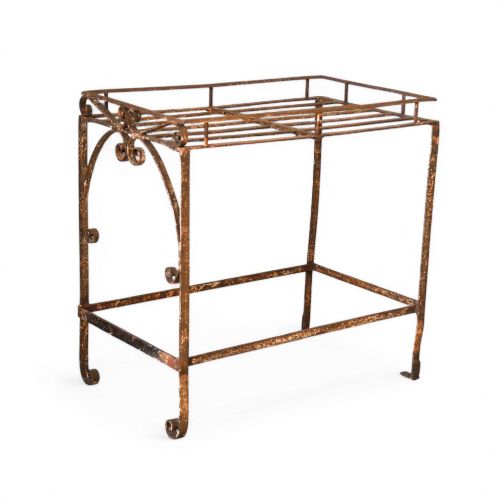
Beyond standard garden containers, the category extends to conservatory wirework tiers, garden racks, and classical orangery planters. French Country and Gothic Revival styles appear frequently among the listed forms.
How they were made
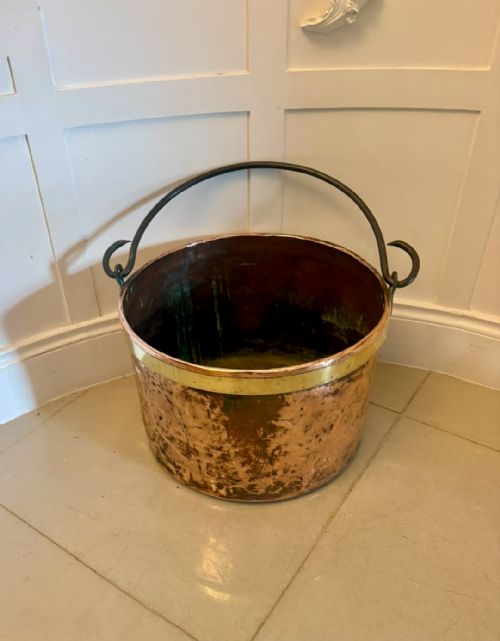
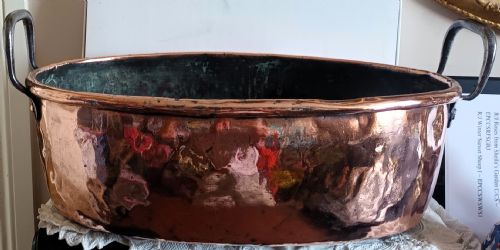
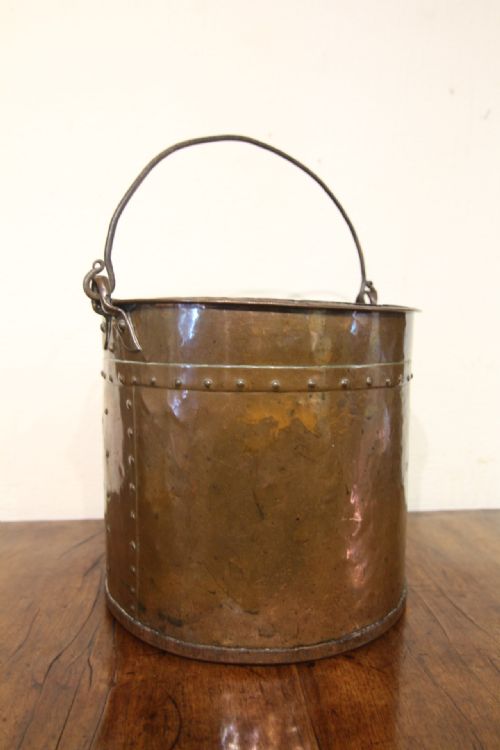
Makers shaped wrought iron manually through heating and hammering, producing strapwork, scrollwork, and rigid structural frames. These iron elements frequently partner with hammered copper bowls, brass accents, and sheet metal.
Many items incorporate mixed media, combining wooden elements such as oak staves with iron bands, or pairing metal stands with terracotta pots and oil jars. Protective layers of paint or natural verdigris develop on the metal surfaces over time.
The listings combine wrought iron with copper, brass, oak, and terracotta across Georgian, Victorian, and Arts and Crafts styles.
What varies in quality
The distinction between ordinary and superior pieces lies in the crispness of the scrollwork and the heft of the metalwork. Estate-made examples often display deliberate decorative details that mark them out from standard production.
Integration between materials dictates overall success, particularly where wrought iron supports heavy copper cauldrons, brass vessels, or ceramic pots. Well-proportioned stands maintain structural balance under the weight of soil and plants.
The Wrought Iron Planter Glossary
- Wrought iron
- A tough, malleable form of iron that blacksmiths shape by hand into decorative scrolls and structural bands.
- Jardiniere
- An ornamental pot or stand designed specifically to hold plants and flowers indoors or in conservatories.
- Strapwork
- Flat strips of metal arranged in geometric or intersecting patterns to form the body of a planter or frame.
- Verdigris
- The green patina that forms naturally on copper and brass surfaces through atmospheric weathering over long periods.
- Orangery
- A large conservatory or garden building designed to protect citrus trees and tender plants during colder months.
Wrought Iron Planter: Frequently Asked Questions
How do I use a wrought iron planter in a modern garden?
These pieces suit patios, terraces, and conservatories as structural focal points for potted plants and trailing greenery.
Many examples function effectively both outdoors with weather-resistant planting and indoors within garden rooms.
Are these planters suitable for outdoor use year-round?
Most pieces handle outdoor conditions well due to the inherent durability of iron and accompanying copper or terracotta.
Protecting vulnerable finishes and ensuring proper drainage helps preserve antique metalwork through wet winter months.
How do I date an antique iron plant stand?
Dating relies on observing construction methods, material combinations, and stylistic markers such as Victorian scrollwork or Arts and Crafts copper work.
Comparing structural details against established period forms helps narrow down the decade of manufacture.