




Wrought Iron Pendant Lamp
These wrought iron pendant lamp options bring robust metalwork and period character to overhead spaces through French hall lanterns and Arts and Crafts chandeliers.

Wrought Iron Pendant Lamp
A wrought iron pendant lamp search brings up a sturdy collection of ceiling fixtures, hall lanterns, and chandeliers shaped from iron alongside glass and copper. These pieces bridge utilitarian metalwork and decorative lighting.
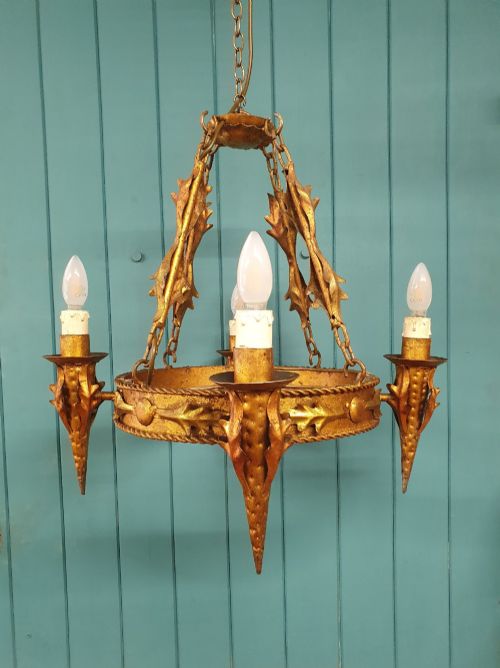
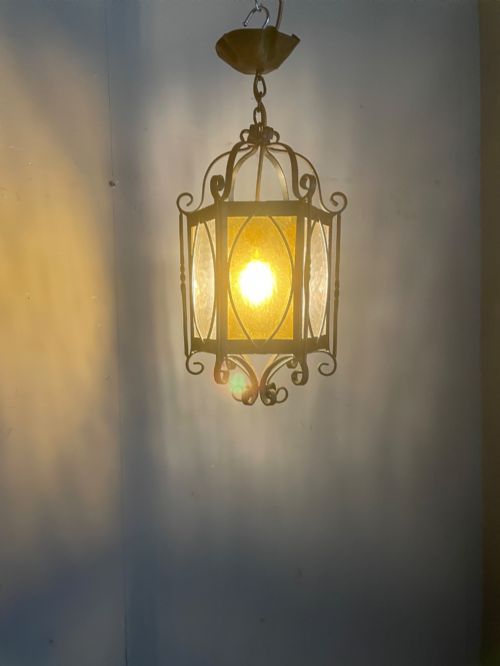
Buyers most frequently meet French hall lanterns and Arts and Crafts hanging lamps across the inventory. The forms span hexagonal glazed lanterns, wagon wheel chandeliers, and porch lights originating from Victorian, Edwardian, and early twentieth century periods.
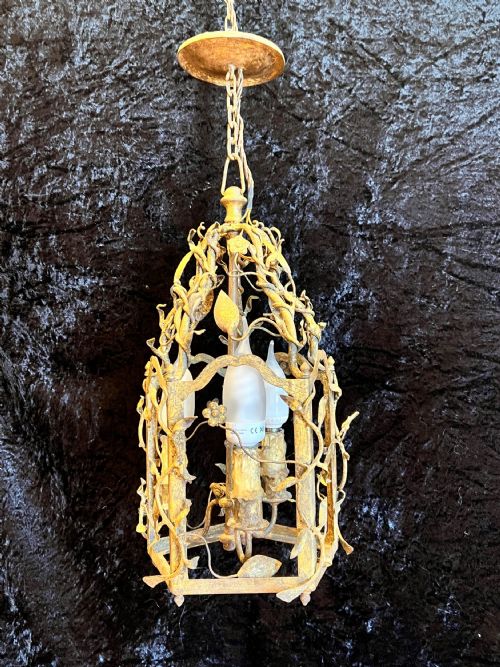
The selection ranges from Gothic Revival and French Chateau designs to Art Nouveau and Art Deco styles. Makers utilised frosted glass, stained glass, and pate de verre alongside forged iron to create diverse illumination for domestic interiors.
How they were made
The construction relies heavily on hand-forged wrought iron combined with cast iron and gilt metal frameworks. Blacksmiths shaped structural scrollwork and suspension loops to support the weight of the metal and glass assemblies.
Glazing techniques involve fitted panels of clear, frosted, stained, and coloured glass secured within metal frames. Artisans also incorporated copper, brass, and fabric elements to soften the industrial nature of the ironwork.
Listings feature wrought iron combined with frosted glass, stained glass, and pate de verre across Edwardian and Victorian eras.
What varies in quality
Quality rests in the finesse of the iron forging and the integration of specialised glass elements such as pate de verre and leaded panels. Pieces bearing distinct maker attributions or complex stylistic motifs demonstrate superior workshop execution.
The balance between robust iron framing and delicate glass components dictates the overall success of the lighting fixture. Heavier decorative detailing in French Gothic or Art Nouveau styles elevates the visual impact.
Verrerie Des Vosges·Muller Freres
The Wrought Iron Pendant Lamp Glossary
- Wrought iron
- A tough, malleable form of iron that can be heated and forged into decorative scrolls and structural frames. This material forms the primary skeleton of these pendant lamps.
- Pate de verre
- A glass-working technique involving crushed glass packed into a mould and fused by heat. This method produces richly textured panels found in specific Art Nouveau shades.
- Hall lantern
- An enclosed ceiling-hung light designed primarily for corridors and entrance spaces. These fixtures typically feature glazed glass panes within a metal housing.
- Wagon wheel chandelier
- A circular lighting formation resembling a cart wheel suspended horizontally from chains. This rustic format supports multiple light points around the iron circumference.
Wrought Iron Pendant Lamp: Frequently Asked Questions
How do I hang a heavy iron pendant lamp safely?
Suspension requires a secure ceiling joist or structural anchor capable of supporting the combined weight of the iron framework and glass panels. Professional electrical installation ensures the wiring matches the demands of these vintage fixtures.
Matching the hanging chain or rod length to the ceiling height keeps the lantern or chandelier properly proportioned within the room. Hallways and high ceilings benefit from adjustable drop links.
What periods do these lamps represent?
The lighting fixtures span Victorian, Edwardian, and early twentieth century decades up to the nineteen thirties. Stylistic influences cross Gothic Revival, Arts and Crafts, Art Nouveau, and Art Deco movements.
French provincial designs and Italian rustic pieces appear alongside British Arts and Crafts examples. Each period brings distinct metalworking techniques and glass combinations.
How do I clean wrought iron and glass fixtures?
Dusting the ironwork with a dry, soft cloth preserves the dark metal finish without introducing moisture. Glass panels can be wiped down gently with standard glass cleaner applied to a cloth rather than sprayed directly onto the metal.
Avoiding harsh abrasives protects any patination or applied gilt finish on the iron frame. Regular gentle maintenance keeps both the forged metal and the coloured glass panels clear.
Where should I place a hall lantern?
Hall lanterns suit entrance corridors, stairwells, and high-ceilinged landings where vertical space allows the hanging form to catch the eye. The enclosed glass design protects the interior light source in transitional draughty areas.
Matching the scale of the lantern to the footprint of the hallway ensures adequate clearance below while providing a welcoming overhead glow.