


Wrought Iron Hearth Planters
Wrought iron hearth planters bring substantial metalwork and generous copper vessels indoors, offering a practical way to hold logs or display foliage beside the fireplace.
Wrought Iron Hearth Planters
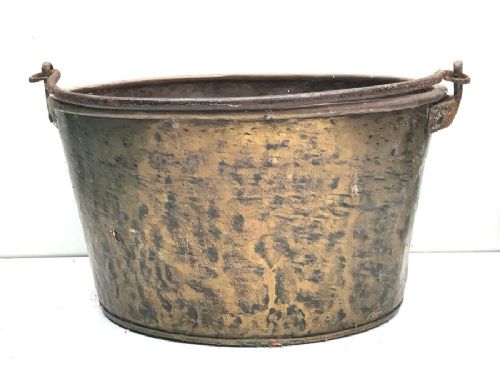
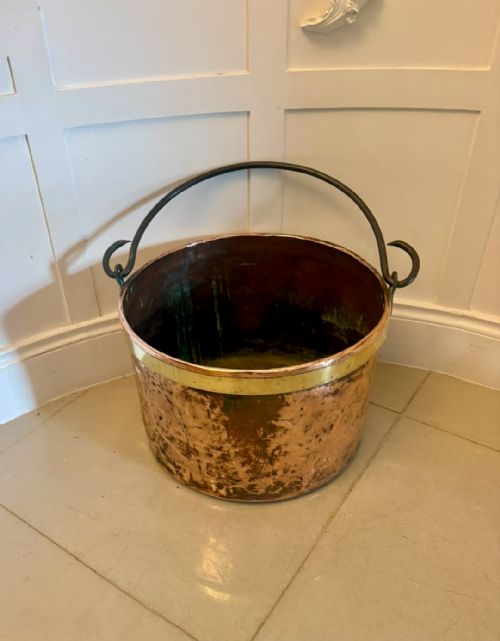
Wrought iron hearth planters encompass heavy metal vessels, cauldrons, and buckets originally forged for domestic service around the fire or dairy. These items bridge utilitarian kitchenware and fireside storage, taking the form of deep copper bowls, coal buckets, and log bins supported by iron or brass mounts.
The versions most commonly met on this page date from the Georgian era through to the early twentieth century, spanning Georgian, Arts and Crafts, and Art Nouveau styles. Makers of the period fashioned these robust vessels to withstand intense heat and heavy daily use while serving central household functions.
Buyers encounter forms that range from simple nineteenth-century country cauldrons with iron swing handles to large George III pots and decorative bowls on stands. Each piece retains a distinct industrial character shaped by its original function in the kitchen, hearth, or dairy.
How they were made
Artisans hammered sheet copper into deep, seamless or riveted vessels, attaching sturdy wrought iron handles and fittings to bear heavy loads of coal or logs. The combination of beaten copper bodies and forged iron mounts provided the structural strength required for constant fireside deployment.
Foundries and workshops utilised traditional blacksmithing techniques to shape iron swing handles, stands, and brackets, securing them firmly to the softer copper and brass bodies. This marriage of ferrous and non-ferrous metals created durable containers capable of handling both dry fuel and damp contents.
One nineteenth-century dairy pan traded its original cream-settling duties for a quiet retirement holding ferns by the window.
What varies in quality
Quality rests in the weight of the metal gauge, the integrity of the hand-beaten form, and the balance between the copper body and its wrought iron hardware. Heavier copper sheets and robustly forged iron handles indicate superior workshop standards from earlier periods.
The refinement of the silhouette and the quality of the joining work separate standard utility items from more ambitious decorative vessels. Pieces showing careful hand-finishing on both the metal bowl and the iron support structure hold greater presence by the hearth.
The Wrought Iron Hearth Planters Glossary
- Cauldron
- A large, deep metal pot with a rounded base, traditionally used over an open fire for boiling or heating. These heavy vessels often feature wrought iron swing handles for suspension or lifting.
- Log bin
- A deep container designed to hold firewood neatly beside the fireplace. They are frequently constructed from heavy copper with iron or brass detailing.
- Swing handle
- A movable arched handle attached to the sides of a bucket or cauldron via pivots. It allows for balanced lifting when the vessel is filled with heavy logs or coal.
- Setting pan
- A wide, shallow metal vessel originally utilised in dairies for resting milk to let the cream rise. These wide copper pans translate well to modern horticultural displays.
- Andirons
- Horizontal metal bars raised on legs, placed in a hearth to support logs, though sometimes adapted or paired with planter functions. They anchor the visual arrangement of the fireplace.
Wrought Iron Hearth Planters: Frequently Asked Questions
Can I use these outdoors?
These metal vessels suit sheltered garden spaces, conservatories, or patios where their copper and iron construction can weather naturally over time.
Moisture will accelerate the oxidation of both the copper body and the wrought iron elements, so proper drainage and winter protection help preserve the metal.
How do I clean copper and iron?
Washing the surfaces with warm soapy water removes accumulated dust and soot while preserving the historic patina accumulated over decades of use.
Harsh metal polishes strip away the aged character that collectors value, so gentle cleaning remains the preferred approach for antique fireside pieces.
Were these originally planters?
Most of these vessels started life as cauldrons, coal buckets, setting pans, or log bins for domestic and agricultural tasks.
Their generous proportions and waterproof metal construction make them natural candidates for housing large potted plants or floral arrangements today.
How do I date a piece?
Examination of construction methods, such as hand-beaten seam work, rivet types, and handle attachments, offers clues to the manufacturing period.
Stylistic markers from Georgian, Arts and Crafts, or Art Nouveau periods further help narrow down the decade of production.