

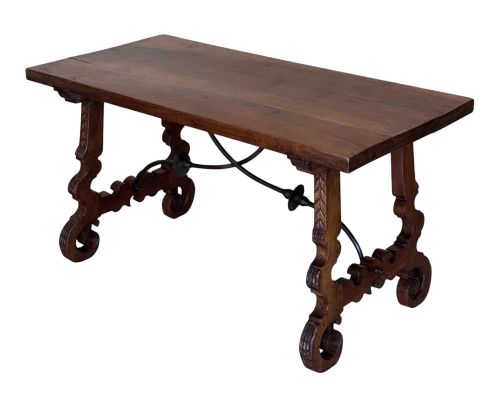


Wrought Iron Dining Table
A wrought iron dining table brings robust metalwork and substantial timber surfaces together for durable, characterful dining.
Wrought Iron Dining Table
When you search for a wrought iron dining table, you are looking at substantial dining furniture that pairs sturdy metal bases with timber or stone tops. These tables range from utilitarian industrial forms to ornate Spanish Baroque and French country designs. The pieces on this page span several centuries, reaching back to eighteenth-century farmhouse tables and extending through nineteenth-century Victorian work to twentieth-century bistro sets.
You are most likely to meet twentieth-century French and English industrial or garden sets alongside earlier Spanish walnut refectory forms. Many examples integrate iron or cast iron framework with oak, walnut, pine, or marble surfaces. These tables suit both kitchen and dining spaces, offering generous proportions and enduring structural strength.
How they were made
The construction of these tables relies on the combination of forged metals and seasoned hardwoods. Blacksmiths and metalworkers shaped wrought iron and cast iron into supportive bases, trestles, and folding frames. These metal elements were paired with timber tops including walnut, oak, chestnut, and pine, often joined with traditional carpentry techniques.
Surface finishes range from polished marble and zinc to aged patinated wood and painted metalwork. Artisans utilised brass and copper alongside iron in certain early twentieth-century designs. The resulting pieces balance heavy metal framing with substantial wooden boards.
Wrought Iron Dining Table Retail Price Guide 2026
Typical asking prices for wrought iron dining table among the pieces listed under this phrase on Sellingantiques today, from the lower quarter to the upper quarter. They describe what is for sale here now, not the wider market.
Listings feature periods spanning from the 18th century through to 1930, utilising iron, walnut, oak, and marble.
What varies in quality
Quality in these tables rests upon the integrity of the materials and the skill of the original fabrication. Superior examples use dense hardwoods like walnut and oak paired with heavy, well-forged ironwork that remains completely rigid. Lesser pieces show more utilitarian construction with simpler pine boards and lighter cast elements.
The proportion between the metal base and the top determines the visual success of the piece. Tables that retain their original marble, zinc, or thick timber tops command greater attention than those with later replacements. The depth of the metalworking and the preservation of the original surface patina separate standard examples from exceptional ones.
The Wrought Iron Dining Table Glossary
- Refectory table
- A long, narrow dining table traditionally used for communal dining in monasteries or large houses. These examples often feature heavy timber tops supported by trestle bases or sturdy wooden framing.
- Bistro set
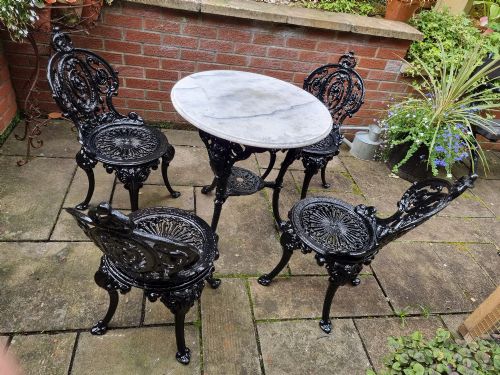
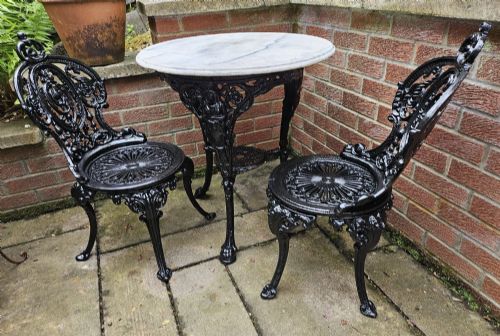
- A small table accompanied by matching chairs, designed originally for commercial cafés or compact garden spaces. They frequently incorporate cast iron bases with wooden or metal slats.
- Cast iron
- A strong, hard alloy of iron and carbon poured into moulds to create intricate decorative patterns and sturdy structural legs. It differs from hand-forged wrought iron through its crystalline structure.
- Trestle table
- A table consisting of two or more support frames connected by a horizontal beam holding a loose or fixed top. This design allows for maximum legroom along the length of the table.
- Baroque style
- An ornate design period characterised by dramatic ornamentation, curved lines, and substantial proportions. In these tables, it appears in Spanish walnut forms with sculptural wooden and metal detailing.
Wrought Iron Dining Table: Frequently Asked Questions
How do I clean a wrought iron base?
Dust the metal regularly with a soft cloth to prevent grime accumulation. Apply a light coat of clear paste wax or specialised metal oil to protect the surface.
Avoid harsh chemical cleaners that strip the historic patina. Ensure the metal is dried completely after any routine maintenance.
Can I use these tables outside?
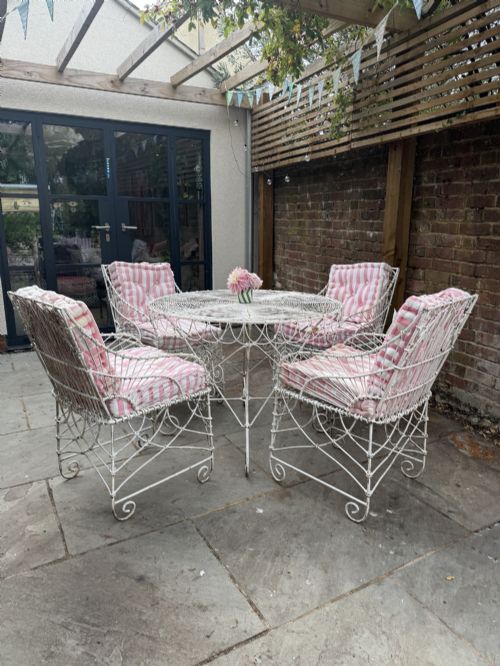
Many garden dining sets and bistro pieces were built specifically for outdoor use. Iron frames withstand exterior environments if protected from prolonged standing moisture.
Tables with sensitive antique timber or marble tops require indoor storage during harsh weather. Check the specific material combination before leaving any piece exposed to the elements.
How do I identify a Spanish Baroque table?
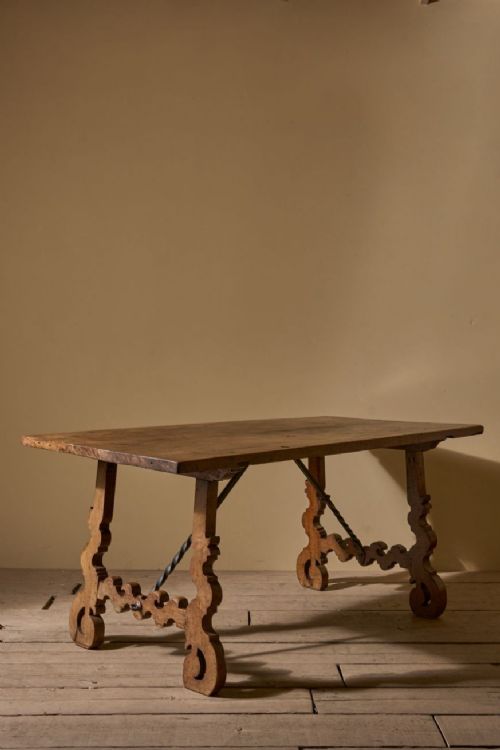
Spanish Baroque tables typically feature rich walnut timbers combined with heavy iron stretchers beneath the top. The woodwork displays deep grain patterns and substantial structural framing.
Look for robust proportions and traditional joinery characteristic of eighteenth-century workshops. These pieces carry a distinct architectural presence compared to lighter industrial designs.
Are folding metal tables sturdy?
Twentieth-century folding metalwork tables utilise robust iron hinges and locking mechanisms designed for regular commercial or domestic movement. Their stability depends on the tightness of the original rivets and joints.
When unfolded, a well-made folding table locks firmly into place without excessive wobble. They offer practical flexibility for dining spaces while maintaining solid metal support.