





Rustic Spanish Walnut Table
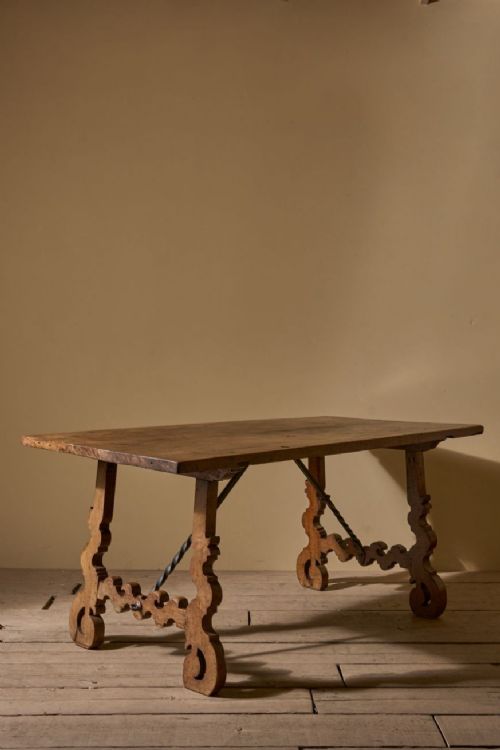
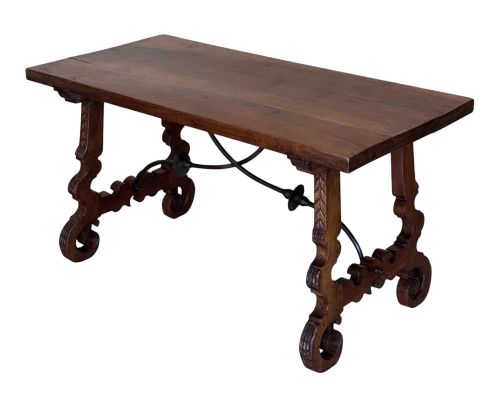
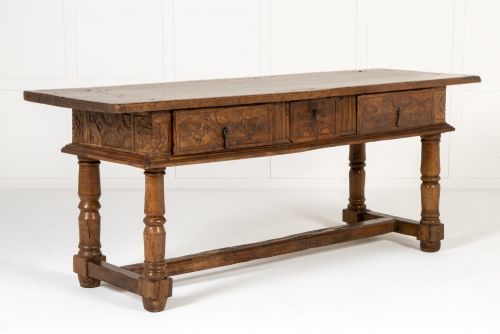
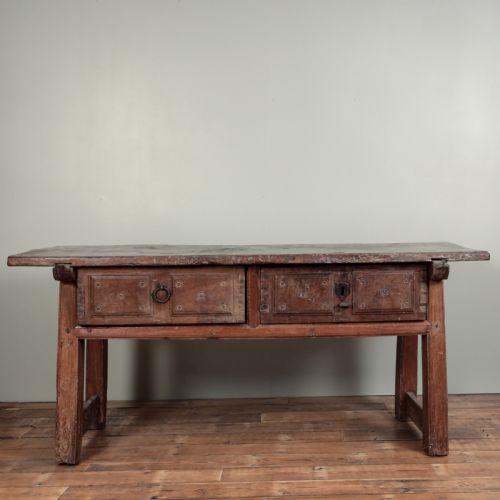
A rustic spanish walnut table brings heavy timber grain and grounded proportions into a room.
Rustic Spanish Walnut Table
A rustic spanish walnut table is a heavy wooden surface shaped by centuries of provincial craftsmanship and utility. The examples found here span from the seventeenth century through to later revival periods, capturing the shift in domestic furniture across Spain.
Dining tables, console tables, side tables, centre tables, desks, and coffee tables make up the forms available. Alongside these tables, the selection includes storage boxes fashioned from the same dense timber.
Seventeenth and eighteenth century pieces sit alongside nineteenth century examples and later twentieth century revivals. Walnut dominates the construction, often supported by wrought iron elements characteristic of Spanish baroque and colonial styles.
How they were made
Joiners built these pieces using solid walnut, fruitwood, and oak, selecting dense woods capable of enduring daily use. Planks were joined to form thick tabletops that rested upon sturdy timber frames or trestle bases.
Wrought iron stretchers and braces frequently feature beneath the surface, providing structural rigidity to console tables and dining tables. Secondary woods like fruitwood appear in specific components, whilst hand tools left subtle marks across the timber.
Rustic Spanish Walnut Table Retail Price Guide 2026
Typical asking prices for rustic spanish walnut table among the pieces listed under this phrase on Sellingantiques today, from the lower quarter to the upper quarter. They describe what is for sale here now, not the wider market.
Storage boxes slip quietly into the furniture lineup, proving that seventeenth century Spaniards also needed somewhere to hide their clutter.
What varies in quality
The choice of timber grain and the integrity of the original construction separate simpler pieces from finer works. The depth of patination on the walnut surface reflects age and handling, whilst heavier seventeenth century examples show greater substance than later revival pieces.
Proportion and the integration of wrought iron supports dictate the visual balance of each table. Pieces retaining their primary timber without extensive replacement parts hold closer ties to their period of origin.
The Rustic Spanish Walnut Table Glossary
- Walnut
- A dense, dark hardwood prized for its rich grain and durability in seventeenth and eighteenth century furniture. It forms the primary material for the majority of these tables.
- Wrought iron
- Iron beaten and shaped by hand into structural stretchers or decorative braces. It provides essential support beneath Spanish tables.
- Trestle table
- A table construction consisting of two or more supports connected by a horizontal beam. This form appears frequently amongst the listed dining tables.
- Refectory dining table
- A long, narrow table traditionally used for communal dining. This style manifests in nineteenth century interpretations.
- Spanish Baroque
- An ornate and theatrical design style prevalent in Spain during the seventeenth century. It influences the heavy proportions and detailing seen on period tables.
Rustic Spanish Walnut Table: Frequently Asked Questions
How do I clean a walnut table?
Dust the surface regularly with a soft, dry cloth to prevent dirt accumulation. Avoid harsh chemical cleaners that strip the natural oils from the wood.
Apply a traditional beeswax polish sparingly when the timber appears dry. Buff gently to maintain the natural sheen of the walnut.
Can I use a side table daily?
These tables were built for utility and withstand normal everyday use. Solid walnut and iron construction provides lasting structural stability.
Use coasters under glasses and placemats under hot dishes to protect the antique wood finish. Treat the surface with care to preserve the historic patination.
How do I date an old table?
Examine the construction methods, tool marks, and timber joints visible beneath the top. Seventeenth century pieces often display heavier timbers and simpler, robust joinery.
Compare the style elements, such as wrought iron stretchers or baroque shaping, against known period characteristics. Revival pieces from later centuries mimic these historic traits with distinct material consistency.
What is a centre table used for?
A centre table stands freely within a room rather than against a wall. It serves as a display surface or a focal point for living spaces.
Historically, these tables held lamps, books, or decorative objects in the middle of a chamber. Their finished appearance on all sides allows flexible placement.