


Wrought Iron Conservatory Stand
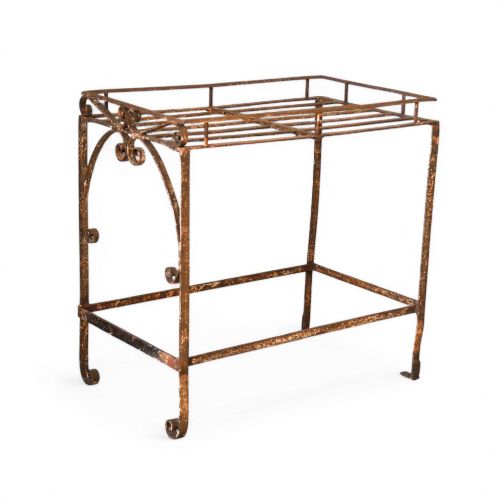
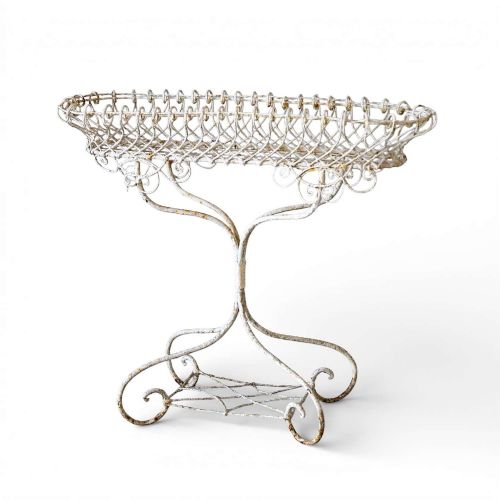
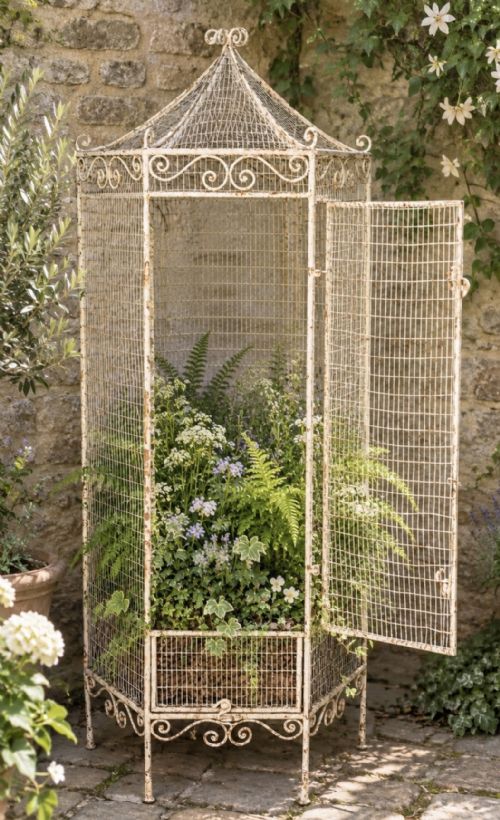
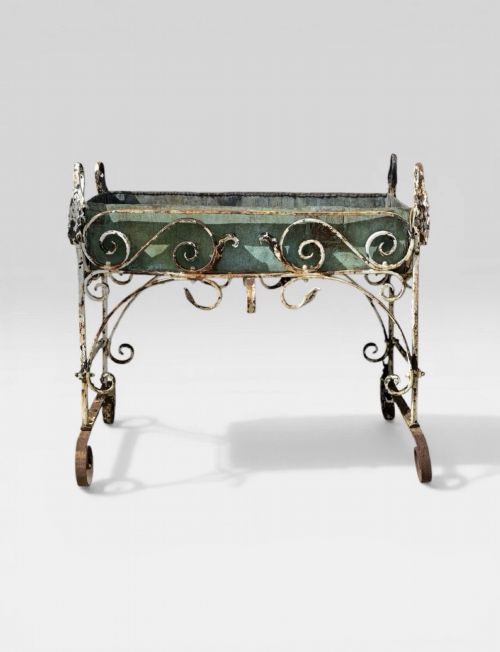
These wrought iron conservatory stand pieces bring architectural plant display into the home.
Wrought Iron Conservatory Stand
A wrought iron conservatory stand provides tiered or raised framing for holding potted plants, garden urns and greenery within light-filled rooms and orangeries. Most examples encountered here date from the nineteenth and early twentieth centuries, spanning Victorian and Edwardian periods.
Forms vary from semi-circular graduated plant stands and corner units to wirework tiered planters and bakers racks. Many incorporate lattice basket tops, scrollwork, and slatted iron construction designed to hold heavy earthenware pots.
Origin points visible in the records include English and French workshops, encompassing country house equipment and estate-made items. The utilitarian function merges with decorative scrollwork and painted finishes suited to domestic display.
How they were made
Construction relies heavily on hand-forged wrought iron and wirework, sometimes combined with brass, zinc, or stone elements. Metal components are riveted or joined to create rigid frames capable of supporting heavy loads of damp soil and pottery.
Surfaces frequently show historic layers of paint, often white or distressed tones applied over iron. Wire mesh and slatted iron provide the structural planes for the plant holders while allowing drainage.
The listings show forms including plant stands, bakers racks, bird cages, and garden tables across the Victorian and Edwardian periods.
What varies in quality
The sophistication of the scrollwork and the structural integrity of the frame define the tier. Estate-made or bespoke pieces often exhibit heavier gauge iron and more complex lattice basket tops than standard utilitarian racks.
The survival of original painted surfaces and complementary materials like zinc liners or brass details elevates the character of the piece. Rigidity in the riveted joints and balanced proportions across graduated tiers dictate the overall success of the design.
The Wrought Iron Conservatory Stand Glossary
- Wrought iron
- A tough, malleable form of iron containing slag inclusions, hammered into shape by hand or machine. It resists rust better than cast iron and bends without snapping.
- Wirework
- Metal strands shaped and welded or woven into openwork frames and baskets. This technique allows for lightweight yet sturdy plant display structures.
- Bakers rack
- A tall shelving unit with open ironwork sides and shelves, originally used for cooling bread but adopted for plant display. They offer substantial vertical storage for pots.
- Orangery
- A large glass-sided building attached to a residence, designed to protect tender plants during winter. These stands were essential furnishings for such spaces.
- Jardiniere
- An ornamental pot or stand for holding flowers and plants. They bring decorative formality to conservatory interiors.
Wrought Iron Conservatory Stand: Frequently Asked Questions
Where did these stands live?
These stands were designed for conservatories, orangeries, and glasshouses where tender plants overwintered. They also found places on sheltered patios and inside country houses.
Their open iron construction allowed light to reach plants from multiple angles while holding heavy pots off the stone floors.
How do I date a stand?
Dating relies on construction methods, such as hand-forging versus machine rolling, and the style of the scrollwork. Victorian and Edwardian examples often feature specific wirework densities and cast or riveted joints.
Comparing the form to documented pieces from the nineteenth century helps narrow the decade of manufacture.
Can I use them outdoors?
Many pieces were built for garden rooms or outdoor use, utilising durable iron and protective paint layers. Continued exposure to moisture requires monitoring the painted surface to prevent deep oxidation.
Placing them on paved garden terraces or inside modern glass extensions suits their original purpose.
What is tiered planting?
Tiered planting involves stepping the display levels upward so that multiple pots catch the light without obscuring one another. Semi-circular and corner stands use this layout to maximise vertical space.
This arrangement originated in estate glasshouses to display varied collections of greenhouse plants effectively.