



Wrought Iron Bistro Chairs
Wrought iron bistro chairs bring practical French cafe style and robust outdoor seating to terraces, gardens and dining spaces alike.
Wrought Iron Bistro Chairs
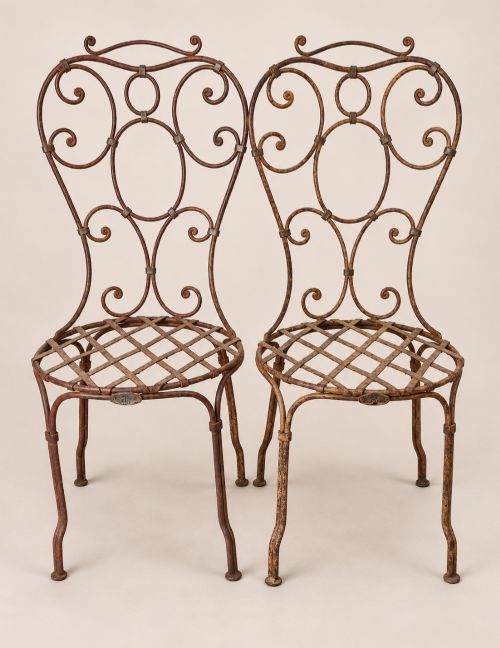
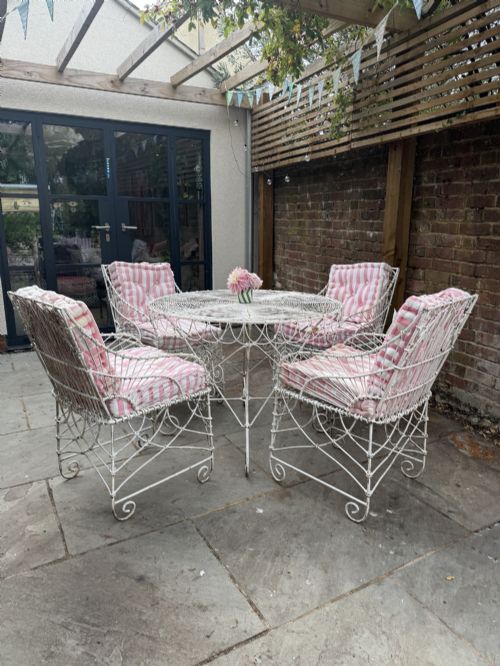
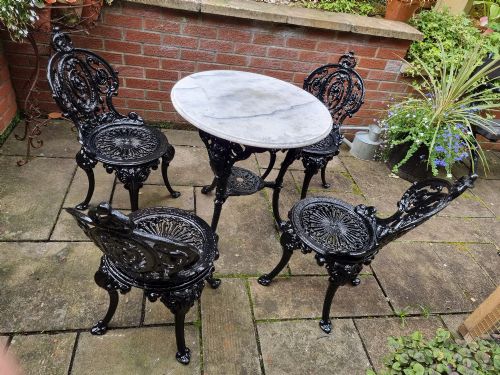
Wrought iron bistro chairs are garden and dining seats originating primarily from French and Victorian traditions, designed for both interior and exterior use. When you search for wrought iron bistro chairs, you encounter robust outdoor sets and folding designs intended for terrace and cafe dining. The selection spans periods from the late nineteenth century through the Edwardian era and into the mid-twentieth century.
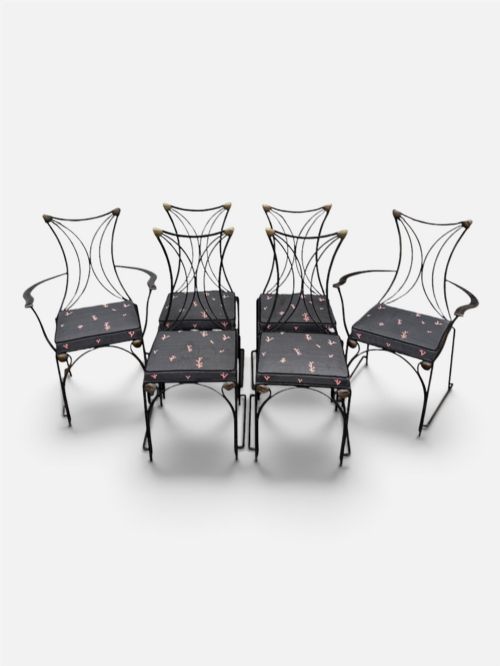
You are most likely to meet French folding metal chairs from the 1920s and 1930s on this page, often paired with garden tables. These pieces combine utilitarian metal construction with stylistic touches like brass shell details or wirework framing, reflecting French industrial and country aesthetics.
How they were made
Makers shaped these chairs using wrought iron, cast iron and wirework, sometimes combining metal frames with fabric elements for seating. The construction relies on durable metalwork designed to withstand outdoor conditions while maintaining structural integrity over decades of use.
Details such as brass shell ornaments and zinc table tops appear alongside the core iron framework, showing a blend of utilitarian metal fabrication and decorative metalwork.
Wrought Iron Bistro Chairs Retail Price Guide 2026
Typical asking prices for wrought iron bistro chairs among the pieces listed under this phrase on Sellingantiques today, from the lower quarter to the upper quarter. They describe what is for sale here now, not the wider market.
Some chairs sport brass shell details, proving that even a humble French bistro seat occasionally likes to feel a bit coastal.
What varies in quality
Quality in these chairs rests upon the refinement of the metalwork and the integrity of the folding mechanisms where applicable. Pieces featuring cast iron elements or specific decorative flourishes like brass shell details demonstrate a higher degree of design ambition.
The distinction between standard utility seating and finer examples lies in the balance between robust industrial construction and decorative French styling. Original folding mechanisms that operate smoothly separate practical workshop output from more sophisticated decorative commissions.
The Wrought Iron Bistro Chairs Glossary
- Wrought iron
- A tough, malleable form of iron that can be heated and hammered into shape. This material allows for sturdy yet slender chair frames suited to outdoor use.
- Wirework
- Metal strands bent and woven into intricate open patterns. This technique appears in nineteenth-century garden furniture to create lightweight yet durable seating surfaces.
- Cast iron
- Iron poured into a mould to create rigid and ornate components. It provides weight and stability to garden tables and chair bases.
- Zinc top
- A sheet metal surface applied to wooden table frames. This material offers a weather-resistant and patinated finish typical of French industrial tables.
Wrought Iron Bistro Chairs: Frequently Asked Questions
Are these chairs suitable for outdoor use?
These metal chairs are built for garden and terrace environments, utilising durable iron construction that withstands the elements.
Over decades, exposure outdoors develops a natural patina on the metal surfaces while maintaining their structural strength.
How do I identify a folding chair period?
Folding mechanisms from the early twentieth century rely on simple, robust iron linkages that allow the seat and back to collapse flat.
Examining the rivets and hinge construction helps distinguish Edwardian and 1920s workshop production from later reproductions.
Can I use bistro chairs indoors?
These French metal and wirework chairs integrate easily into interior dining spaces, sunrooms and kitchens.
Their slender profiles and industrial character complement both traditional and modern interior schemes.
What maintenance do iron chairs need?
Regular inspection of the metal surface helps manage any weathering and preserves the original iron or painted finish.
Storing folding sets under cover during harsher winter months protects the mechanical joints and material integrity.