

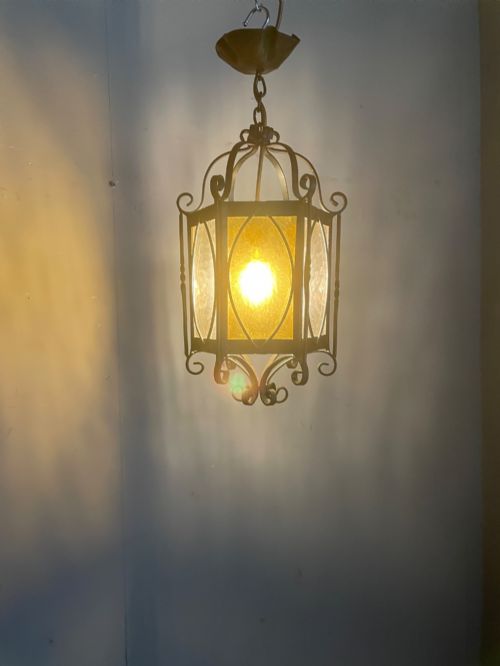


Wrought Iron Art Glass
Wrought iron art glass marries heavy forged metal with vibrant, translucent vessels, bringing striking industrial contrast and coloured light to period interiors.
Wrought Iron Art Glass
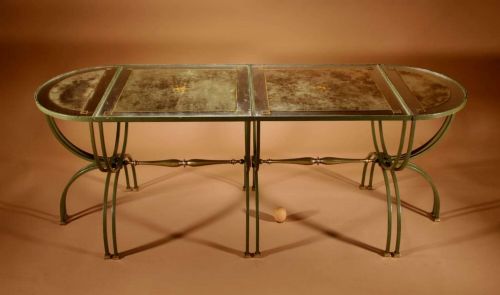
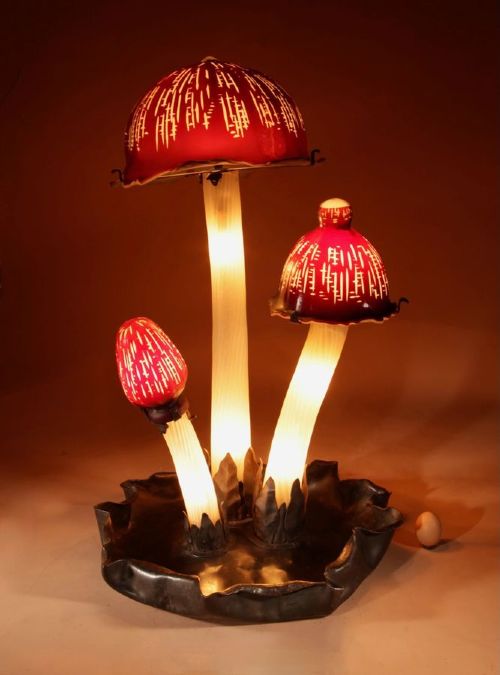
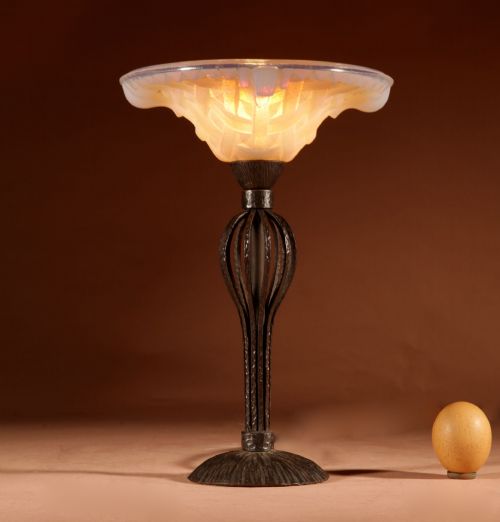
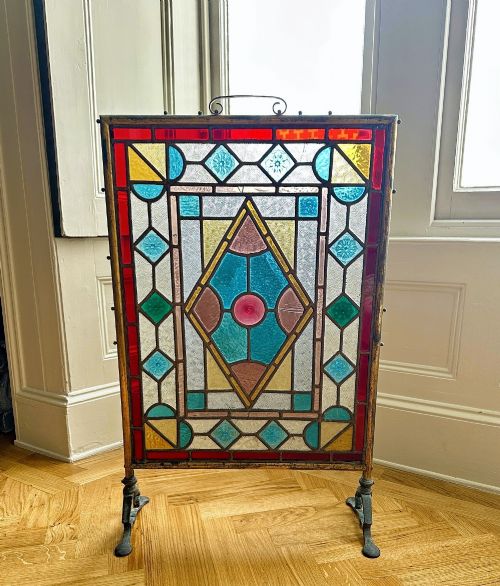
Wrought iron art glass brings together forged metalwork and decorative glass, spanning table lamps, chandeliers, hall lanterns, coffee tables, vases, firescreens, and wine dispensers. You encounter these pieces across diverse eras, from the 19th Century and Victorian Gothic periods through the 1900s, 1910s, 1920s, 1930s, and 1940s.
The most common iterations on this page are French Art Deco table lamps, hanging chandeliers, and geometric hall lanterns. These works frequently showcase distinct styles such as Art Deco, Art Nouveau, Arts and Crafts, and Gothic Revival.
Makers and designers range from prominent glassworks to anonymous blacksmiths, producing everything from intimate table lamps to large architectural hall lanterns. Each object demonstrates how utilitarians transformed iron and glass into decorative centerpieces.
Weight and Finish
Quality rests in the precision of the blacksmith's hand and the depth of the glasswork. Heavier, more complex iron scrolls and cleanly finished joints distinguish superior frames from simpler production pieces.
The glass shade dictates much of the distinction, particularly when signed by known glassworks or executed in layered pate de verre and rich opalescent hues. Original shades that retain their factory surface and undamaged edges hold greater integrity than later replacements.
Proportion and structural balance define the better examples, where the heavy metal base supports the glass vessel without awkward transitions. The integration between the forged mount and the fragile glass reveals the maker's mastery.
Wrought Iron Art Glass Retail Price Guide 2026
Typical asking prices for wrought iron art glass among the pieces listed under this phrase on Sellingantiques today, from the lower quarter to the upper quarter. They describe what is for sale here now, not the wider market.
Materials recorded across the archive include wrought iron, brass, copper, frosted glass, opalescent glass, and vitrolite.
Lacroix Lalique·Schneider·Daum·Degue·Verrerie Des Vosge·Muller Freres
The Wrought Iron Art Glass Glossary
- Pate de verre
- A glass-making technique where crushed glass is packed into a mould and fused in a kiln. This method produces mottled colours and a dense, sugary texture.
- Vitrolite
- An opaque, pigmented structural glass popular during the early twentieth century. It provides a smooth, glossy surface often utilised for table tops.
- Opalescent glass
- Glass exhibiting milky, multi-coloured reflections that shift as the light changes. It diffuses illumination softly within lamp shades and ceiling lights.
- Came
- A grooved strip of lead used to hold pieces of stained or coloured glass together in panels. It forms the structural grid of firescreens and leaded lanterns.
- Demi-lune
- A half-moon shape characteristic of console tables designed to sit flush against a wall. This profile saves floor space in narrow hallways and reception rooms.
Wrought Iron Art Glass: Frequently Asked Questions
How do I clean wrought iron and glass?
Dust the ironwork gently with a dry cloth and apply a microcrystalline wax sparingly if the metal appears dry. Wash glass shades separately in lukewarm soapy water, ensuring they are completely dry before reassembly.
Avoid harsh chemical cleaners on patinated iron surfaces or enamelled glass decorations. Take care when handling heavy or fragile shades near metal collars.
Are these lamps safe for modern wiring?
Many vintage lamps retain older electrical components that require inspection or rewiring by a qualified professional before daily use. Historic brass lamp holders and fabric cords often fall short of current safety standards.
A professional electrician can update the internal wiring while preserving the original wrought iron exterior and period shade.
How can I date an art glass lamp?
Examine the stylistic markers of the ironwork and the moulding techniques of the glass shade. Art Deco pieces from the 1920s and 1930s favour geometric lines and frosted surfaces, whereas 1900s Art Nouveau highlights organic, whiplash curves.
Signatures etched into the glass provide a direct link to specific makers, while construction methods like hand-riveted iron indicate earlier blacksmith work.
Where should I place a hall lantern?
Hall lanterns suit entrance vestibules, high-ceilinged corridors, and stairwells where their downward light and decorative ironwork can be appreciated from multiple angles. Ensure adequate ceiling clearance for hanging chains and heavy frames.
Pairing a glazed lantern with nearby brass or iron accessories helps unify an industrial or period interior scheme.
What is vitrolite?
Vitrolite is a heavy, opaque structural glass manufactured in flat sheets and commonly utilised for table tops during the Art Deco era. Its glossy, pigmented finish resists stains and provides a durable surface.
Tables featuring original vitrolite tops require careful placement to protect the glass edges from heavy impact.