




Writing Campaign Chest
A writing campaign chest is a modular piece designed for travel, combining drawers and a fitted desk for officers on the move.
Writing Campaign Chest
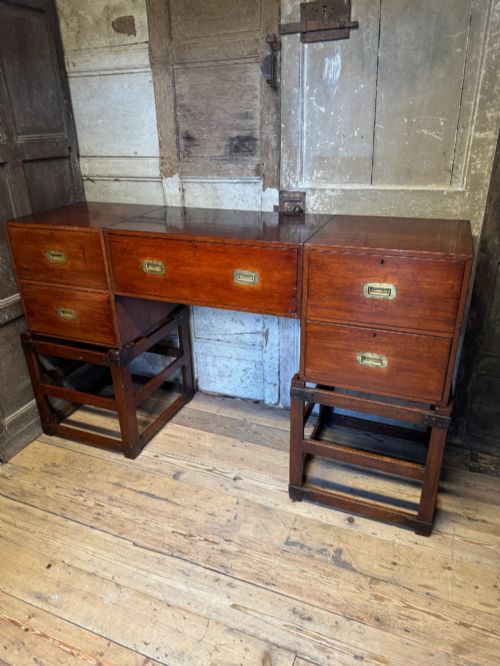
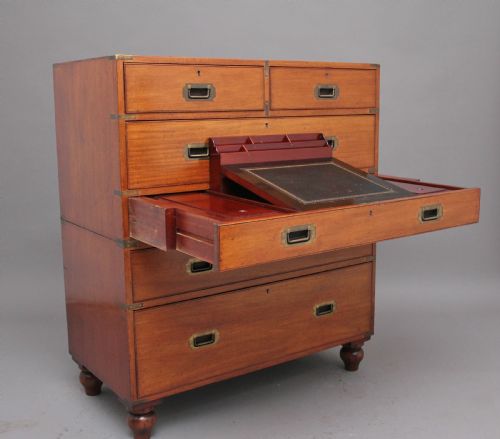
A writing campaign chest serves both storage and correspondence needs, frequently constructed in two separate sections for easy transport by sea or land. These pieces span Georgian, Regency, and Victorian periods, reflecting the shifting demands of military life across the nineteenth century.
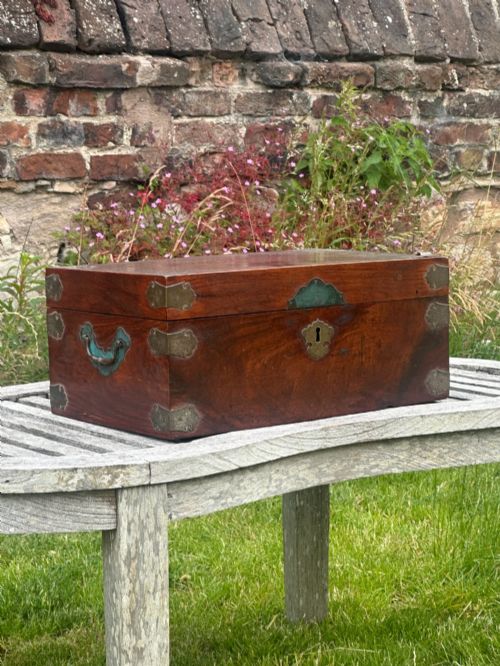
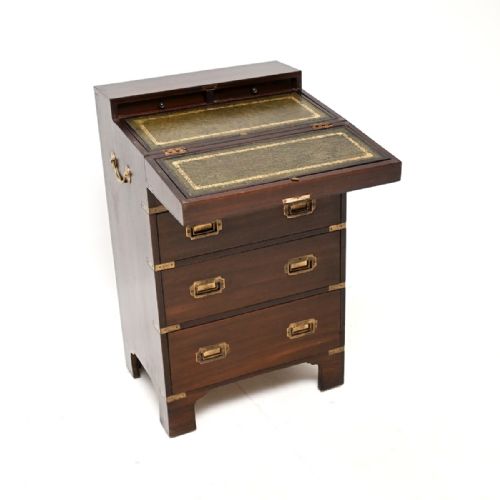
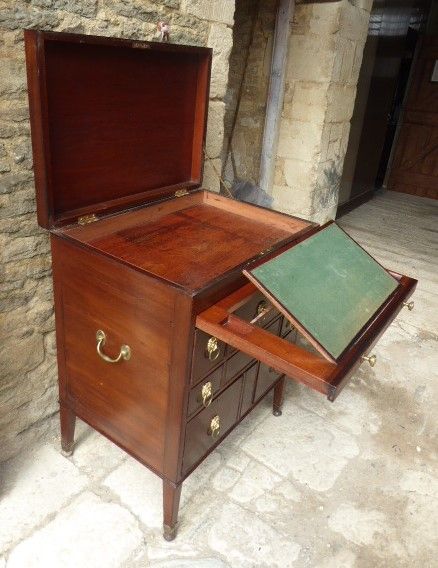
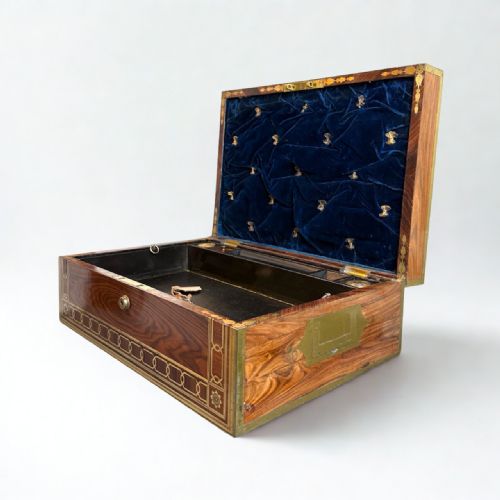
The most common form on this page is the secretaire chest, where the top drawer pulls down to reveal a fitted writing surface, small pigeonholes, and secret compartments. Alongside full-sized chests of drawers, smaller portable writing slopes and boxes also appear within the selection.
Origin points range from British workshops to Anglo-Indian and Chinese export studios, demonstrating the widespread manufacturing network that supplied officers and officials abroad. Timelines extend from the late eighteenth century into the early twentieth century.
How They Were Made
Constructed primarily from durable timbers such as mahogany, teak, camphor wood, padouk, and rosewood, these pieces needed to withstand tropical climates and rough transit. Woods like camphor wood offered natural insect-resistant properties suited for colonial service.
Brass corners, flush-fitting drop handles, and strapwork reinforced every edge and joint against heavy handling, screwed securely into the timber. Secure locks and leather-lined writing surfaces completed the interiors, balancing rugged exteriors with refined desk spaces.
Several chests hide secret compartments behind miniature pigeonholes for confidential letters.
What Varies in Quality
The precision of the brass hardware and the tightness of the drawer joints distinguish exceptional examples from standard campaign items. Superior pieces feature well-concealed pigeonhole mechanisms, high-grade secondary timbers, and unblemished veneers.
Proportion and execution of the secretaire drawer layout reveal the hand of skilled cabinet makers, whereas simpler boxes rely purely on utilitarian construction. The integration of brass binding adds structural rigidity while indicating the original tier of commissioning.
William Austin
The Writing Campaign Chest Glossary
- Secretaire chest
- A chest of drawers featuring a dedicated writing drawer that folds down to reveal compartments and a writing surface. It often contains hidden drawers triggered by secret wooden pins.
- Brass bound
- The method of reinforcing corners, edges, and drawer faces with recessed brass strips and brackets to prevent splitting during transit. This hardware sits flush with the wood surface.
- Camphor wood
- An aromatic timber frequently utilised in colonial campaign furniture for its insect-repellent qualities and stability in humid environments. It imparts a distinct scent.
- Writing slope
- A portable box with a hinged, slanted lid that opens to reveal a velvet or leather writing surface and inkwell compartments. Some incorporate folding mechanisms to expand the desk area.
- Two-part chest
- A modular cabinet built in stacked upper and lower halves fastened by side brackets and drop-in bolts. This division allowed manageable loading for pack animals and ships.
Writing Campaign Chest: Frequently Asked Questions
Why are writing campaign chests built in two parts?
Two-part construction allowed officers to pack, load, and transport heavy furniture across rough terrain during military campaigns and colonial postings.
Each section fitted with side carrying handles, making it manageable for two people to lift into a baggage wagon or ship hold.
How do you use a secretaire drawer?
The upper drawer front hinges downward on internal brass quadrants to form a horizontal writing desk.
Inside, small drawers, pigeonholes, and leather inserts provide an organised workspace for letters and documents.
What is the difference between teak and camphor wood?
Teak is a dense, oily timber prized for water resistance and structural strength in tropical military service.
Camphor wood is lighter, aromatic, and naturally discourages moths, making it ideal for lined storage interiors.
Were these chests only used by the military?
While commissioned primarily for British officers on foreign deployment, colonial administrators and diplomats also utilised them.
Their modular design suited anyone needing portable, secure storage during extended travel.