



Woven Turkmen Wall Art
These woven turkmen wall art pieces are tribal textiles and trappings from Central Asian steppes, bringing rich geometric patterns into modern interiors.
Woven Turkmen Wall Art
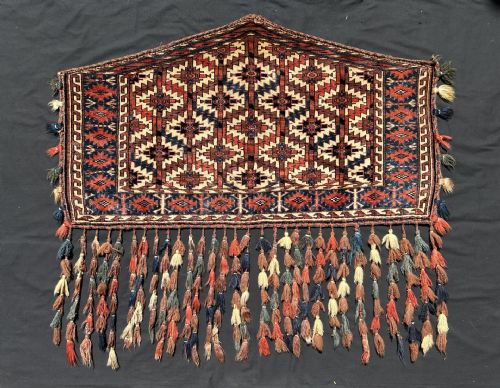
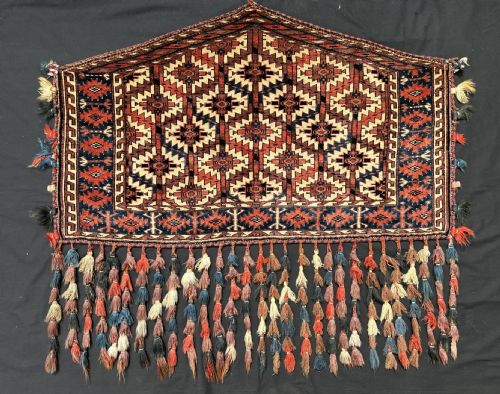
When searching for woven turkmen wall art, collectors encounter nineteenth-century tribal textiles originally made as tent trappings, bags, and asmalyks by nomadic groups across the Trans-Caspian steppes. The selection frequently includes Yomut asmalyks, torbas, spindle bags, and chuvals adapted for display.
These items originate from specific tribal groups including the Yomut, Tekke, and Ersari peoples working in regions such as the Middle Amu Darya and Merv Oasis. Pieces range from small okbash tent gear to large multi-gul storage bags.
Many examples date from the mid-nineteenth century up to the early twentieth century, showing traditional tribal motifs and banded flatweave designs. They serve today as textile art and wall hangings.
How They Were Made
Weavers constructed these textiles primarily using hand-spun wool, cotton, and linen foundations combined with dyed yarn and natural dyes. Artisans occasionally incorporated silk highlights into embroidered faces or specific design elements.
Techniques varied between pile knotting and plain weave structures, often seen in torba faces, flatweave mafrash bands, and intricate asmalyks. Natural dye palettes provided the deep reds, browns, and contrasting hues characteristic of Central Asian tribal work.
The selection includes pieces from the 1850s to the 1910s, utilising wool, natural dyes, silk highlights, and cotton foundations.
What Varies in Quality
Quality depends upon the tightness of the weave, the clarity of tribal motifs such as guls and star-in-octagons, and the preservation of the original structure. Finely woven chuvals and asmalyks demonstrate superior control over the pile and structural symmetry.
The vibrancy and depth of the natural dyes distinguish finer examples, alongside the integrity of embroidered highlights or silk additions. Completeness, such as retaining plain weave backs or original fringes, influences the character of each textile.
The Woven Turkmen Wall Art Glossary
- Asmalyk
- A pentagonal trapping made by Yomut and other Turkmen tribes, traditionally hung on bridal camel flanks during wedding processions.
- Torba
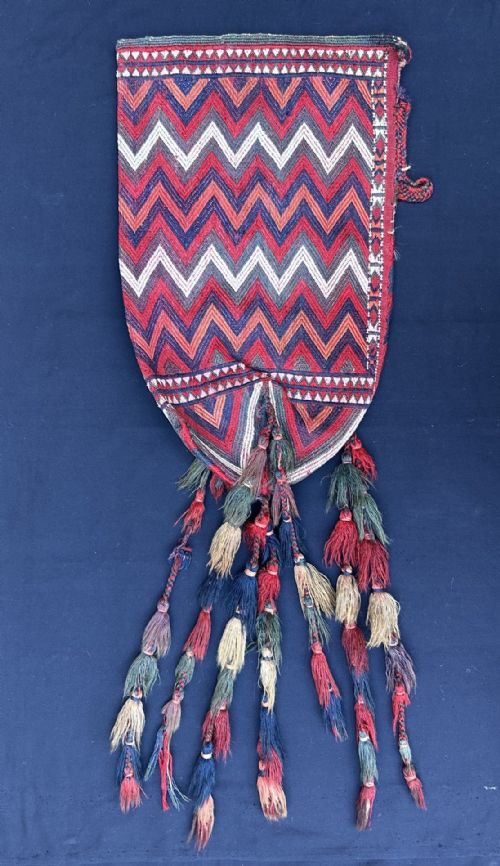
- A small storage bag used inside the yurt for household goods, featuring a decorated face and a plain weave back.
- Chuval
- A large storage bag utilised by nomadic families, characterised by repeating gul motifs across the face.
- Okbash
- A tent peg bag or tent pole cover with a triangular top, woven by Yomut tribes.
- Gul
- A repeating medallion or octagonal motif central to Turkmen tribal rug and textile design.
Woven Turkmen Wall Art: Frequently Asked Questions
How were these bags used originally?
Nomadic groups utilised these textiles inside tents and during migrations for storage and transport. Pieces functioned as grain sacks, bedding bags, and decorative wedding trappings.
Over time, many surviving fragments and complete faces transition into decorative wall hangings because of their strong geometric patterns and rich colours.
How do I hang a textile safely?
Mounting requires weight distribution across a custom sleeve or a padded velcro strip attached to the upper reverse. Avoid direct clamping that stresses single wool fibres.
Keep pieces away from direct sunlight to protect natural dyes from fading over the years.
How can I tell Yomut and Ersari pieces apart?
Yomut weavings often display diamond patterns, asmalyk pentagons, and hooked motifs executed in deep red and brown wools. Ersari items frequently feature large octagons, star designs, and occasional silk highlights.
Tribal structures and specific border arrangements help clarify regional origins.
What is a gul motif?
A gul is a repeating primary medallion pattern embedded within Turkmen textile design. Each tribe maintained distinct variations of these octagonal emblems.
Counting the guls on a chuval helps identify the specific format and scale of the trapping.