


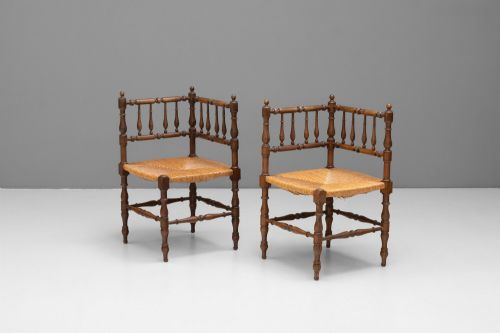
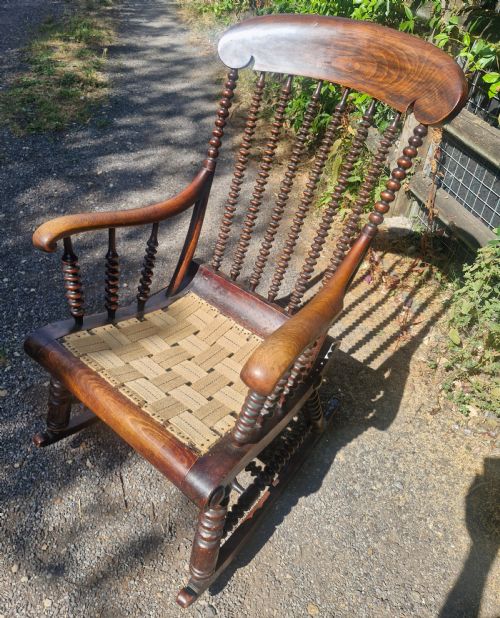
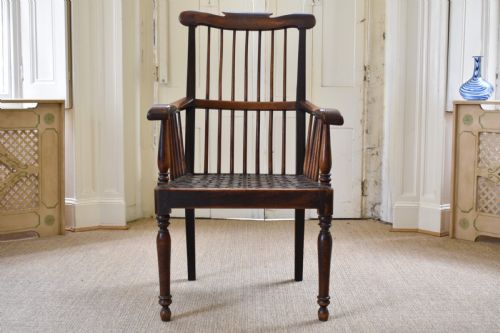
Woven Seat Armchair
A woven seat armchair brings tactile texture and traditional craftsmanship into a room, offering supportive comfort through time-honoured natural materials.
Woven Seat Armchair
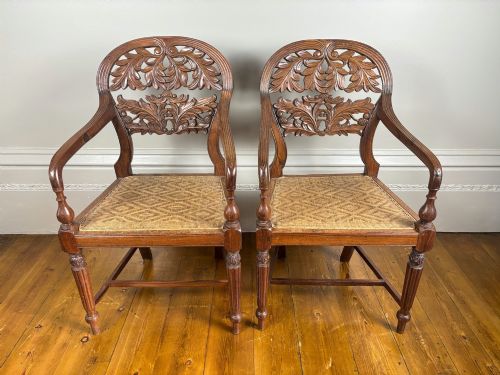
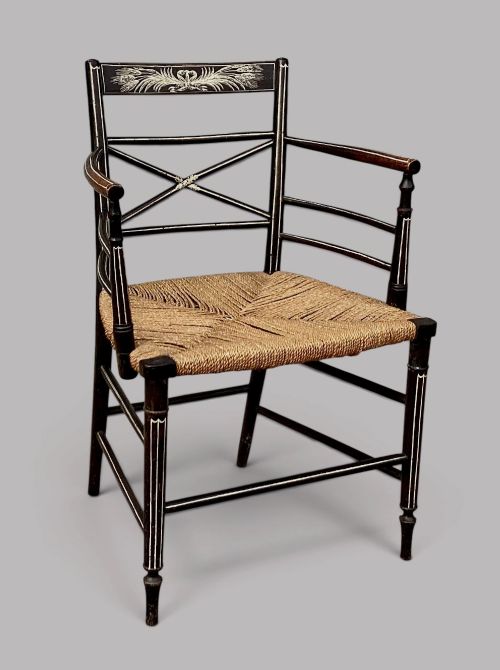
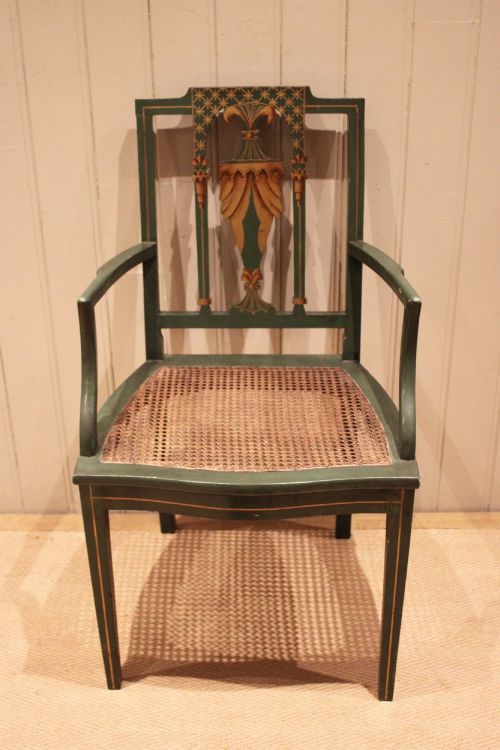
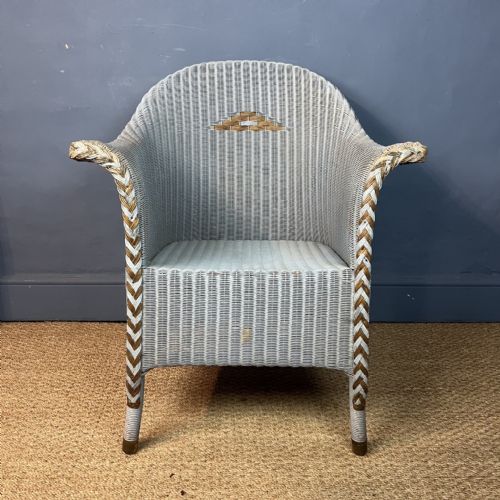
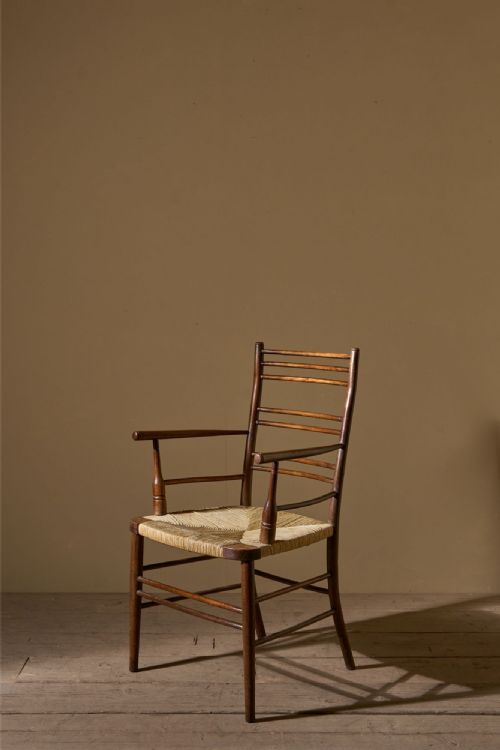
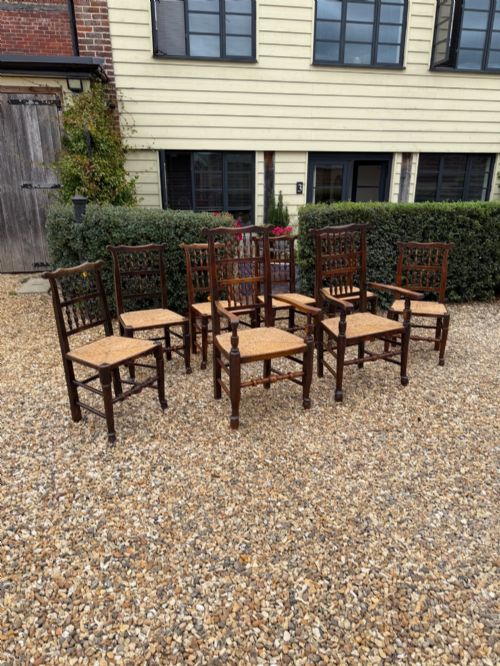
When searching for a woven seat armchair, collectors encounter a diverse lineage spanning the eighteenth century through the Art Deco era and the 1930s. The selection ranges from vernacular country ladderbacks to formal Regency designs and Arts and Crafts creations.
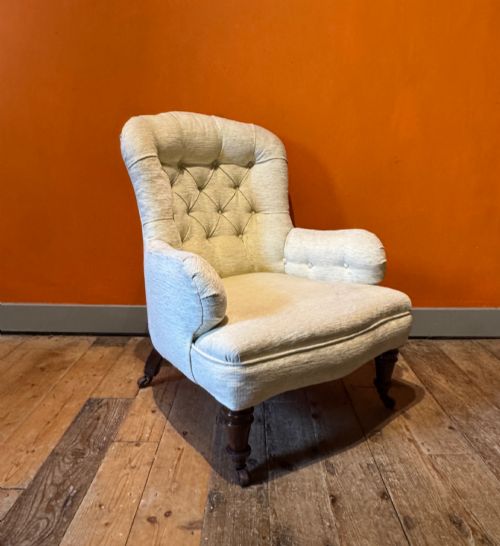
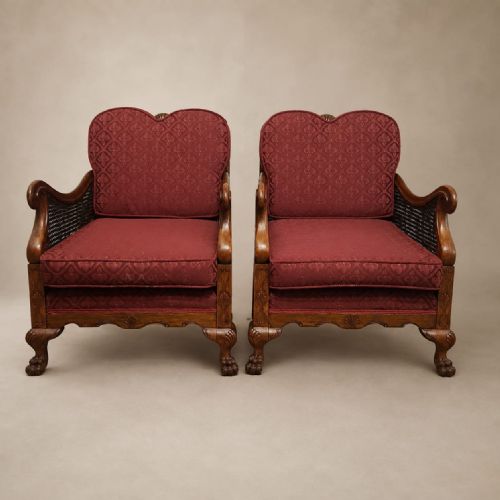
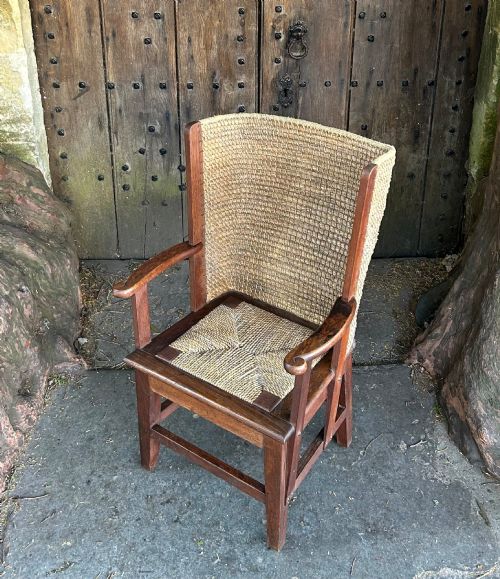
Most examples appearing here belong to the nineteenth and early twentieth centuries, encompassing styles such as Victorian country, Edwardian, and Scottish vernacular pieces like Orkney chairs. Forms include low armchairs, rocking chairs, bergères, and garden room seating.
Makers and regional workshops utilised local timbers and specific weaving traditions, resulting in chairs intended for both formal reception rooms and vernacular domestic interiors.
Materials and construction
Frames are constructed from native and exotic woods including oak, mahogany, walnut, elm, ash, laburnum, fruitwood, teak, and ebony. Joinery techniques reflect the period and origin, uniting turned spindles, carved elements, and steam-bent components.
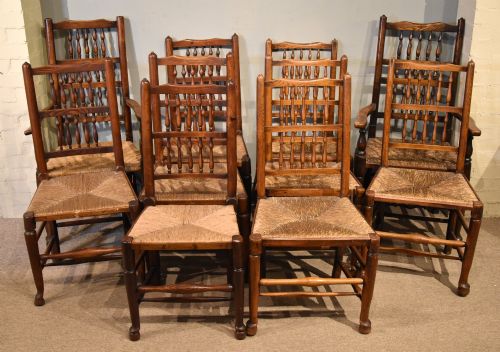
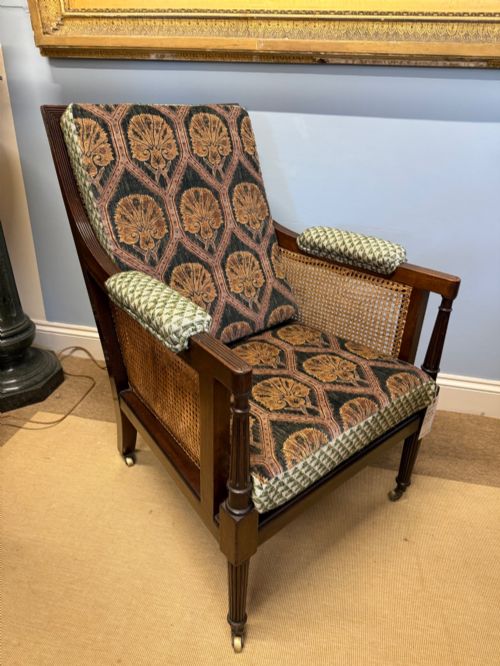
Seats and backs utilise woven natural materials such as rush, cane, split cane, rattan, wicker, and woven leather. These fibrous elements are hand-woven around or through the wooden framework to create resilient, flexible support surfaces.
Woven Seat Armchair Retail Price Guide 2026
Typical asking prices for woven seat armchair among the pieces listed under this phrase on Sellingantiques today, from the lower quarter to the upper quarter. They describe what is for sale here now, not the wider market.
Materials recorded across the selection include cane, rush, rattan, wicker, leather, oak, mahogany, walnut, teak, ebony, and elm.
Distinctions in quality
Quality rests in the harmony between the timber frame and the precision of the woven element. Superior examples display refined turning, subtle carving, and tight, uniform weaving that maintains structural integrity under daily use.
The pedigree of design and the integrity of materials dictate distinction, separating standard vernacular seating from pieces produced by notable nineteenth-century design firms or specialist regional workshops.
Morris and Co·Dryad and Co
The Woven Seat Armchair Glossary
- Bergère
- An upholstered armchair with enclosed sides, where the back and sides typically feature cane or rush webbing. The wooden frame is frequently exposed and polished.
- Rush
- A strong marsh plant used for bottoming chairs. The stems are twisted together before being hand-woven into a durable, textured seat grid.
- Cane
- Strips derived from the outer bark of rattan palms. It is woven in various patterns to create light, flexible panels for seats and chair backs.
- Orkney chair
- A traditional Scottish vernacular armchair featuring a high, rounded back woven from oat straw, supported by a wooden frame.
- Ladderback
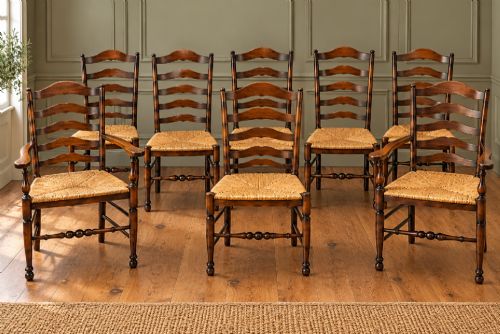
- A chair style characterised by horizontal wooden slats or rails between the upright posts of the back. These often support a woven rush seat.
Woven Seat Armchair: Frequently Asked Questions
How do I care for a rush or cane seat?
Natural woven seats require moderate humidity to prevent the fibres from becoming brittle and snapping over time. Regular dusting with a soft brush keeps the material clean without introducing excess moisture.
Occasionally dampening cane underneath with a damp sponge helps maintain its elasticity. Avoid placing these chairs near direct heat sources or strong radiators.
Are these chairs suitable for daily use?
Many of these armchairs were built for everyday domestic environments using robust timbers like oak and elm. Their construction is generally durable enough for regular seating when handled with reasonable care.
Weight distribution matters greatly with woven panels. Sitting down gently prevents undue stress on older cane or rush tension.
What defines an Arts and Crafts armchair?
Arts and Crafts armchairs emphasise honest construction, visible joinery, and the use of natural materials without excessive ornamentation. Oak frames paired with rush seats are characteristic of this movement.
Designers in this tradition focused on hand-craftsmanship and vernacular utility, echoing earlier rural furniture traditions.