



Woven Pictorial Rug
A woven pictorial rug brings figurative artistry to the floor, telling stories in wool, cotton, and silk.
Woven Pictorial Rug
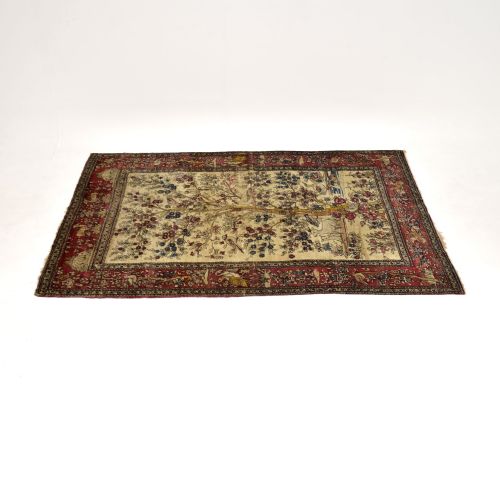
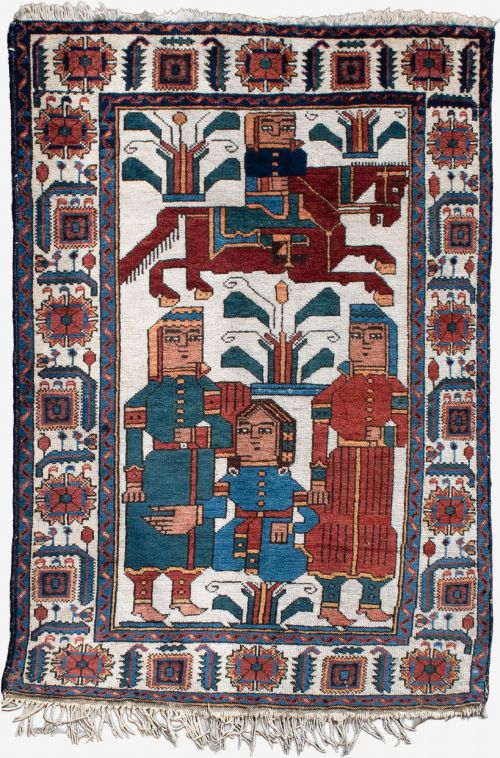
Regional styles dictate the complexity and scale of the imagery. Fine city workshops execute detailed portraits with high knot densities, whilst tribal pieces offer stylized depictions of human and animal forms. This variety allows collectors to choose between courtly sophistication and rustic charm.
Materials and Construction
Weavers knot the pile by hand onto the vertical foundation, building the pictorial composition knot by knot. Flatweave dhurries utilise cotton in a supplementary weft-patterned technique rather than a knotted pile. Each method demands precise planning to translate portraits and figures accurately into textile form.
Woven Pictorial Rug Retail Price Guide 2026
Typical asking prices for woven pictorial rug among the pieces listed under this phrase on Sellingantiques today, from the lower quarter to the upper quarter. They describe what is for sale here now, not the wider market.
This site's listings show pieces dated between eighteen eighty and nineteen thirty, utilising wool, cotton, and silk.
Assessing Quality and Execution
Quality rests upon the fidelity of the portraiture and the fineness of the knotting. Higher density allows weavers to articulate subtle facial expressions and complex historical garments with clarity. Coarser tribal examples rely on bold stylisation rather than photographic precision.
The choice of materials also divides the range. Pieces incorporating silk highlights or exceptionally fine wool yarns represent greater technical ambition. The integrity of the foundational weave and the symmetry of the pictorial composition complete the assessment.
The Woven Pictorial Rug Glossary
- Warp
- The vertical foundation threads stretched tightly on the loom before weaving begins. The pile knots are tied around these stationary strings.
- Weft
- The horizontal threads passed across the warp after every row of knots to lock the structure in place. They contribute to the handle and firmness of the textile.
- Pile
- The upright ends of yarn that form the usable surface of the rug. This soft layer carries the pictorial design and absorbs wear.
- Dhurrie
- A flat-woven rug or carpet produced without a pile. Indian cotton examples provide a lighter, reversible floor covering.
- Knot density
- The number of knots per square unit, which determines the resolution of the pictorial design. Higher counts permit intricate facial portraits.
Woven Pictorial Rug: Frequently Asked Questions
What is a pictorial rug?
A pictorial rug is a textile featuring figurative designs, portraits, or historical narratives rather than traditional geometric or floral medallions.
Weavers use coloured yarns to render specific individuals, animals, or scenes directly into the pile of the floor covering.
How were these rugs used?
Many fine pictorial rugs served as display pieces in formal rooms, hung on walls to protect them from foot traffic and to showcase their artistry.
Others functioned as floor rugs or mats in domestic settings, combining decorative narrative with everyday utility.
How do I care for wool rugs?
Protect wool and silk pile textiles from direct sunlight to prevent the fading of natural dyes over time. Vacuum gently without a beater bar and consult a specialist for professional cleaning.
Rotate the rug periodically to ensure even wear across the pictorial surface in high-traffic areas.
How do I date a piece?
Dating relies on stylistic clues, historical subjects, and structural characteristics recorded in the physical weave. Portraits of specific monarchs or political figures provide a clear terminus post quem for the production date.
Material analysis and regional attribution further narrow the period of manufacture to specific decades.