


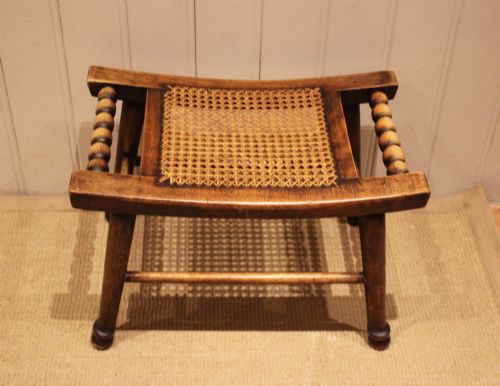


Woven Cane Stool
A woven cane stool brings texture and lightness to a room, offering practical seating or a surface built with traditional plant-based webbing.
Woven Cane Stool
A woven cane stool is a compact seating or resting piece defined by its woven plant-fibre top. These items appear across the nineteenth century, Edwardian era, and the early twentieth century, showing both small footstools and longer forms like daybeds and hall benches.
The versions most commonly met on this page span Victorian and Edwardian periods, utilising varied framing timbers. Makers adapted the woven seat across several styles, ranging from rustic farmhouse and Jacobean revival to French Regence and Victorian bentwood.
The form stretches beyond simple domestic footrests into multi-use items, functioning occasionally as low coffee tables or dressing table seats. Buyers find both square mahogany frames and turned beech structures within the current selection.
How they were made
Frames rely on traditional cabinet timbers including mahogany, oak, satinwood, and beech, alongside ebonised wood and bamboo. Carpenters shaped these woods through turning and carving to build sturdy supports for the seating platform.
The central feature is the plant-derived cane or bergere webbing, threaded through frame perforations to form a resilient, flexible surface. Brass fittings occasionally appear on these frames as decorative or structural elements.
Woven Cane Stool Retail Price Guide 2026
Typical asking prices for woven cane stool among the pieces listed under this phrase on Sellingantiques today, from the lower quarter to the upper quarter. They describe what is for sale here now, not the wider market.
One notable piece is a gout stool, designed to comfortably elevate a sore foot while keeping the rest of the body at ease.
What varies in quality
Quality depends upon the choice of timber and the precision of the frame joinery, with dense hardwoods like mahogany and satinwood holding more structural integrity than softer woods. Finer pieces demonstrate careful carving and balanced proportions rather than plain assembly.
The tightness and regularity of the cane weave dictate the standard of the seating surface, distinguishing standard production from specialised work such as original bergere panels by makers like Thonet.
Thonet
The Woven Cane Stool Glossary
- Cane
- The split outer bark of the rattan palm, woven into flexible patterns for seats and panels. It provides a light yet strong surface.
- Bergere
- A tight, fine cane weave traditionally used in upholstery frames. It appears on finer seating and specialised footstools.
- Ebonised
- Wood treated with a dark stain or finish to imitate ebony. This treatment was popular in nineteenth-century furniture design.
- Satinwood
- A dense, pale hardwood with a natural sheen, utilised in fine cabinet-making. It offers a smooth surface for dressing table furniture.
- Bentwood
- Wood steamed and bent into curved structural shapes without traditional joints. This technique defines specific nineteenth-century seating forms.
Woven Cane Stool: Frequently Asked Questions
What is a woven cane stool used for?
These pieces function primarily as footstools, dressing table seats, or low resting benches in living spaces. Longer variations serve as daybeds or narrow hall benches.
The woven top provides a breathable, flexible surface suited for resting feet or short periods of sitting.
How do I identify a 19th-century cane stool?
Nineteenth-century examples show traditional timber framing methods, such as hand-turned beech, solid mahogany, or ebonised wood finishes. Stylistic cues often link them to Victorian aesthetic movements or late-period revivals.
Construction details like frame joints and the gauge of the cane webbing help separate these older pieces from later reproductions.
Are cane seats strong enough to sit on?
Traditional cane webbing is surprisingly resilient and built to support the weight of a seated person. The tension of the woven plant fibres distributes pressure evenly across the frame.
Heavier use is better suited to sturdy hardwood frames like oak or mahogany rather than delicate bamboo structures.
Can a cane top be repaired?
Skilled craftspeople can re-weave damaged cane panels by hand using traditional threading techniques through the frame holes. This process preserves the original timber structure of the stool.
Keeping cane conditioned with light moisture prevents the natural fibres from becoming brittle over time.