

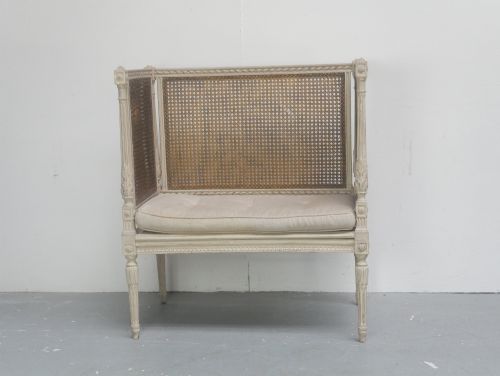
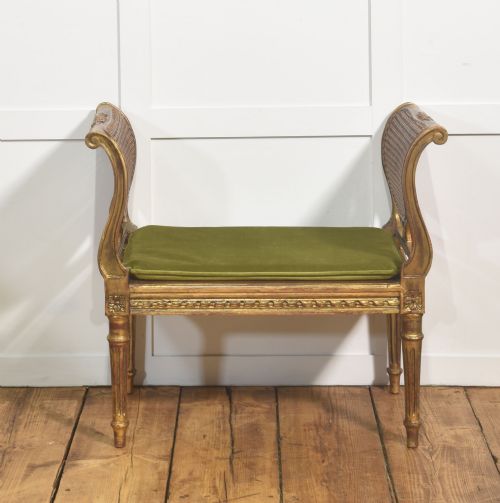

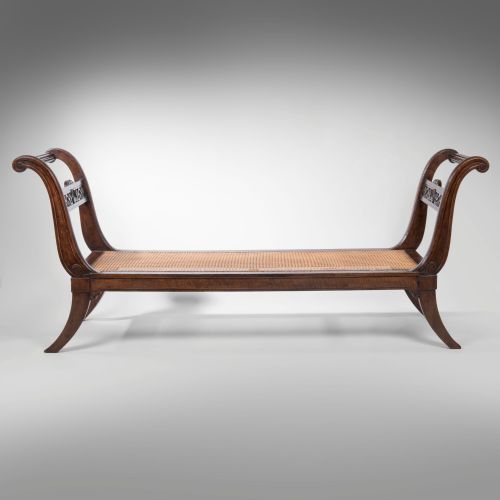


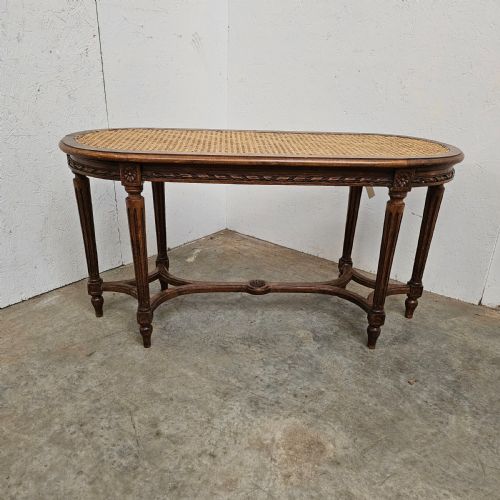


Cane Window Seat
A cane window seat brings tactile woven texture and architectural form to a light-filled bay or foot of a bed.
Cane Window Seat
A cane window seat unites long, low seating proportions with woven plant fibre panels set into wooden frames. These pieces span the nineteenth century through the early twentieth century, drawing on Regency, Victorian, Edwardian, and French revival designs.
Most examples you encounter take the form of benches, stools, or long settees designed to fit beneath sills or fill hallway spaces. Frameworks range from simple painted satinwood and ebonised wood to carved giltwood and mahogany.
Origins stretch from English country houses to French chateaux and Italian workshops, producing everything from modest bamboo hall benches to grand giltwood daybeds. The unifying element across these diverse origins is the woven cane seating or panel insert.
Materials and construction methods
Timbers like mahogany, beech, walnut, and satinwood form the structural skeletons, often shaped through turning, carving, or painting. Giltwood and ebonised finishes appear on pieces styled after French Regence and Louis XVI aesthetics.
Woven cane provides the resilient seating surface, threaded directly through holes drilled in the wooden frame or secured within channels. Brass mounts, painted decorations, and bamboo elements supplement the primary timber structures on specific nineteenth and twentieth century pieces.
Cane Window Seat Retail Price Guide 2026
Typical asking prices for cane window seat among the pieces listed under this phrase on Sellingantiques today, from the lower quarter to the upper quarter. They describe what is for sale here now, not the wider market.
Listings feature 19th Century, Edwardian, and Regency periods alongside materials including giltwood, mahogany, beech, brass, and ebonised wood.
Assessing craftsmanship and execution
Quality rests in the precision of the timber framing and the tightness of the hand-woven cane work. Dense hardwoods like mahogany and walnut provide rigid structural integrity, while finely carved giltwood or painted satinwood demands greater artisan skill.
The uniformity and tension of the cane panels dictate the longevity of the seating surface. Superior examples demonstrate meticulous joinery in the frames and precise hand-weaving that distributes weight evenly across the woven strands.
The Cane Window Seat Glossary
- Cane
- A material made from the peeled outer bark of rattan palms, woven into open or closed mesh patterns for seating. It offers a flexible yet strong surface.
- Giltwood
- Timber coated with a thin layer of gold leaf or gilt finish, commonly found on French revival pieces. This treatment creates a reflective, decorative surface.
- Banquette
- A long upholstered or caned bench without a back, often used in hallways or beneath windows. These pieces provide streamlined seating in narrow spaces.
- Satinwood
- A durable, yellowish timber prized for its smooth grain and suitability for painted decoration. It appears frequently in Edwardian and late nineteenth century pieces.
- Bergere
- An enclosed upholstered or caned armchair or small settee with wooden frames. The style emphasises curved lines and integrated woven panels.
Cane Window Seat: Frequently Asked Questions
Where should I place a window seat?
These pieces suit natural light sources such as large bay windows, long corridors, or the foot of a bedroom bed. Their low profiles ensure they do not obstruct views or light.
They also function effectively as alternative seating in dressing rooms or drawing rooms alongside matching tables.
How do I care for cane webbing?
Maintain cane by dusting it regularly with a soft brush and keeping it away from direct heat sources that dry out the material. Occasional damp wiping helps preserve moisture in the plant fibres.
Avoid placing excessive localized weight on the centre of the panel to prevent premature sagging of the weave.
What is the difference between a window seat and a daybed?
Window seats are generally shorter benches designed specifically for sitting beneath window sills or in narrow circulation spaces. They often feature simple frames or end scrolls.
Daybeds and long stools provide extended proportions intended for reclining or resting feet, occasionally incorporating higher ends or backrests.
How do I identify French style influences?
French influence appears through carved giltwood frames, cabriole legs, and nomenclature like Louis XVI or Regence styles. These pieces often feature decorative painted surfaces and intricate woodwork.
English interpretations tend to use mahogany, satinwood, or bamboo with more restrained architectural lines.