




Worcester Porcelain Pot Pourri
Worcester porcelain pot pourri vessels bring scented florals and intricate hand-painted decoration into the home through lidded ceramic jars designed to release fragrance.
Worcester Porcelain Pot Pourri
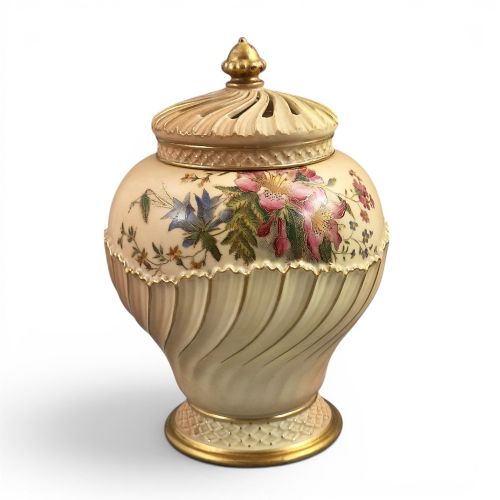
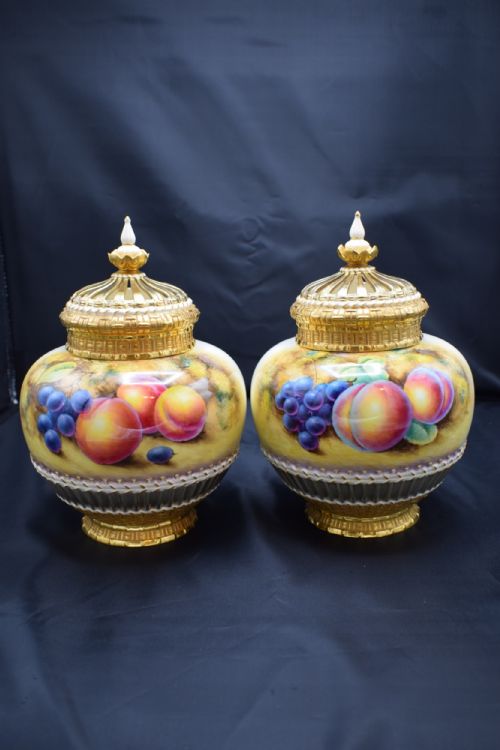
Worcester porcelain pot pourri vessels take the form of lidded jars, ovoid urns, and pedestal vases created to hold fragrant dried plant material. These decorative pieces appear in styles ranging from early nineteenth-century Japan patterns to Edwardian blush ivory ground designs and mid-century painted fruit compositions.
The selection on this page centres heavily on twentieth-century production, particularly pieces dated from the Edwardian era through the nineteen-sixties. Buyers frequently encounter blush ivory jars featuring crown covers alongside later hand-painted fruit and animal subjects by signed artists.
Forms vary from single lidded jars to larger three-piece garnitures designed to sit together on a mantelpiece or side table. Early nineteenth-century examples in historical styles also occasionally surface from the archive alongside standard pedestal shapes.
Materials and methods
These pieces utilise fine ceramic bodies including bone china and traditional porcelain, shaped into ovoid jars, vases, and urns. Pot pourri vessels require pierced or crown covers to allow scented air to circulate from the interior chamber.
Decoration relies on hand-painted enamels combined with gold leaf, gilding, and gilt highlights applied across the ceramic surface. Many pieces feature specialised grounds such as blush ivory, upon which artists painted botanical subjects, birds, and fruit.
Pot pourri jars retain the exact architecture needed to perfume a Victorian drawing room, even if todays owners rely on them purely for painted fruit.
Factors of quality
Quality rests significantly upon the skill of the painting and the presence of a recognised artist signature. Hand-painted fruit, birds, and botanical studies executed by named painters elevate a vessel above standard decorative production.
The complexity of the ceramic form also dictates quality, particularly where reticulated covers, applied handles, and pedestal bases are involved. Well-preserved gilding and crisp enamel work maintain the visual impact of the original design.
Royal Worcester·Flight and Barr
The Worcester Porcelain Pot Pourri Glossary
- Blush ivory
- A soft, matte cream-coloured ceramic ground developed by Royal Worcester in the late nineteenth century. This finish typically provides a subtle background for delicate floral transfer printing and hand-tinted enamel painting.
- Crown cover
- An open, pierced lid designed to sit atop a pot pourri jar. This architectural shape allows scent to escape while keeping the dried botanicals contained within the vessel.
- Gilding
- The application of gold leaf or gold paint to ceramic surfaces for decorative accent. On pot pourri vases, gilding highlights rims, handles, and pedestal bases.
- Ovoid
- An egg-shaped ceramic form commonly used for pot pourri bodies. This rounded silhouette provides a wide surface area for painted fruit or floral scenes.
Worcester Porcelain Pot Pourri: Frequently Asked Questions
What is a Worcester porcelain pot pourri?
A Worcester porcelain pot pourri is a lidded ceramic jar or vase designed to hold and diffuse scented dried plant materials. These vessels feature pierced or crown covers that allow fragrance to permeate a room.
Pot pourri containers span various periods from the early nineteenth century to the mid-twentieth century. They combine functional fragrance diffusion with elaborate hand-painted decoration.
How do I identify Edwardian blush ivory pieces?
Edwardian blush ivory pieces display a characteristic matte cream-coloured ceramic body often decorated with floral motifs and gilt highlights. These items frequently date from the late Victorian period through the Edwardian decade and into the nineteen-tens.
Makers' marks on the underside help confirm the production period. Many of these vessels take the form of ovoid jars with pierced crown covers.
Who painted the fruit and bird scenes?
Named artists working for the factory painted detailed subjects such as fruit, pheasants, swans, and botanical studies by hand. Signatures on the body of the vase often indicate the specific painter.
Signatures from artists active in different decades appear across the available inventory. These hand-painted examples represent a distinct category separate from standard transfer-printed items.
How should I display a pot pourri vase?
Pot pourri vases suit prominent display on mantelpieces, sideboards, and occasional tables where their painted surfaces remain visible. Three-piece sets provide a symmetrical arrangement for larger surfaces.
Keeping the pierced cover intact preserves the intended silhouette of the vessel. Modern placement generally focuses on the visual decorative qualities rather than active fragrance use.