


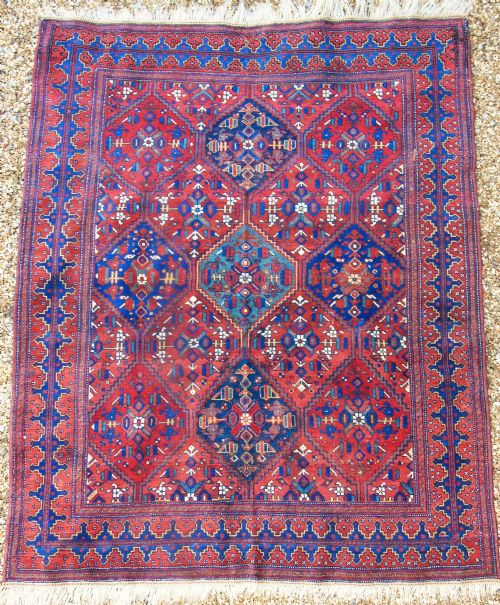


Wool Tribal Floor Covering
These wool tribal floor covering pieces bring grounded pattern and rich texture into a room, offering authentic nomadic craftsmanship for everyday living.
Wool Tribal Floor Covering
A wool tribal floor covering brings together traditional nomadic patterns and hardy materials designed for practical use. When browsing this selection, buyers encounter various formats ranging from generous carpets to smaller scatter rugs and repurposed bag faces.
The objects originate from distinct regional weaving traditions, with Persian tribal styles and Caucasian examples appearing frequently. These pieces carry the geometric motifs and bold colour palettes characteristic of village and nomadic workshops from the late nineteenth and early twentieth centuries.
The assortment includes floor coverings alongside functional soft furnishings such as cushions made from antique bag faces. This variety allows collectors to incorporate authentic textile fragments into modern interiors through different scales and object types.
Materials and construction
These textiles rely on wool and hand-spun wool for their resilient piles and structural foundations. The natural fibre provides the durability necessary for floor use while accepting traditional dye colours with depth and variation.
Weavers constructed these items by hand, utilising traditional knotting and weaving techniques passed down through generations. Cotton occasionally appears alongside wool, providing structural stability in the foundations of specific regional carpets.
Wool Tribal Floor Covering Retail Price Guide 2026
Typical asking prices for wool tribal floor covering among the pieces listed under this phrase on Sellingantiques today, from the lower quarter to the upper quarter. They describe what is for sale here now, not the wider market.
Current listings span production dates from the mid-nineteenth century through the 1930s, featuring wool, cotton, and hand-spun wool materials.
Assessing quality
Quality in these textiles rests upon the fineness of the weave and the clarity of the design execution. Tighter knot counts and balanced proportions elevate certain carpets and rugs above standard utilitarian examples.
The choice and richness of the wool yarns influence the tactile appeal and longevity of the piece. Superior examples display harmonious dye saturation and intentional composition within their traditional geometric layouts.
The Wool Tribal Floor Covering Glossary
- Pile
- The upright yarn loops or cut ends that form the usable surface of a carpet. This layer bears the direct friction of foot traffic and defines the texture.
- Warp
- The stationary longitudinal threads stretched on the loom before weaving begins. These parallel elements form the skeletal base of the textile.
- Weft
- The horizontal threads passed alternately over and under the warp yarns to lock the knots in place. This material secures the structural integrity of the weave.
- Knot
- The individual loops of wool tied around warp threads to build the patterned surface. Different regional traditions employ distinct knotting structures.
- Bag face
- The decorative front panel of a utilitarian nomadic storage sack. These panels are often preserved and mounted as cushions or small display pieces.
Wool Tribal Floor Covering: Frequently Asked Questions
What is a wool tribal floor covering?
A wool tribal floor covering is a hand-woven textile created by nomadic or village weavers using local wool materials. These items traditionally served practical functions in tents or homes while displaying distinct regional patterns.
They encompass various formats including large carpets, smaller area rugs, and functional saddlebags. Each piece reflects the aesthetic vocabulary of the specific culture that produced it.
How were these rugs used originally?
Nomadic communities utilised these textiles as floor coverings, sleeping mats, and pack animal equipment during seasonal migrations. Their durable construction provided insulation against cold ground and hard surfaces.
Items such as saddlebags and bag faces served as portable storage for household possessions. Over time, many functional textiles transitioned into decorative elements for domestic interiors.
How do I care for an antique rug?
Gentle vacuuming without a rotating brush roll helps remove embedded dust from the wool pile. Professional cleaning suited to antique textiles ensures the natural fibres remain protected.
Placing a breathable pad underneath prevents slipping and reduces wear from friction against hard floors. Direct sunlight should be managed to prevent fading of natural dyes over extended periods.