




Wool Tassel Tribal Textile
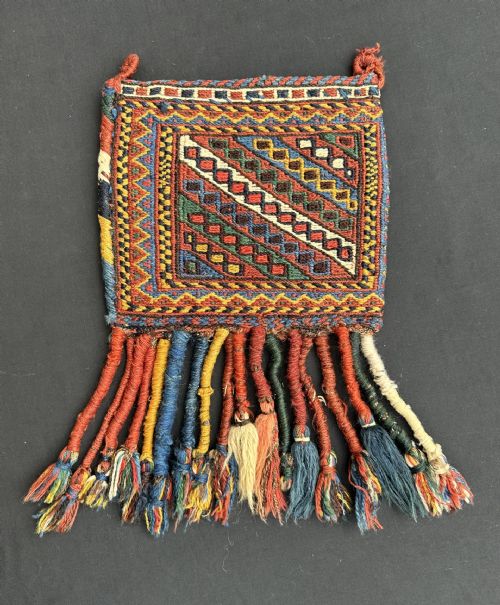
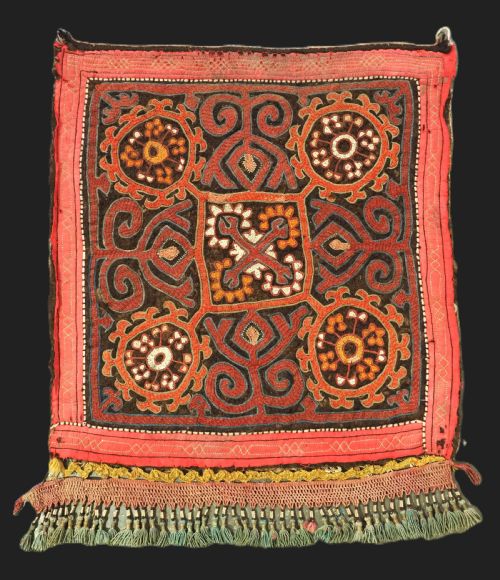
These wool tassel tribal textile pieces carry the nomadic history of Central Asian and Persian makers through tactile wool and hanging fringes.
Wool Tassel Tribal Textile
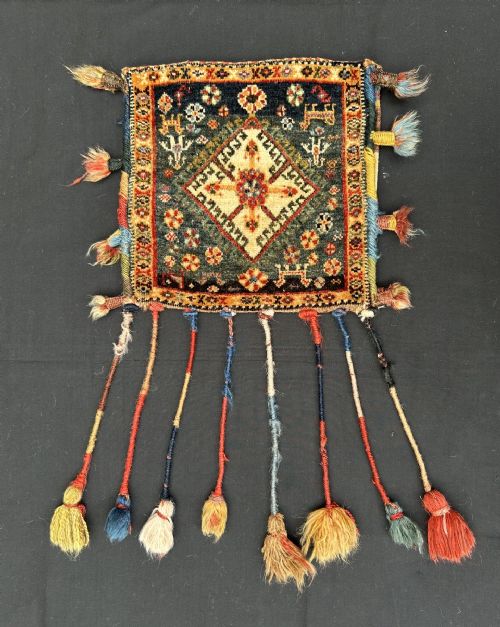
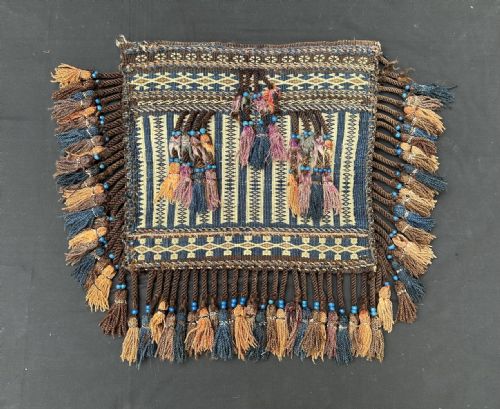
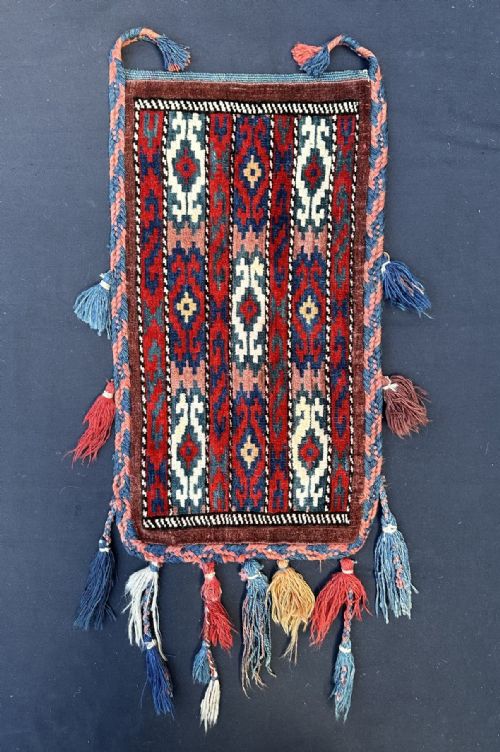
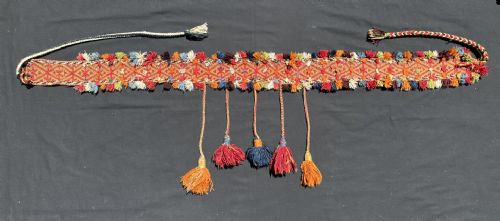
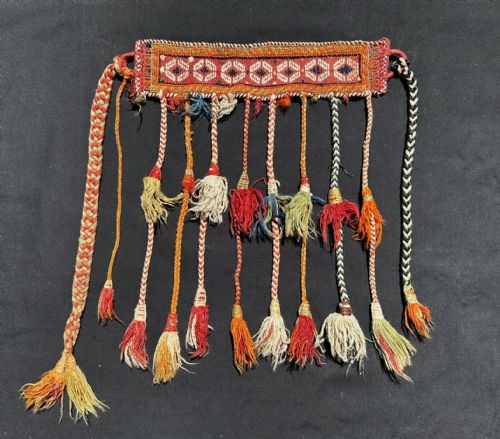
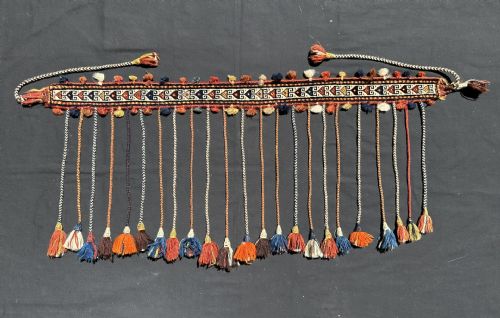
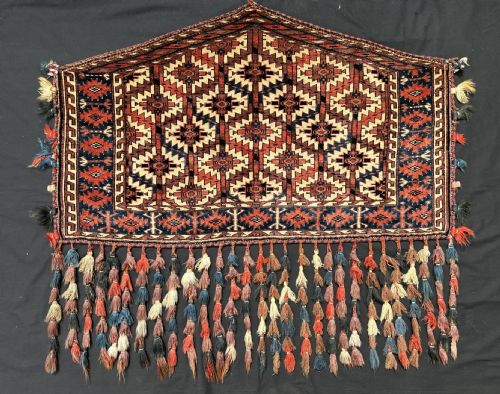
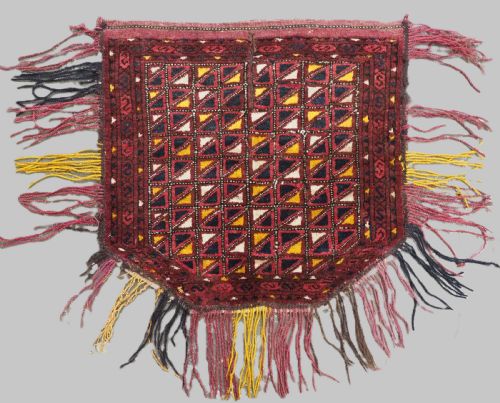
A wool tassel tribal textile encompasses functional storage bags, animal trappings, and wall hangings created by nomadic groups across Persia, Afghanistan, and Central Asia. These items range from horse decorations and camel headdresses to utilitarian salt bags, vanity bags, and spindle bags originating between the late nineteenth and early twentieth centuries.
Materials and construction
Makers constructed these items primarily from handspun wool and cotton grounds, frequently incorporating natural dyes to achieve deep regional colour palettes. Artisans embellished specific examples with silk embroidery, glass beads, leather, and felted panels.
Structure relies on traditional flat weave or pile techniques, finished with applied fringes, braided wool, and horse hair tassels. These hanging elements served both decorative and apotropaic purposes within the nomadic tent or transport harness.
Several horse and camel neck garments wait here, having spent a century shedding dust instead of riding across the steppe.
Assessing quality in nomadic textiles
Quality rests upon the fineness of the weave, the saturation and source of the natural dyes, and the integrity of the structural wool foundation. Examples that retain their original tassels, braided hanging cords, and complete backing fabrics demonstrate superior preservation.
The precision of tribal pattern execution and the complexity of subsidiary materials like silk or glass bead embellishments distinguish standard utilitarian items from finer tribal weaving achievements.
The Wool Tassel Tribal Textile Glossary
- Asmalyk
- A large pentagonal trapping produced by Turkmen groups, historically mounted on the flanks of a bride's wedding camel.
- Torba
- A small storage bag utilised inside the nomadic tent for household goods, featuring an opening across the back or front.
- Ok Bash
- A specialised felt or woven cover designed to protect the protruding ends of yurt roof poles during transit.
- Namakdan
- A narrow-necked salt bag woven by nomadic tribes to store rock salt for livestock or domestic consumption.
- Kapunuk
- A decorative tent hanging placed around the wooden frame of a yurt doorway by Turkmen weavers.
Wool Tassel Tribal Textile: Frequently Asked Questions
What were these tribal bags used for?
Nomadic groups utilised these bags and trappings inside portable tents for storing household possessions, salt, spindles, and personal items.
Larger woven examples served as decorative elements for pack animals, wedding processions, and tent interiors during tribal migrations.
How do I hang a textile wall hanging?
Mount these pieces using a custom fabric sleeve stitched to the reverse, through which a flat wooden or metal rod can be passed.
Avoid direct hanging by nails or pins through the wool fabric to prevent stress and tearing along the antique structure.
How are Yomut and Qashqai pieces told apart?
Yomut Turkmen items originate from the Trans-Caspian steppes and typically display deep madder-red wool grounds with geometric gul motifs and structured pile or flat weave.
Qashqai pieces come from south-west Persia and frequently incorporate rich indigo and madder tones with animal figures, boteh motifs, and finer knotted pile.
How do I clean an antique wool textile?
Remove surface dust gently with low suction through a mesh screen rather than beating or shaking the delicate antique fibres.
Professional textile conservators should handle any wet cleaning to prevent dye bleed across the natural wool and silk elements.