



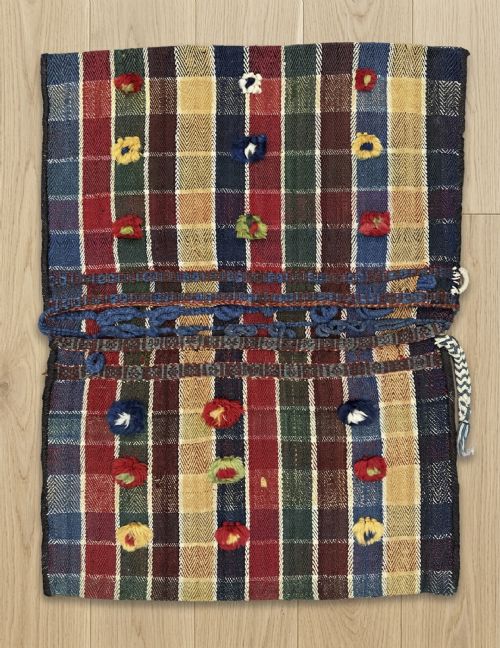

Wool Rug Pillow
A wool rug pillow brings authentic tribal craft and rich natural texture into a modern interior.
Wool Rug Pillow
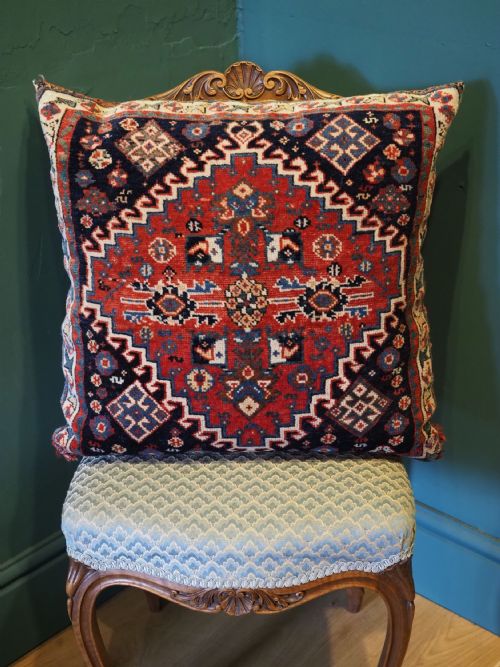
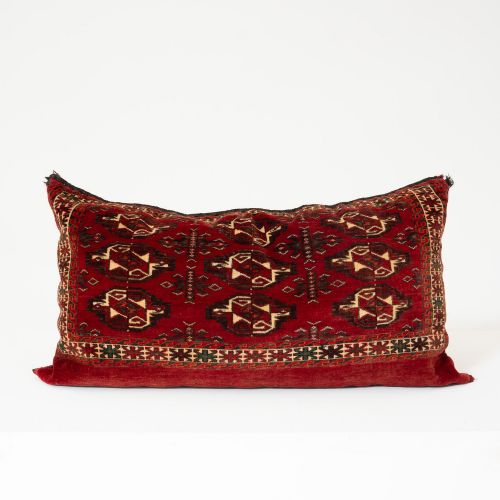
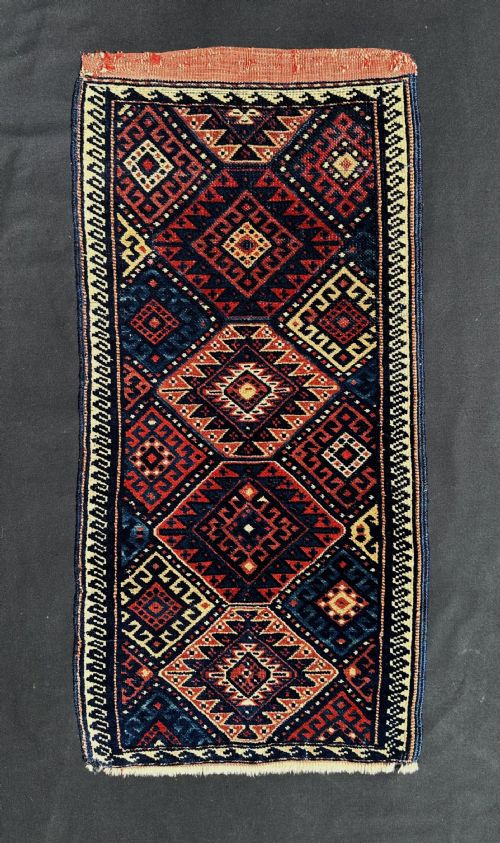
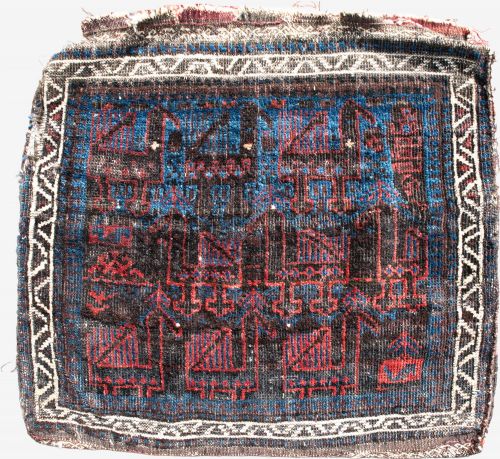
A wool rug pillow originates from repurposed nomadic weaving items such as saddlebags, storage bags, and grain sacks. These utilitarian tribal pieces date from the mid-nineteenth century through the early twentieth century, originating across Persia, Anatolia, and Central Asia.
Buyers frequently encounter bag faces and kilim remnants converted into cushions. These items display distinct regional patterns created by groups including the Qashqai, Baluch, Yomut, and Shahsevan tribes.
The objects combine dense pile weaving or flatweave structures with sturdy wool and cotton backings. Each textile carries the geometric motifs and tribal iconography characteristic of its specific weaving group.
Materials and construction
Weavers utilised hand-spun wool for the main pile and face designs, often combining it with cotton foundations for structural stability. This wool absorbs natural dyes in deep, saturated tones that age with considerable character.
Nomadic makers employed traditional techniques including pile knotting and flatweaving methods such as kilim and sumakh. The resulting textiles were originally built for heavy daily use on animals or inside tents.
Wool Rug Pillow Retail Price Guide 2026
Typical asking prices for wool rug pillow among the pieces listed under this phrase on Sellingantiques today, from the lower quarter to the upper quarter. They describe what is for sale here now, not the wider market.
Nomads originally wove these sturdy bags to haul household gear across mountains before they found a second life on modern sofas.
Assessing quality and retention
Quality rests upon the tightness of the weave, the clarity of the tribal motifs, and the depth of the natural dyes. Finely knotted pieces from specific regional groups display superior structural integrity and intricate drawing.
Preservation of the original bag face layout and the presence of early natural colour palettes distinguish better examples. The condition of the wool pile and the integrity of the flatweave sections dictate the overall visual impact.
The Wool Rug Pillow Glossary
- Torba
- A wide tribal storage bag traditionally used for household goods and bedding within a tent. These pieces often display banded designs or gul motifs.
- Gul
- A medallion or repeated octagonal motif found frequently in Turkmen and Central Asian weaving. Each design identifies a specific tribal affiliation.
- Chuval
- A large tent storage bag made by Turkmen nomadic groups. Fragments of these functional sacks frequently become decorative cushions.
- Flatweave
- A textile constructed without a pile by interlocking warp and weft threads. Kilim and sumakh techniques belong to this category.
Wool Rug Pillow: Frequently Asked Questions
What is a wool rug pillow?
A wool rug pillow is a decorative cushion constructed from antique nomadic textiles, such as saddlebags, storage bags, and kilim fragments.
These functional tribal items are repurposed into home furnishings while retaining their original hand-spun wool and natural dye characteristics.
How old are these pillows?
The textiles used for these cushions generally date from the mid-nineteenth century up to the early twentieth century.
Maker groups across Persia, the Caucasus, and Central Asia produced the original bags before they were converted into cushions.
Which tribes made these textiles?
Various nomadic and village groups produced the source pieces, including Qashqai, Baluch, Yomut, Tekke, Shahsevan, and Kurdish tribes.
Each group utilised distinct regional patterns, colour palettes, and weaving structures that identify their origin.
How do I care for an antique wool pillow?
Maintain the textile by gentle surface vacuuming with a low suction setting, avoiding the rotating brush roll.
Professional specialist cleaning is recommended for heavier maintenance to protect the antique wool and natural dyes.