




Wool Needlepoint Wall Art
Wool needlepoint wall art brings centuries of hand-stitched character into a room through textured wools and silks framed for display.
Wool Needlepoint Wall Art
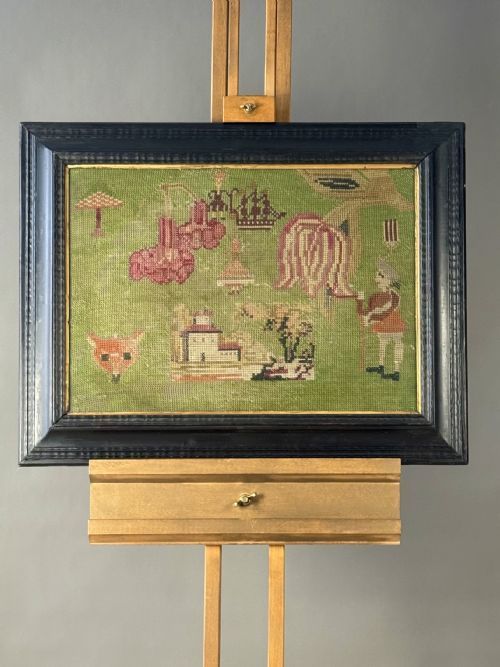
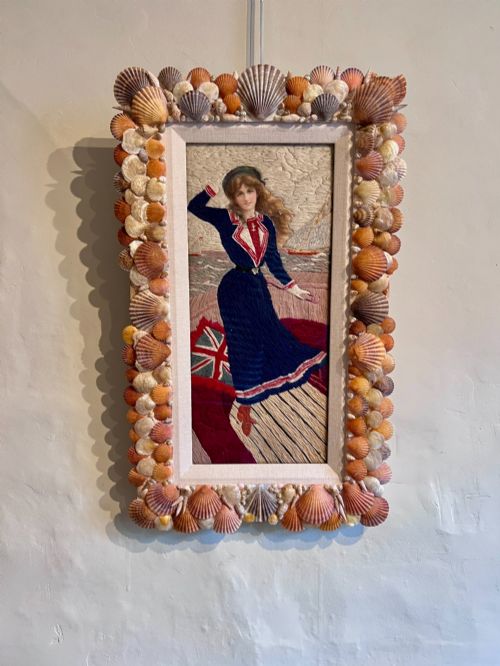
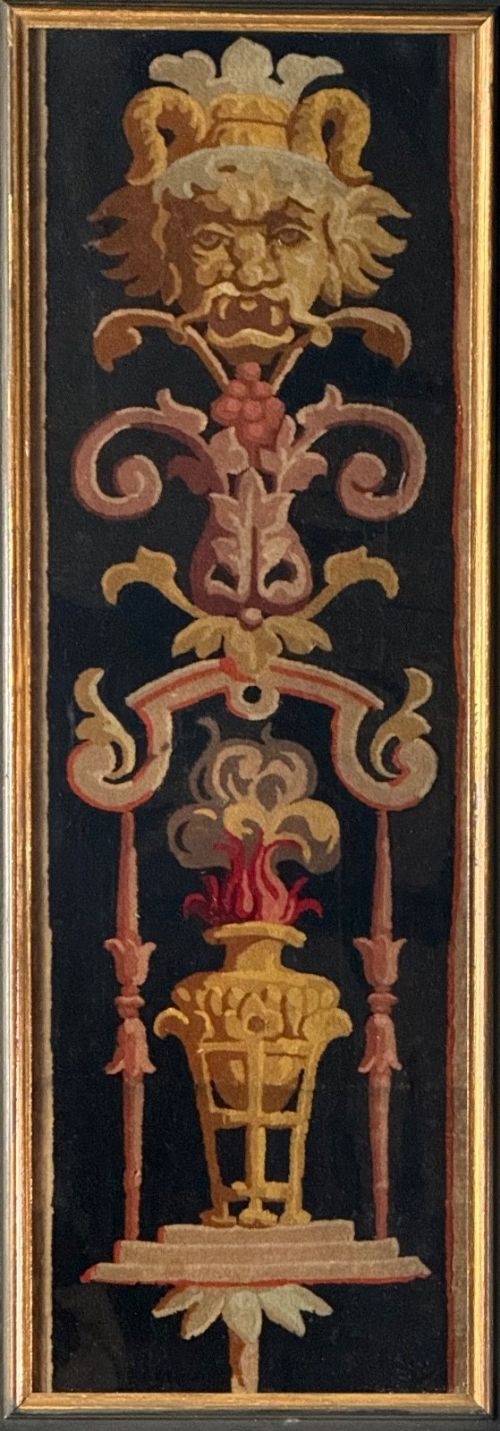
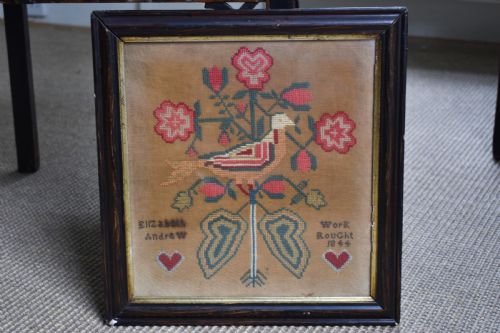
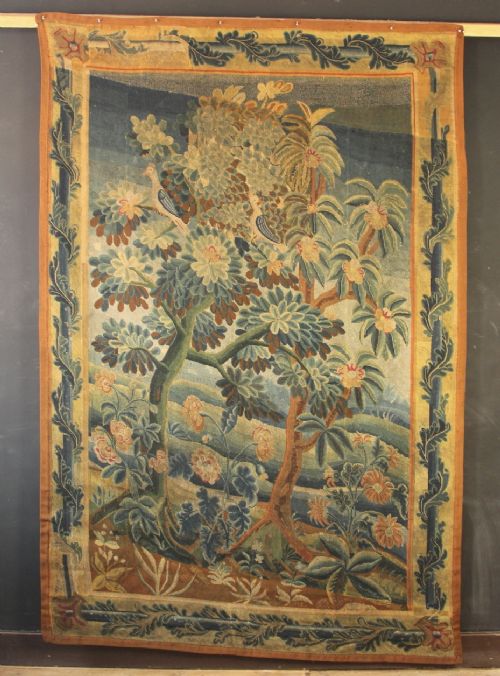
Wool needlepoint wall art encompasses textile pictures, samplers, and tapestries originating from the seventeenth century through to the Edwardian era. Buyers encounter pastoral scenes, classical portraits, and folk art interpretations executed on canvas or linen grounds.
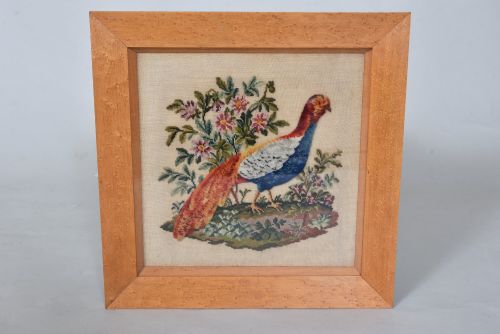
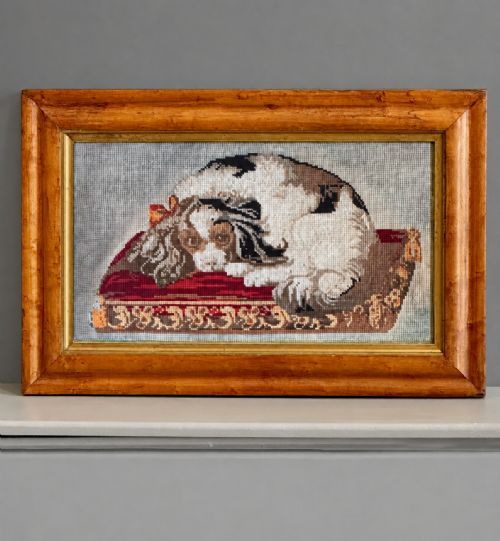
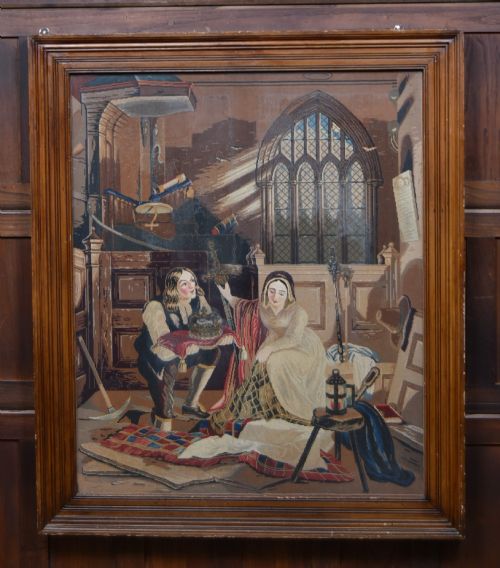
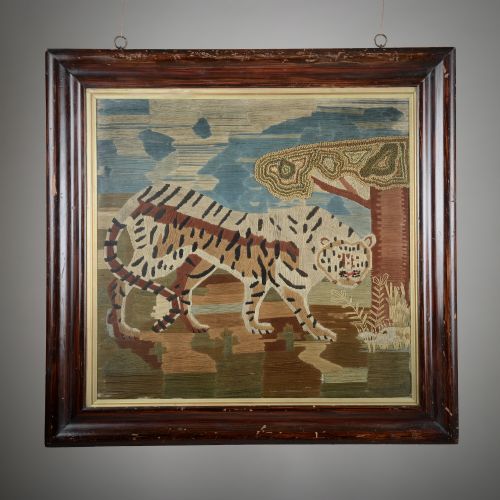
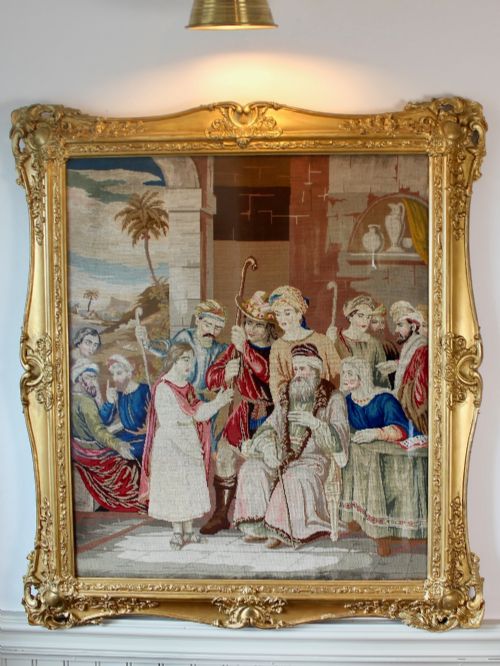
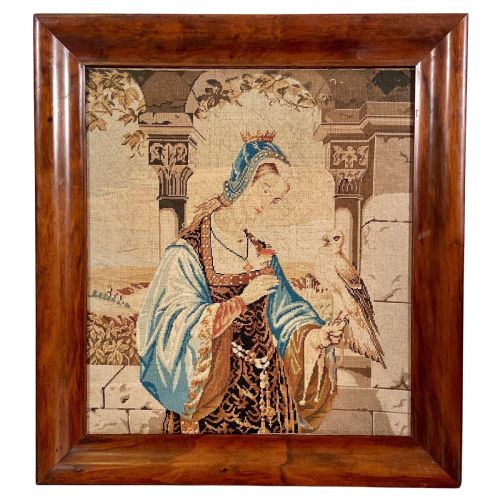
Victorian examples, including Berlin work and plushwork depictions of animals or figures, appear frequently alongside eighteenth-century needlework pictures and continental tapestries. Many pieces retain their original frames, ranging from burr maple to giltwood.
How they were made
Makers stitched wool, silk, and sometimes linen yarns onto open-weave canvas or linen foundations using tent stitch, gros point, or plushwork techniques. The resulting textiles were then stretched and mounted into timber frames, occasionally incorporating verre églomisé glass.
Heavier wall hangings and cushions utilised wool and gold leaf elements on structured tapestries, while detailed Berlin work relied on printed colour grids that guided the needleworker in shading complex subjects like animals and historical scenes.
Look closely for the stray pet hair stitched permanently into the grass of an eighteenth-century pastoral landscape by an industrious domestic maker.
What varies in quality
Quality rests in the precision of the stitching, the complexity of the colour blending, and the preservation of the fibres. Tightly executed needlework with varied wool tones maintains its visual impact better than loose or faded stitching.
The enclosure matters equally, as original period frames such as burr maple or giltwood enhance the integrity of the piece. Superior examples combine skilled pictorial composition with stable foundation materials that show minimal wear.
The Wool Needlepoint Wall Art Glossary
- Berlin work
- A style of needlepoint popular in the nineteenth century that used charted pattern papers. It allowed stitchers to create elaborate, highly coloured pictures using wool on canvas.
- Gros point
- A coarse needlepoint stitch worked on canvas using thick wool yarn. This technique produces durable, heavily textured surfaces suitable for large panels and wall hangings.
- Sampler
- A piece of needlework produced to demonstrate proficiency in various stitches. Early examples often record alphabets, motifs, and genealogical details.
- Verre églomisé
- A decorative technique involving cold painting and gilding on the reverse side of glass. It frequently appears as a protective border framing antique prints and needlework.
- Plushwork
- A variant of needlework where loops of wool are left uncut or sheared to create a raised, velvety pile. It gives animal depictions a tactile, three-dimensional quality.
Wool Needlepoint Wall Art: Frequently Asked Questions
How do I hang antique needlework safely?
Support the weight of the piece from the frame rather than the fabric itself, using sturdy fixings suited to the wall type.
Keep textile art away from direct sunlight and damp environments to protect the natural wool and silk fibres from degradation.
What is Berlin work?
Berlin work is a nineteenth-century needlepoint style that utilised printed grid patterns imported from Germany. This method enabled stitchers to produce vibrant pictorial scenes with complex shading.
The technique popularized wool needlework in domestic settings, resulting in framed pictures depicting animals, biblical stories, and literary characters.
How do I date an embroidered panel?
Dating relies on stylistic clues, framing materials, and the types of canvas or thread used in the construction. Eighteenth-century pieces often feature pastoral silk and wool work, while Victorian examples lean towards brightly coloured Berlin woolwork.
Inscribed dates, specific stitch densities, and original timber frames also help narrow down the period of manufacture.