


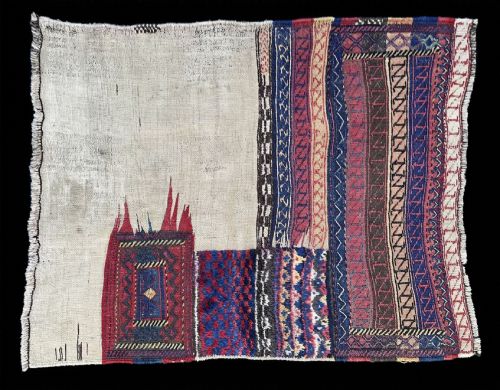
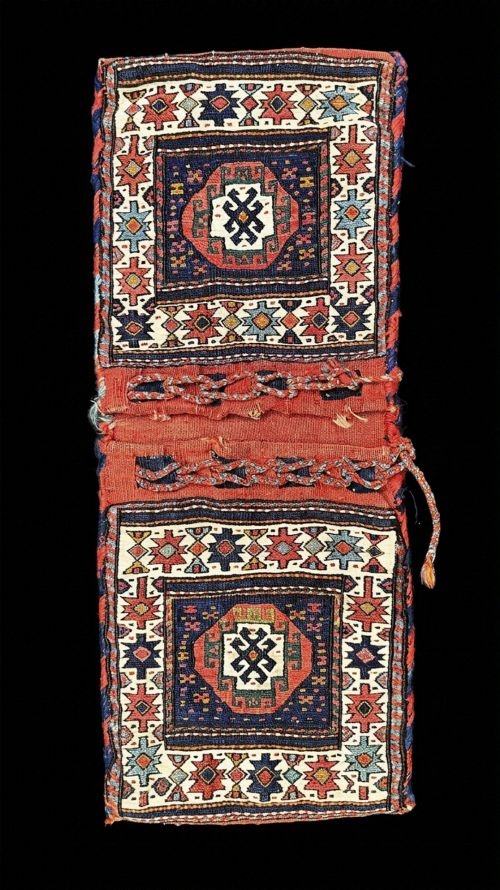
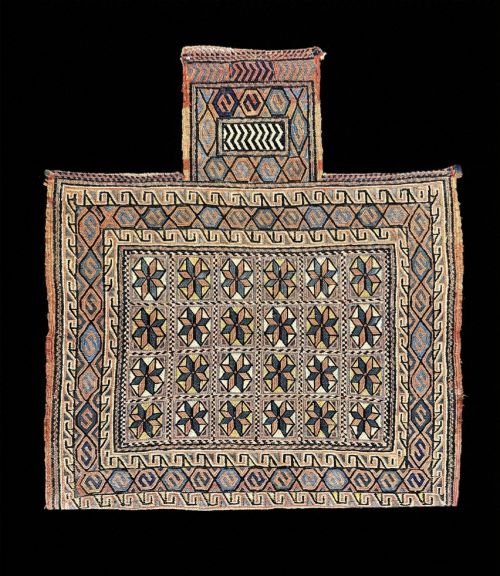
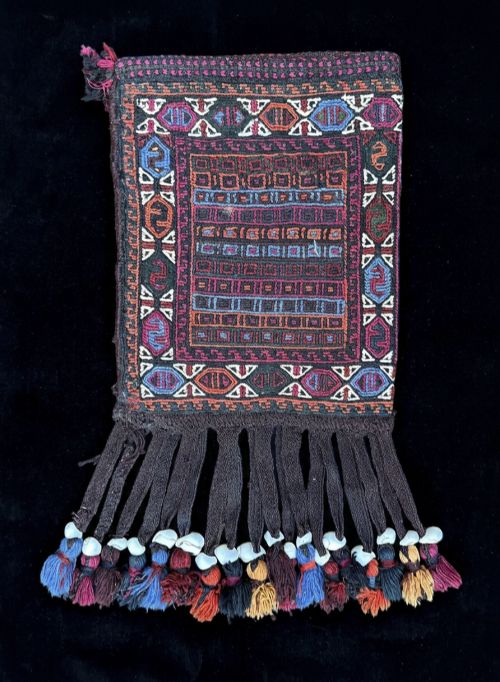
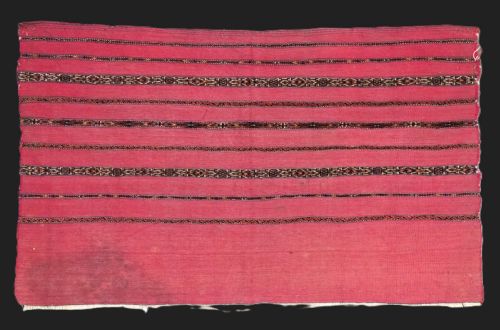

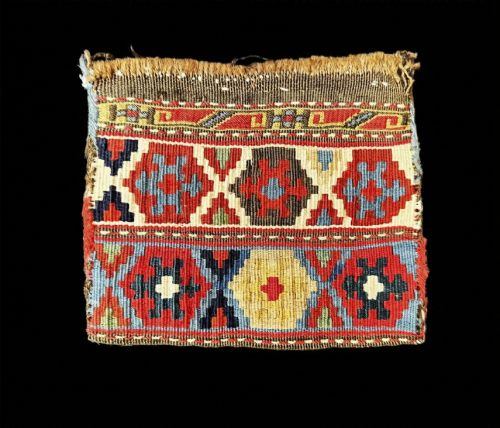
Wool Flatweave Bags
Wool flatweave bags are nomadic storage pieces and utilitarian textiles woven by tribal groups across Persia, Central Asia, and the Caucasus.
Wool Flatweave Bags
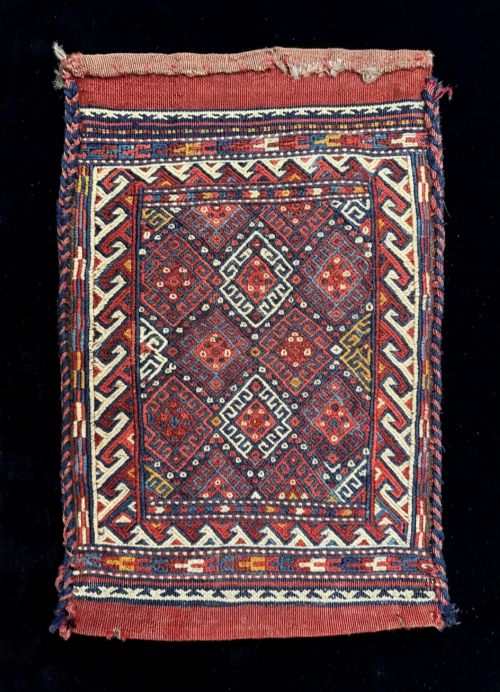
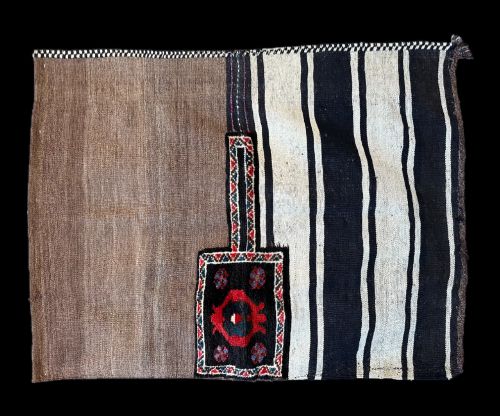
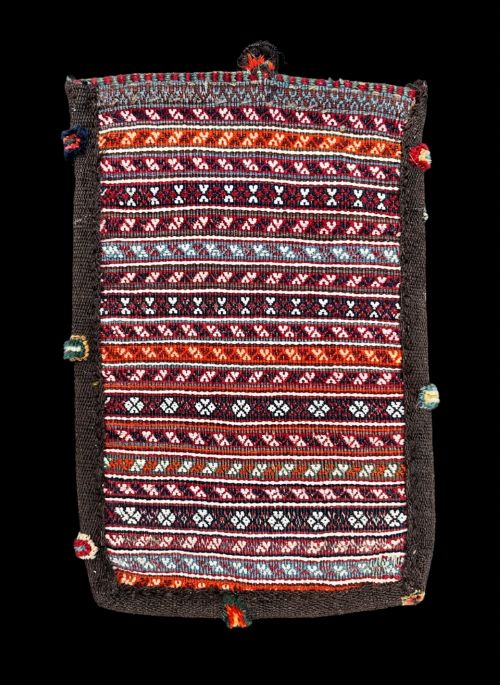
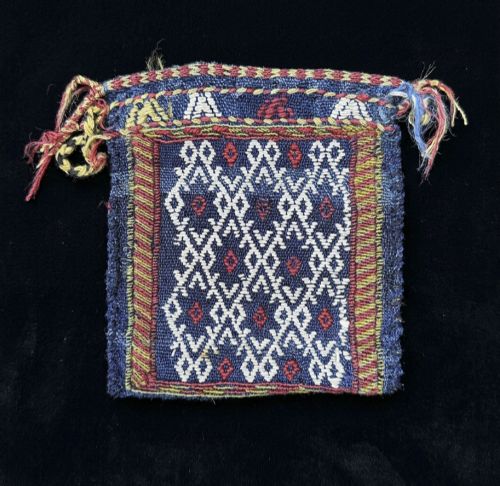
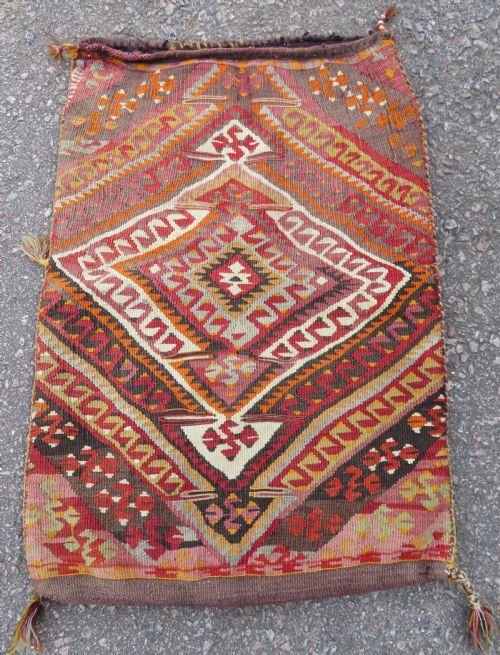
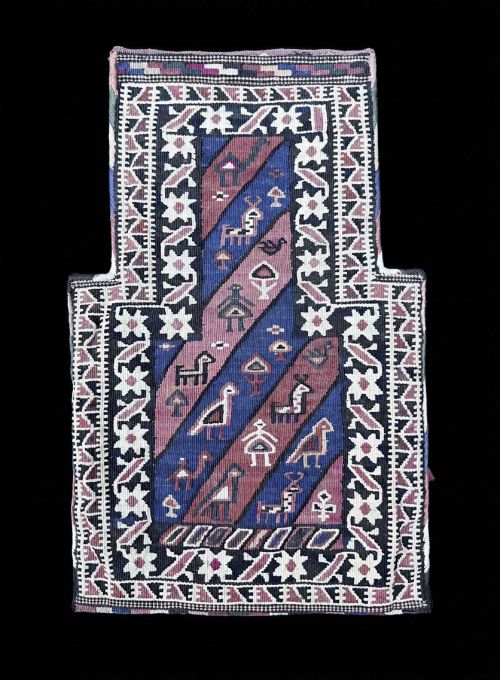
Buyers examining wool flatweave bags encounter specific utilitarian forms created for nomadic life, including grain sacks, salt bags, vanity bags, and saddle bags. These textiles originate from tribal groups such as the Shahsavan, Qashqa'i, Afshar, Yomut, and Tekke Turkmen, dating from the nineteenth and early twentieth centuries.
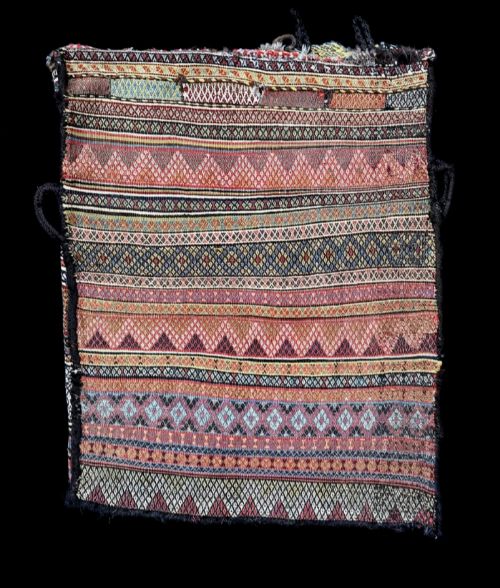
The most common formats on this page are bag faces, complete storage bags with original plain weave backs, and grain sacks known as tacheh. Such items span geographic regions from Western Persia and Khorassan to Azerbaijan and Central Asia, reflecting distinct regional weaving traditions.
Materials and construction methods
Weavers constructed these utilitarian textiles using hand-spun wool and cotton, frequently incorporating goat hair for structural durability along edges and backs. Natural dyes provide the palette for these flatweave surfaces, while supplementary techniques like soumak work add texture and structural integrity.
Detailing on specific pieces includes the addition of cowrie shells, leather, and metal elements to storage sacks and saddle bags. The integration of these secondary materials served both decorative and functional purposes in nomadic daily life.
Wool Flatweave Bags Retail Price Guide 2026
Typical asking prices for wool flatweave bags among the pieces listed under this phrase on Sellingantiques today, from the lower quarter to the upper quarter. They describe what is for sale here now, not the wider market.
Listings feature wool, cotton, goat hair, and natural dyes across Persian, Caucasian, and Central Asian tribal origins dating from the nineteenth and early twentieth centuries.
Quality variations in tribal textiles
Distinctions in quality arise from the tightness of the weave, the precision of the tribal pattern execution, and the condition of the materials. Pieces featuring fine weaves and intact original backs demonstrate superior preservation of their original utilitarian form.
The complexity of the structure, such as detailed soumak work versus basic plain weave, influences the visual depth of the textile. Additionally, the survival of complete sets or original structural elements separates standard examples from exceptional specimens.
The Wool Flatweave Bags Glossary
- Flatweave
- A textile produced without pile by interlocking warp and weft threads together. This technique creates a smooth, thin fabric characteristic of storage sacks and kilim rugs.
- Soumak
- A brocade-like weaving technique where pattern threads wrap over and under the warp threads. This method produces a raised, textured surface on tribal bags.
- Chuval
- A large storage bag produced by Turkmen tribes. These items were used inside nomadic tents for household storage.
- Tacheh
- A large grain or wheat sack woven by Persian nomadic groups. They often feature banded flatweave designs.
- Mafrash
- A rectangular storage container or compression bag used in nomadic households. Complete examples typically comprise four sides and a base.
Wool Flatweave Bags: Frequently Asked Questions
What were wool flatweave bags used for?
Nomadic groups utilised these textiles for practical storage needs inside tents and during migration. Different forms served specific functions, such as holding salt, grain, personal items, or riding equipment.
Containers like salt bags and vanity bags kept small possessions secure, while larger sacks transported provisions or bedding across regions.
How do I tell different tribal designs apart?
Tribal attribution relies on specific structural patterns, border motifs, and regional colour palettes characteristic of groups like the Shahsavan or Qashqa'i. Each region developed distinct geometric vocabulary and weaving techniques over generations.
Examining the specific weave structure, such as soumak work or banded flatweave, helps identify the producing tribe and geographic origin.
Are these bags complete with backs?
Many listings specify whether a piece is a bag face or complete with its original plain weave back. Complete storage bags retain both front and back panels used during their period of utility.
Bag faces represent examples where the decorative front panel has been separated from the utilitarian backing over time.
How should I display a textile bag at home?
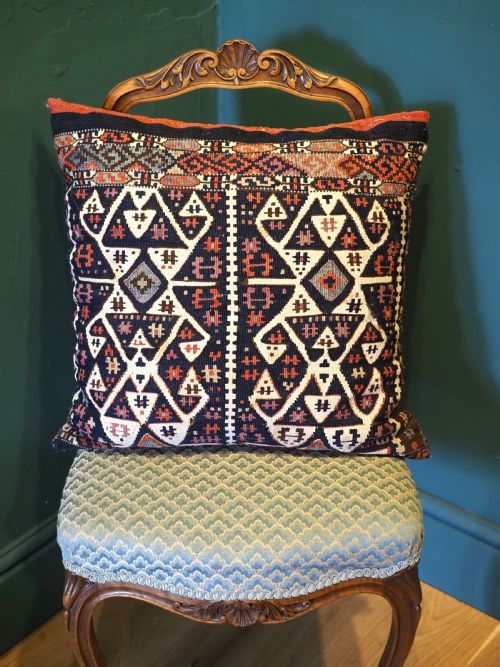
Smaller storage bags and fragments adapt well to wall mounting using appropriate conservation-grade display methods. Larger complete pieces or cushions function effectively on surfaces where wear from foot traffic is avoided.
Protecting these textiles from direct sunlight preserves the natural dyes used in their original production.