

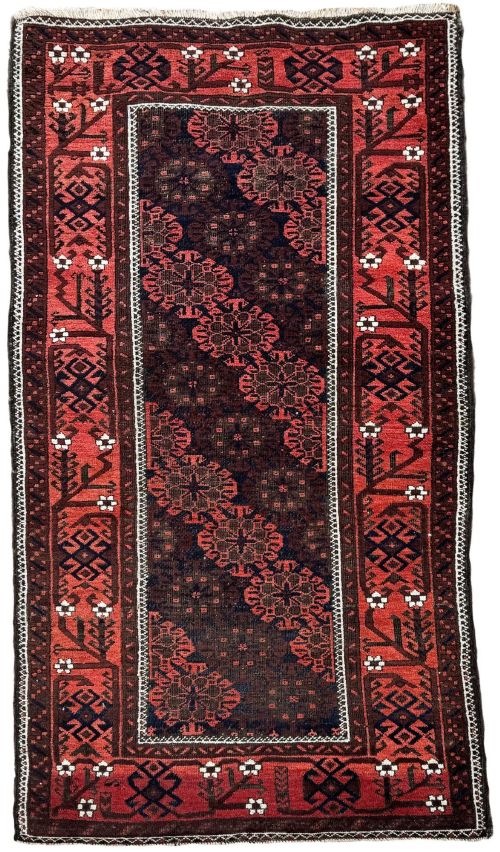


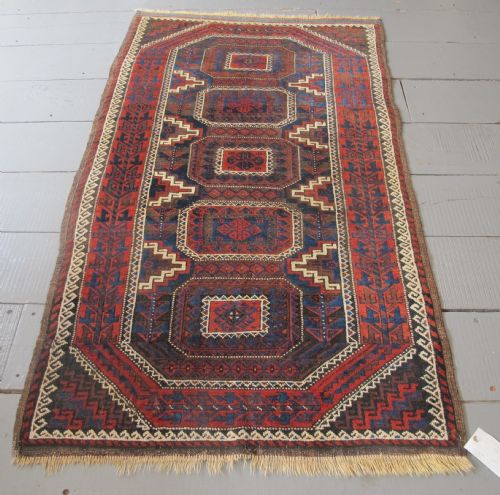


Wool Belouch Rug
A wool belouch rug brings rich tribal character and deep saturated colour into a room, offering authentic nomadic weave traditions from the late nineteenth and early twentieth centuries.
Wool Belouch Rug
A wool belouch rug is a traditional tribal textile originating from weavers in regions such as East Persia, Khorasan, and Ferdows Province. These floor coverings and small textiles date from periods spanning the late nineteenth century to the early twentieth century, encompassing dates around 1870, 1880, 1900, 1910, and 1920.
The pieces on this page appear in various formats, including standard area rugs, small scatter sizes, specific prayer rugs, and unusual formats such as birdbag textiles. Designs feature distinct motifs like latch hook medallions, calyx lattice patterns, and camel grounds.
Tribal classifications define these works, appearing variously under Persian tribal, Baluch tribal, and traditional Belouch descriptions. Each piece reflects the hand-woven methods of nomadic and village makers.
Materials and construction methods
Construction relies primarily on wool as the foundational textile fibre, paired frequently with camel hair and goat hair to create contrast and structural variation across the ground and pile. Cotton also appears in the physical makeup of these hand-woven rugs.
The hand-woven technique binds these natural animal fibres into dense, durable flatweaves or piled surfaces designed for practical nomadic utility. Artisans utilise locally sourced materials, meaning fibre selection directly reflects regional livestock and pastoral availability.
Wool Belouch Rug Retail Price Guide 2026
Typical asking prices for wool belouch rug among the pieces listed under this phrase on Sellingantiques today, from the lower quarter to the upper quarter. They describe what is for sale here now, not the wider market.
Listings feature hand-woven pieces utilising wool, camel hair, goat hair, and cotton across Persian tribal and Baluch styles.
Judging the quality of a wool belouch rug
Quality rests in the tightness of the weave and the crispness of traditional motifs such as the latch hook medallion or calyx lattice design. Finer examples display meticulous execution in the hand-woven structure and well-preserved natural pile.
The integrity of the camel hair and goat hair elements influences the tactile richness and visual depth of the piece. Superior specimens maintain structural stability across the edges and foundation while retaining their original regional character.
The Wool Belouch Rug Glossary
- Camel hair
- A natural fibre utilised in tribal rug foundations and pile, prized for its warm, undyed golden-brown tone. It ages with a soft lustre.
- Latch hook
- A stepped geometric motif commonly found in tribal weaving traditions, often arranged in vertical rows or central medallions. It is a hallmark of nomadic design vocabulary.
- Prayer rug
- A small format textile featuring a distinctive mihrab or niche design used historically for ritual devotion. These rugs are scaled for individual placement.
- Birdbag
- A specialised nomadic container or trapping woven in tribal regions, sometimes listed among smaller textile formats. It shares the technical weave characteristics of larger rugs.
- Calyx lattice
- An interconnected geometric trellis pattern resembling flower calyxes, appearing across regional Persian weaving. This design orders the field with repeating symmetry.
Wool Belouch Rug: Frequently Asked Questions
Where were these rugs made?
These textiles originate from tribal weavers in regions spanning East Persia, Khorasan, and the Ferdows Province. Nomadic and village communities produced them for personal use and trade.
The makers worked within established regional traditions, passing down specific geometric motifs and dyeing techniques through generations.
How do I care for my rug?
Protect the wool and natural hair pile by vacuuming gently without a rotating brush bar. Keep the textile out of direct, harsh sunlight to prevent dye fading.
Professional cleaning tailored to antique tribal textiles ensures the structural integrity of the weave remains undisturbed over decades of use.
What is a birdbag?
A birdbag is a specialised nomadic storage pouch or trapping created by tribal weavers. These smaller textile pieces exhibit the same hand-woven wool construction as larger floor rugs.
They function today as decorative accent pieces or small wall hangings that showcase intricate village craftsmanship.
How do I date a piece?
Dating relies on stylistic analysis, material wear, and structural characteristics consistent with late nineteenth and early twentieth-century production. Comparisons with documented examples from periods like 1870 or 1900 provide a reliable baseline.
Natural variations in hand-spun wool and traditional dyestuffs further help place the textile within its correct historical era.