







Wool Balkan Rug
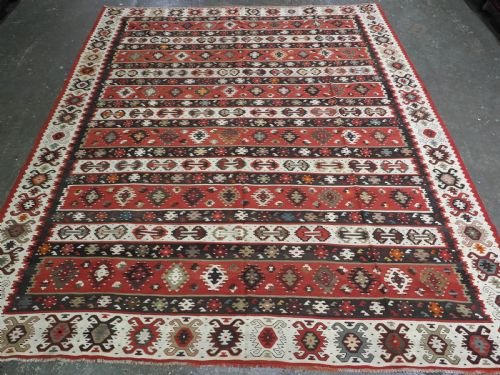
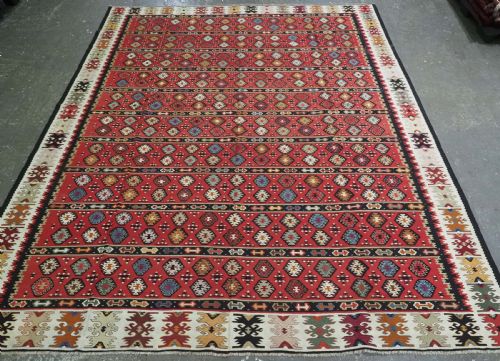
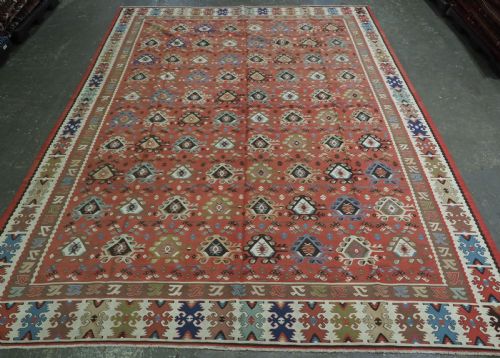
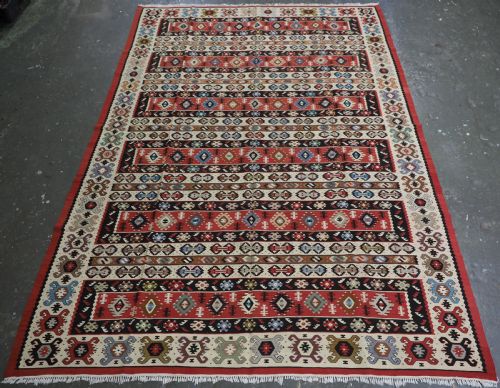
A wool balkan rug brings distinct folk patterns and rich historical textures into a room through flatweave kilims and prayer rugs.
Wool Balkan Rug
When you examine a wool balkan rug, you encounter flatwoven textiles originating from regions encompassing Sarkoy, Pirot, Monastir, and Thrace. These pieces emerge in various dimensions, ranging from smaller formats to large room sizes suited for expansive floor spaces.
The selections here heavily feature kilim rugs and area rugs defined by Balkan folk art, traditional styles, and Ottoman influences. Pieces span several decades from the mid-nineteenth century through the early twentieth century, showing established regional weaving traditions.
Materials and construction methods
Weavers utilised natural wool and cotton fibres to build the strong flatweave foundations and intricate surface patterns of these textiles. The yarn absorbs dye to produce soft reds, pastels, and warm tonal variations across the field.
Makers employed traditional slit-tapestry techniques to create sharp geometric borders, flowering tree motifs, and repeat medallions without adding extra pile height. This method yields a durable, reversible floor covering with a flat profile.
The listings here span six distinct decades between eighteen-sixty and nineteen-thirty, focusing primarily on wool and cotton flatweave constructions.
Distinguishing quality factors
Quality rests upon the crispness of the designated pattern, whether handling a classic design, a repeat medallion, or a scarce lattice arrangement. Finer examples maintain structural precision across large formats while preserving balanced proportions in the border work.
The depth and preservation of the dyed wool elevate certain pieces above standard production. Tonal clarity in soft reds and pastel palettes contributes significantly to the visual presence of the textile.
The Wool Balkan Rug Glossary
- Kilim
- A flatwoven textile produced without a pile by tightly interweaving warp and weft strands. This technique results in a lightweight, durable floor covering.
- Pirot
- A designated weaving centre known for producing distinct geometric and patterned flatweaves. Rugs from this origin display notable regional motifs.
- Sarkoy
- A specific provenance for flatwoven rugs carrying traditional Balkan and Ottoman design characteristics. These pieces often exhibit banded or repeat patterns.
- Prayer rug
- A smaller format textile featuring a niche design intended for devotional use. These formats are easily incorporated into modern interior layouts.
- Warp
- The stationary vertical threads stretched upon a loom that form the structural foundation of the rug. Weft threads pass horizontally through these foundational strands.
Wool Balkan Rug: Frequently Asked Questions
How do I clean a wool balkan rug?
Regular gentle vacuuming without a rotating brush roll helps remove loose dust from the flatweave surface. Professional textile cleaners experienced with antique wool should handle deeper washing.
Water exposure must be managed carefully to protect the natural dyes. Prompt attention to spills prevents lasting staining on wool fibres.
Where were these rugs made?
These textiles originate from various communities across the Balkan region, including specific centres like Sarkoy and Pirot. Local workshops adapted traditional motifs passed down through generations.
Ottoman and regional folk art influences shaped the distinct visual vocabulary found in these areas. Each location developed recognisable design arrangements over decades of production.
Are these rugs suitable for high traffic?
The flatwoven construction lacks a protruding pile, making these textiles resilient against heavy foot traffic. Placed over an appropriate rug underlay, they maintain stability on wooden or carpeted floors.
Areas with moderate movement allow the flat structure to wear evenly over time. Regular rotation distributes pressure across the entire surface of the rug.
How do I identify a Sarkoy kilim?
Sarkoy pieces typically display banded layouts, flowering tree motifs, or traditional repeat patterns in soft reds and pastels. The weave structure relies on flat tapestry techniques characteristic of the region.
Comparing border details and colour palettes helps separate these specific examples from other tribal flatweaves. The absence of pile remains consistent across these particular textiles.