



Woodland Scene Canvas Painting
A woodland scene canvas painting brings the quiet depth of trees and shifting light directly into a room.
Woodland Scene Canvas Painting
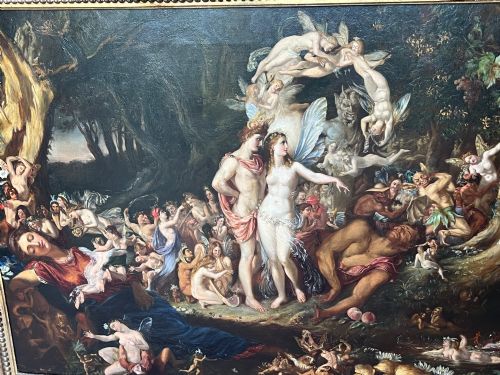
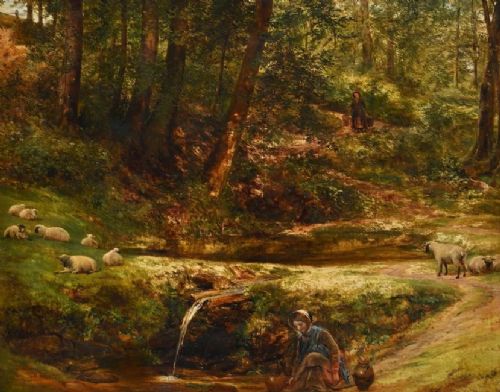
When you search for a woodland scene canvas painting, you encounter works spanning the nineteenth century through the mid-twentieth century. The selection encompasses Victorian landscapes, early twentieth-century British scenes, and French impressionist canvases.
Most pieces depict natural settings such as leafy glades, riverbanks, and wooded paths, occasionally featuring figures, cattle, or children gathering firewood. These artworks are executed primarily as oil paintings on canvas and framed in wood or gilt settings.
How they were made
The works utilise oil paint applied to stretched canvas surfaces, supported by wooden stretcher frames and frequently housed within gesso and gilt frames. Artists built up the composition through layered brushwork to capture the varying light of sunset, summer, or winter.
Techniques range from the detailed naturalism of the nineteenth century to the looser, more luminous brushstrokes of later impressionist works.
Styles span from Victorian Naturalism and French Impressionism to early twentieth-century British landscape painting.
What varies in quality
Quality rests upon the artist's handling of light, depth, and brushwork within the woodland setting. Stronger pieces display confident draftsmanship and atmospheric depth, whereas lesser examples rely on formulaic foliage and flat perspectives.
The preservation of the original oil paint and canvas surface, alongside the integrity of any period gilt frame, influences the standing of an individual work.
Sir Joseph Noel Paton·Richard Sebastian Bond·William H Myers·Thomas W Lascelles·Richard Redgrave·Arthur Herbert Rigg·James Mallard Bromley·David Watts·John Wright Oakes·James Proudfoot·Edward H Holder·George F Wetherbee·Lester Sutcliffe·Frederick Bartman·Walter Emsley·Charles Edmond Rene His·William Mellor·Everett W Mellor·Charles Duval·George Neil
The Woodland Scene Canvas Painting Glossary
- Canvas
- A heavy woven fabric used as a surface for oil painting. It is typically stretched tightly across a wooden frame before application of the paint.
- Gesso
- A plaster-like mixture applied to wooden frames as a base for gilding. It provides a smooth surface for gold leaf.
- Impressionism
- A style of painting developed in the nineteenth century characterised by relatively small, thin, yet visible brush strokes. Emphasis is placed on accurate depiction of light in its changing qualities.
- Pre-Raphaelite
- A group of nineteenth-century artists associated with detailed observation, bright colours, and complex composition. Their work often draws on literary or mythological themes alongside nature.
- Victorian Naturalism
- An art movement focusing on the unidealised depiction of the natural world. It prioritises careful rendering of flora, fauna, and rural topography.
Woodland Scene Canvas Painting: Frequently Asked Questions
What periods do these paintings cover?
The pieces span from the nineteenth century through the Edwardian era and into the mid-twentieth century.
Most examples date from the Victorian period up to post-war twentieth-century production.
How should I hang an oil painting?
Ensure the wall is away from direct heat sources and strong sunlight to protect the canvas and oil pigments.
Use appropriate fixings matched to the weight of the canvas and its wooden or gilt frame.
Are these works signed by the artists?
Several pieces feature signatures from listed painters, while others remain unsigned.
Attributions rely on recorded documentation and stylistic comparison with known works.
What framing do these canvases use?
Many works retain their original wooden frames, frequently finished with gesso and gilt.
Some pieces showcase simpler wooden surrounds reflecting their specific period of origin.