



Wooden Wine Cistern
A wooden wine cistern holds the bottles and the ice, bringing period presence to a dining room.
Wooden Wine Cistern
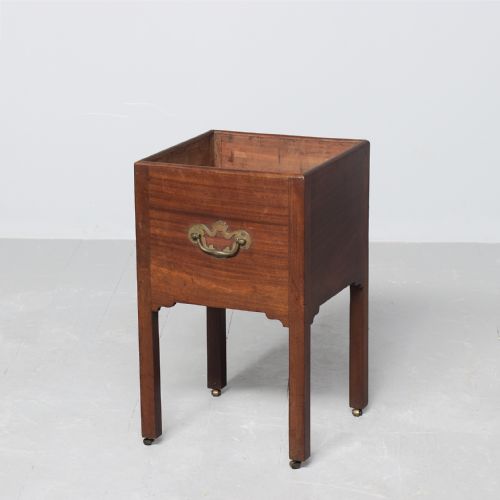
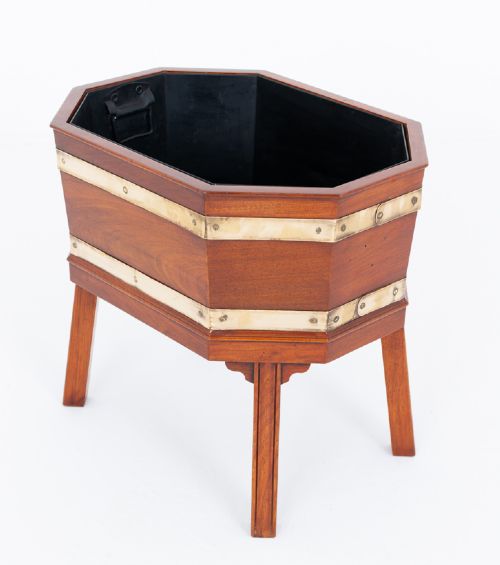
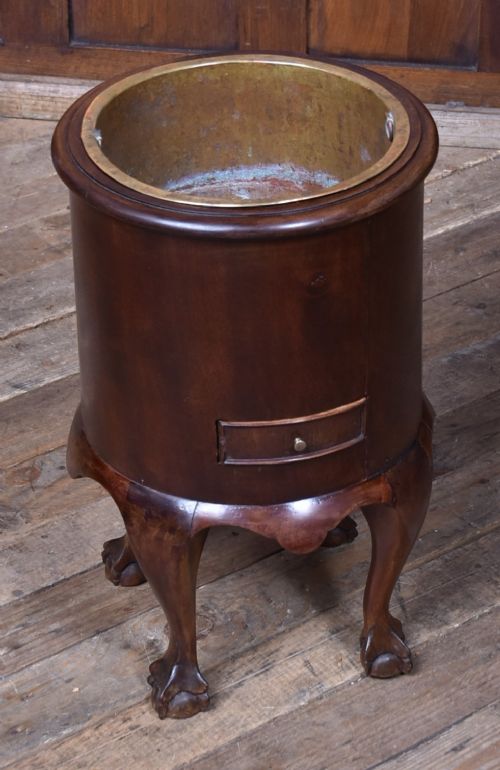
A wooden wine cistern is a substantial serving vessel designed to chill and hold wine bottles during grand meals. Most examples encountered here are mahogany pieces originating from the eighteenth and nineteenth centuries, often taking oval or open forms.
The selection ranges from early Georgian and George III designs to Regency and Victorian interpretations, occasionally including continental styles such as French Louis XVI and Dutch neoclassical pieces. Many function equally well as planters or jardinières in modern interiors.
What varies in quality
Quality rests upon the selection of timber, the crispness of the carving or inlay, and the integrity of the original metal linings and mounts. Pieces retaining their period stands and heavy brass binding show a higher level of original commissioning.
Proportion and execution distinguish standard production from finer cabinet work. Refined handling of veneers, subtle mouldings, and intact interior fittings elevate an example above simpler utility vessels.
Listings feature mahogany as the predominant timber, accompanied by walnut, oak, satinwood, and rosewood across Georgian and Victorian periods.
Maples and Co
The Wooden Wine Cistern Glossary
- Cistern
- A large vessel used for holding liquid and cooling wine bottles. It sits either on the floor or upon its own dedicated stand.
- Cellarette
- A lockable container used for storing wine bottles securely within a dining room. It shares many forms with the open wine cooler.
- Jardiniere
- An ornamental pot or stand used for holding plants and flowers. Many wine cisterns were adapted for this secondary purpose over time.
- Ormolu
- Gilded bronze ornamentation applied to furniture and decorative objects. It appears frequently on French and Regency examples.
- Marquetry
- Decorative veneer work formed by fitting pieces of various coloured woods into a design. Dutch pieces utilise this technique to great effect.
Wooden Wine Cistern: Frequently Asked Questions
How were wooden wine cisterns used?
These vessels stood beneath sideboards or on the floor during formal dinners, filled with ice and water to chill wine bottles before serving. Servants would draw bottles directly from the cistern as the meal progressed.
They also served as impressive decorative statements that displayed the wealth and status of the household through fine timber and metalwork.
Can I use a wine cistern as a planter?
Many period wine cisterns and coolers feature metal or zinc linings that naturally lend themselves to holding potted plants and floral arrangements. Historical listings frequently describe them as jardinières for this very reason.
Using one to house large houseplants places the piece back into a functional role that complements its original design.
How do I tell George III from Regency cisterns?
George III pieces typically display classic mahogany construction with substantial brass banding and bracket feet or stands, leaning towards restrained proportions. Regency examples often incorporate bolder bronze or ormolu mounts and classical revival motifs.
Looking at the specific combination of timber figure and metal mount helps clarify the period of manufacture.
Where should I place a wine cistern at home?
A large wooden wine cistern makes a striking focal point in a dining room, either positioned against a wall or used to fill an empty corner. Their generous proportions also suit large hallways or living spaces.
They work well paired with heavy furniture where their rich mahogany or walnut surfaces can catch the light.