




Wooden Wine Casket
These wooden wine caskets are substantial period containers designed to hold bottles, bringing classic craftsmanship and rich timber tones to a room.
Wooden Wine Casket
When you search for a wooden wine casket, you are looking at functional serving vessels and storage boxes known variously as cellarettes, wine coolers, and wine boxes. The versions you are most likely to meet on this page date from the Georgian and Regency periods, spanning the eighteenth and nineteenth centuries.
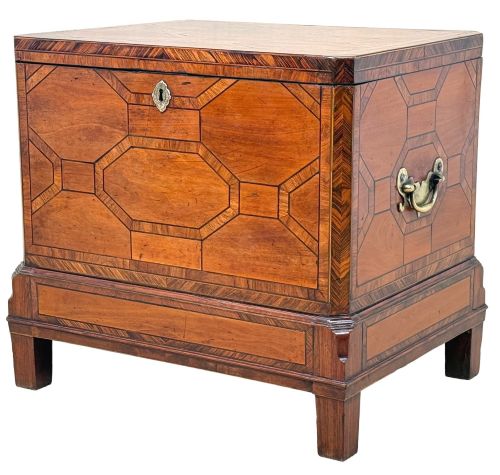
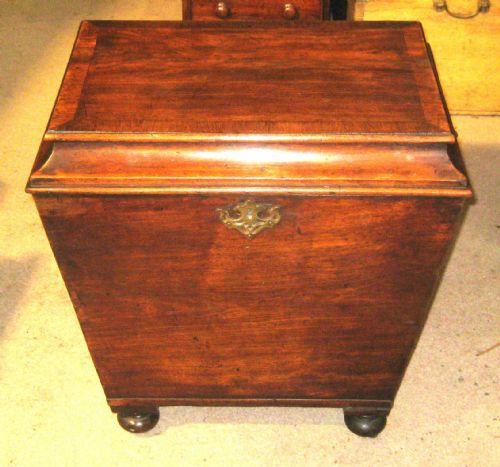
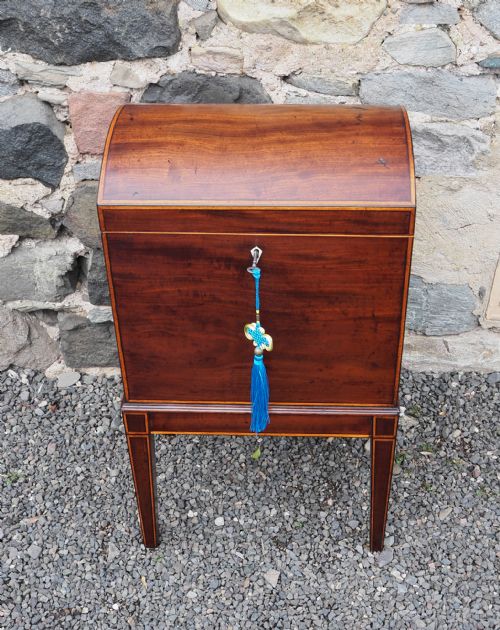
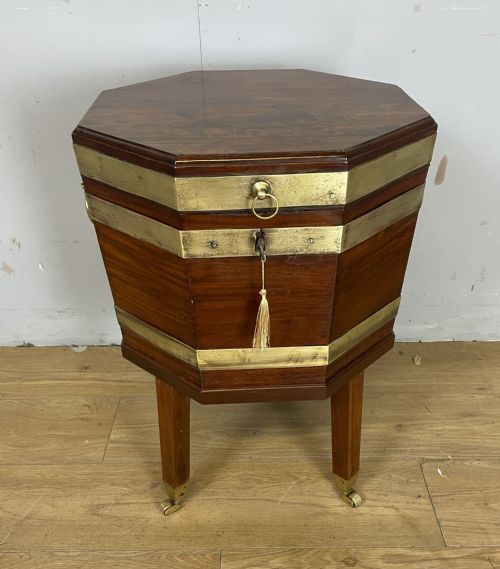
The forms range from octagonal and sarcophagus shapes to rectangular boxes, reflecting the interior storage needs of their original dining room settings. Origins stretch from English workshops to Anglo-Indian commissions, showing how dining culture shaped these timber containers.
Makers and designers produced these items in mahogany, oak, satinwood, and kingwood, often incorporating brass mounts or intricate boxwood inlay. Each piece serves as a tangible link to period entertaining, functioning today as a decorative storage chest or standalone statement object.
How they were made
Cabinetmakers constructed these pieces primarily from solid mahogany and oak, applying veneers of satinwood and kingwood to create decorative surface patterns. These timbers provided the structural stability needed for heavy containers holding glass bottles and ice.
Surface decoration relied heavily on precision boxwood inlay, marquetry, and architectural carving that mirrored prevailing neoclassical tastes. Metalwork played a crucial structural role, with brass banding and mounts reinforcing the timber joints and adding functional contrast.
Joinery techniques matched the demands of heavy use, utilising tight carcass construction to withstand the weight of contents and frequent movement. Workshops employed specialist turners and metalworkers to supply the characteristic handles, feet, and bindings.
Several boxes arrive with their original brass banding still intact, ready to hold modern contents after centuries of service.
What varies in quality
The distinction between standard examples and superior pieces rests on the choice of timber and the ambition of the design. Dense, highly figured mahogany and carefully matched satinwood veneers elevate a piece well above plain utility.
Execution of decorative details marks the divide in craftsmanship, visible in the sharpness of boxwood inlay and the precision of brass bindings. Pieces that incorporate sophisticated neoclassical styling or reference specific design traditions demonstrate a higher tier of workshop output.
Gillows of Lancaster
The Wooden Wine Casket Glossary
- Cellarette
- A lockable container used for holding wine bottles near the dining table. They evolved from simple wooden boxes into elaborate architectural pieces during the eighteenth century.
- Marquetry
- The art of applying pieces of veneer to a structure to form decorative patterns and pictures. Cabinetmakers used contrasting timbers like satinwood and kingwood for this work.
- Boxwood inlay
- The practice of inserting thin strips of light-colored boxwood into contrasting wood surfaces to create geometric borders. It was a favored decorative technique in Sheraton furniture.
- Regency Neoclassical
- A design style drawing inspiration from the art and architecture of ancient Greece and Rome. This aesthetic influenced the proportions and decorative motifs of early nineteenth-century cellarettes.
Wooden Wine Casket: Frequently Asked Questions
What is a wooden wine casket?
A wooden wine casket is a period storage chest designed to hold wine bottles near the dining table. These containers kept bottles cool and secure during meals.
They appear under names like cellarettes and wine coolers, reflecting the terminology of eighteenth and nineteenth-century dining rooms.
How were cellarettes used?
Original users placed these containers beside the dining table to hold bottles within arm's reach of the host. Some interiors included lead linings for ice and water.
Today, buyers repurpose these heavy timber boxes as side tables, log bins, or decorative storage chests in living spaces.
How do I identify a Regency piece?
Regency pieces often feature classical architectural motifs, such as the prominent sarcophagus shape or neoclassical details. Cabinetmakers working in this period utilised rich mahogany and brass mounts.
Proportions tend to be bold and sculptural, drawing inspiration from ancient Roman and Greek design principles.
What woods were commonly used?
Mahogany and oak formed the structural foundation for the vast majority of these containers. These dense hardwoods provided the necessary strength for heavy daily use.
Cabinetmakers also applied decorative veneers of satinwood and kingwood, complemented by boxwood inlay and brass banding.