




Wooden Wine Bottle Cooler
A wooden wine bottle cooler is a practical container for chilling and presenting vintage bottles at the table, shaped in classical mahogany or oak.
Wooden Wine Bottle Cooler
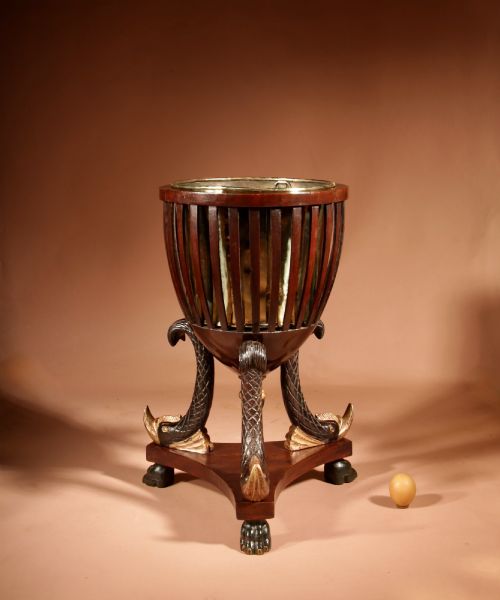
A wooden wine bottle cooler serves to hold bottles and ice during dining, taking forms from simple boxes to grand architectural vessels. The selection here leans heavily towards Georgian and Regency examples, alongside later Victorian and Edwardian interpretations.
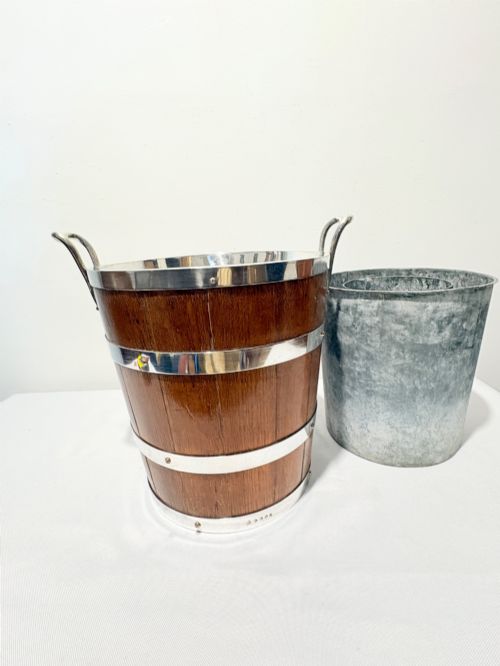
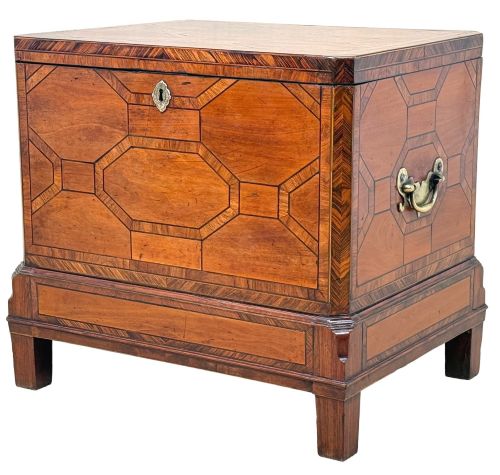
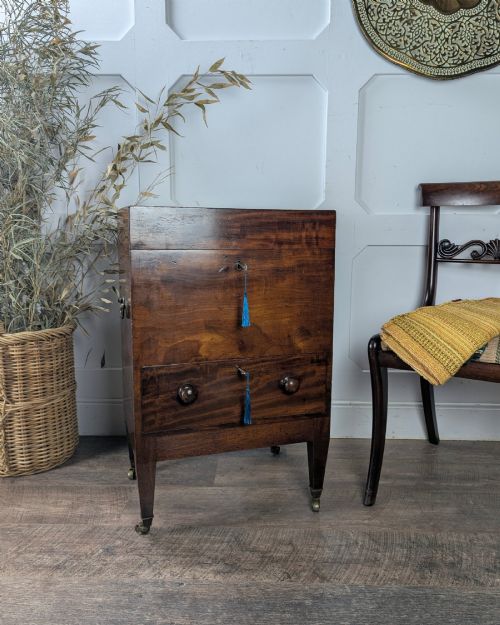
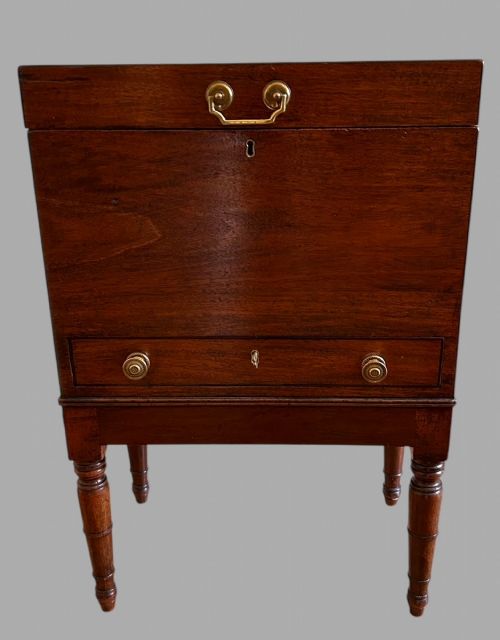
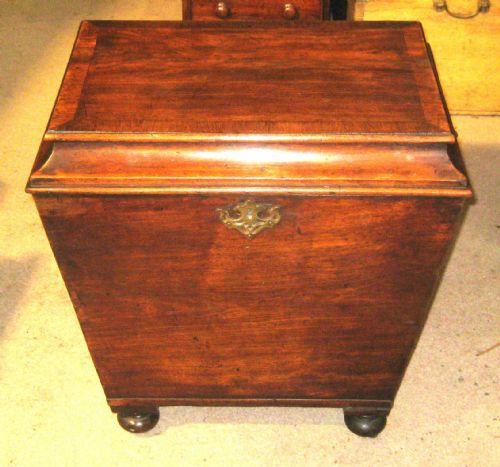
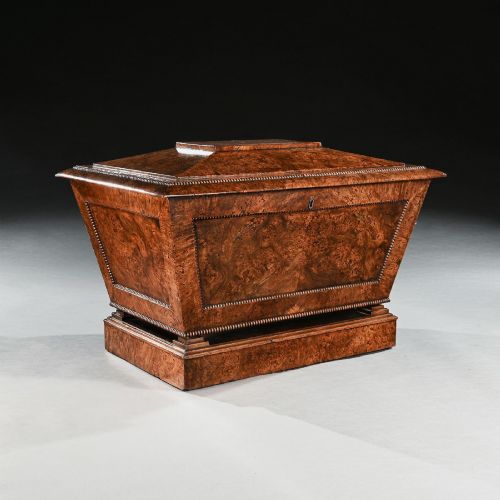
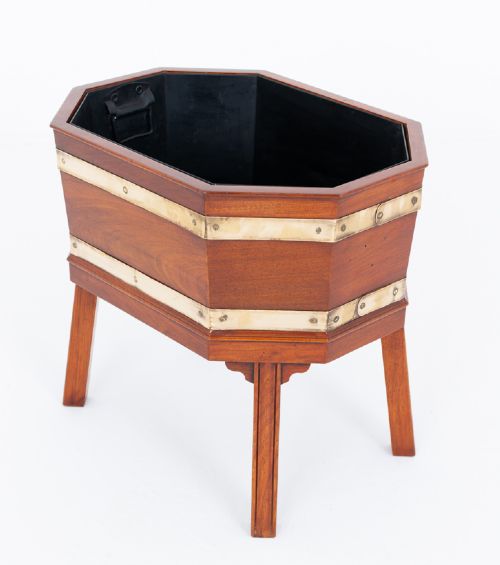
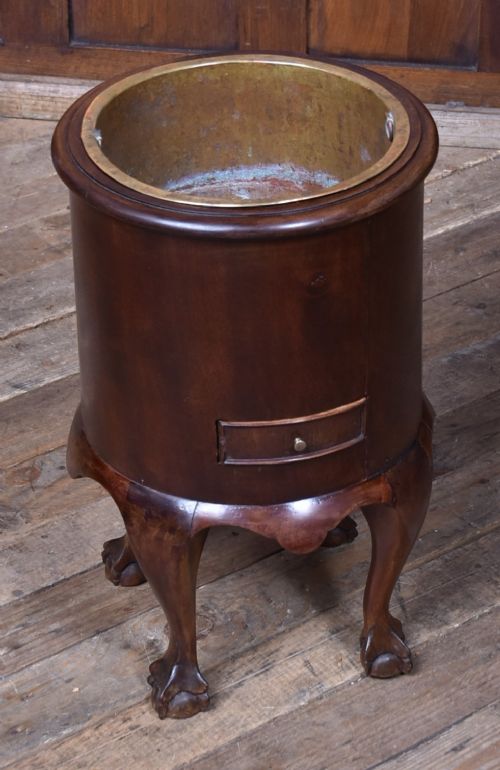
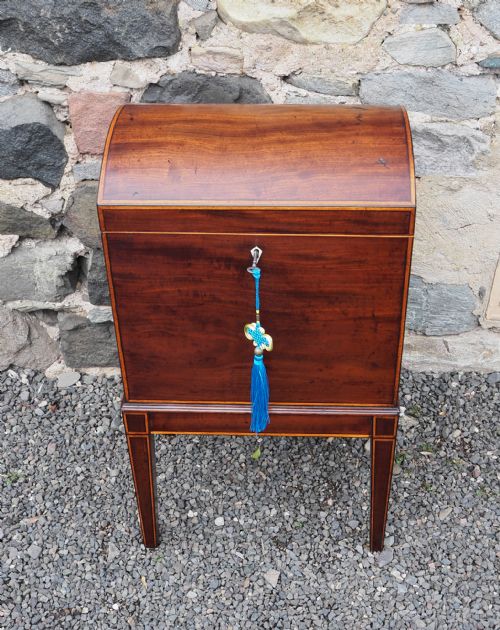
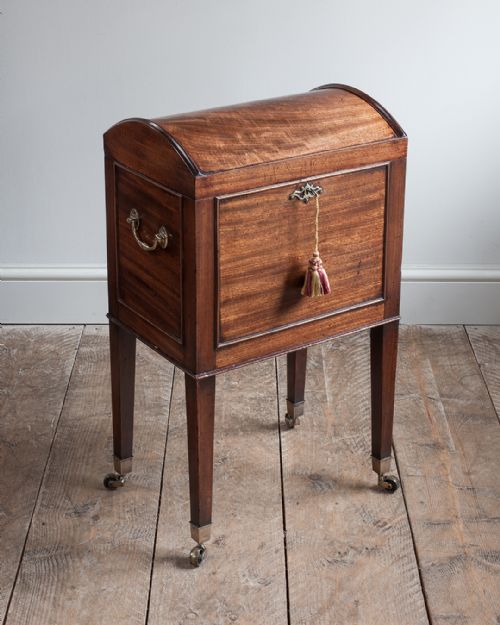
Buyers encounter sarcophagus shapes, oval brass-bound buckets, and rectangular box cellarettes resting on sturdy stands or feet. Mahogany predominates, supported by walnut, satinwood, and pollard oak.
Originating largely from English workshops, these pieces bridge utility and formal dining room display. They trace a clear evolution from eighteenth-century box designs to nineteenth-century revival styles.
Materials and Construction
Cabinetmakers utilised solid mahogany, flame mahogany veneers, and oak to construct the main bodies, often adding boxwood inlay and satinwood banding for contrast. Carved details define the more ornate Regency and William IV iterations.
Internal zinc linings or metal liners held the ice and water necessary for chilling bottles without damaging the timber structure. Brass bands, handles, and paw feet provide both structural reinforcement and decorative accent.
The listings span from the Georgian era through to the Edwardian period, featuring mahogany, satinwood, and pollard oak.
Craftsmanship and Material Depth
The distinction between standard examples and finer pieces rests in timber selection, such as highly figured flame mahogany or pollard oak possessing deep natural patina. Crispness of carved mouldings and the retention of original brass fittings elevate certain items.
Attribution to known workshops or superior cabinetmaking traditions marks the upper tier of the range. Internal integrity, including original zinc linings and sound framing, separates honest surviving examples from heavily altered pieces.
Gillows of Lancaster and London·Maples and Co·Whytock and Reid·Charles Heathcote Tatham
The Wooden Wine Bottle Cooler Glossary
- Cellarette
- A dedicated container or box used for storing and cooling wine bottles near the dining table. They evolved from under-table bins into freestanding decorative furniture.
- Sarcophagus form
- A heavy, tomb-like architectural shape with a domed lid popular during the Regency period. This profile maximised internal space for ice and bottles.
- Flame mahogany
- A decorative wood veneer displaying a distinctive swirling, flame-like grain pattern. Cabinetmakers selected the timber for its visual impact on primary surfaces.
- Brass bound
- Secured with heavy metal bands fastened around the circumference of the vessel. This technique offered structural strength to stave-built wooden buckets.
Wooden Wine Bottle Cooler: Frequently Asked Questions
How were wooden wine bottle coolers used?
These vessels sat on the floor or on side tables near the dining area during formal meals. Servants filled the interior with ice and water to keep bottles chilled before pouring.
Once the meal concluded, the containers secured remaining stock away from light and dust. Their heavy construction ensured steady temperatures throughout long evening gatherings.
What is a cellarette?
A cellarette is a specific term for a lockable box or stand designed to hold wine bottles. They emerged when dining rooms lacked built-in cellars or sideboards.
Over time, the form shifted from simple rectangular boxes to sculptural sarcophagi and table stands. They function today as decorative storage or planters.
How do I care for antique wood and liners?
Keep wooden surfaces nourished with appropriate wax and away from direct heat sources or rapid temperature shifts. Avoid placing dripping ice directly onto unprotected antique timber.
Inspect the internal metal or zinc linings regularly to ensure moisture does not seep into the surrounding joints. Gentle dusting preserves the historical patina.
How do I distinguish Georgian from Regency pieces?
Georgian pieces generally favor restrained classical lines, straight bracket feet, and simpler box or oval bucket forms. Mahogany and satinwood banding dominate this earlier phase.
Regency examples introduce bolder architectural motifs, including paw feet, carved lion masks, and heavy brass rings. The sarcophagus shape becomes prominent during this later era.