

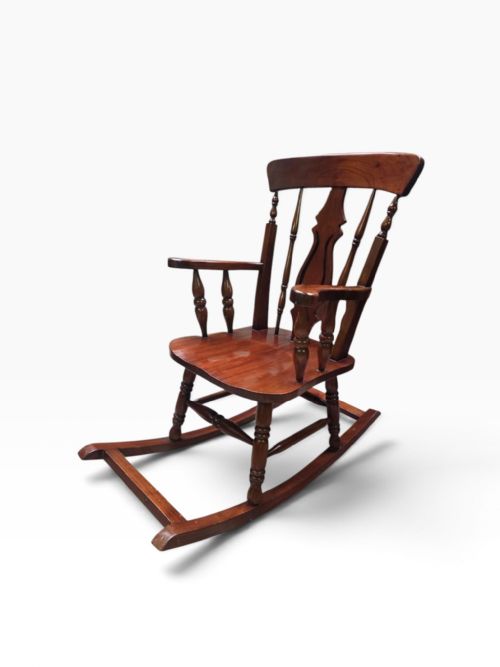
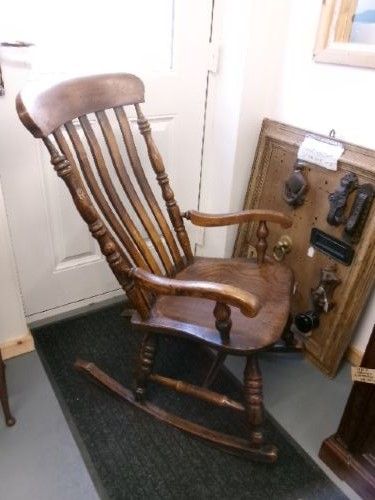
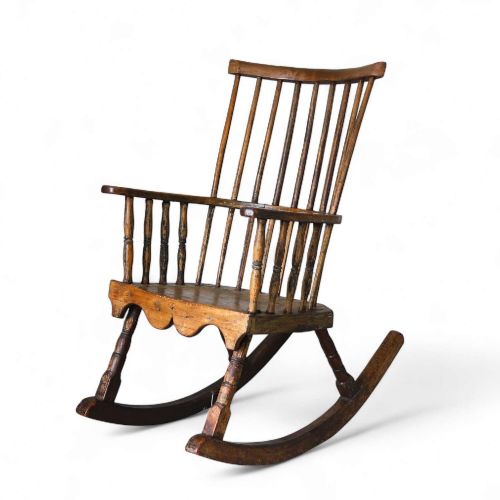
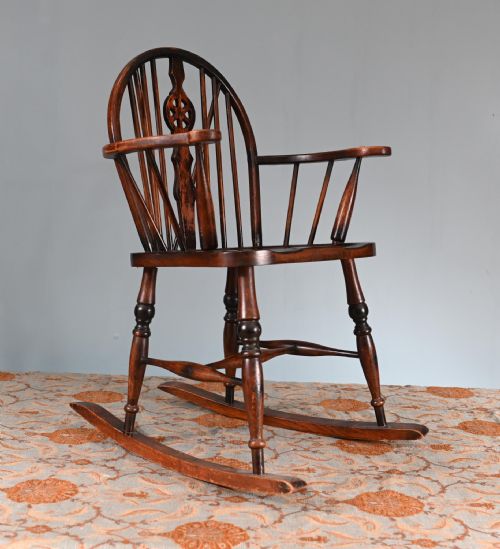
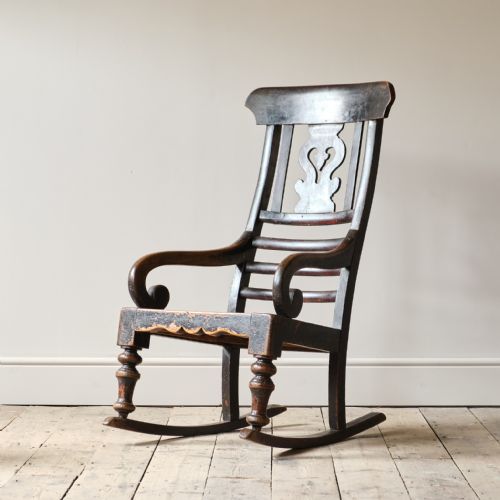


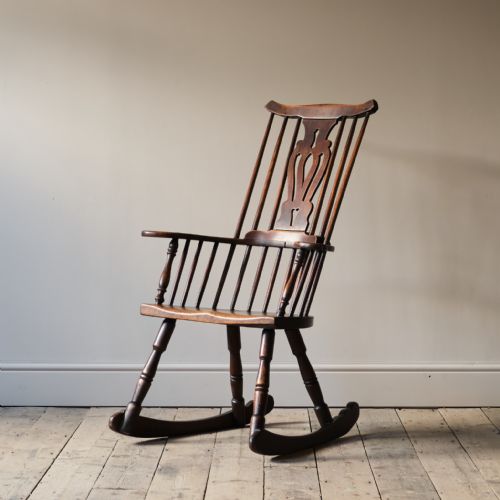

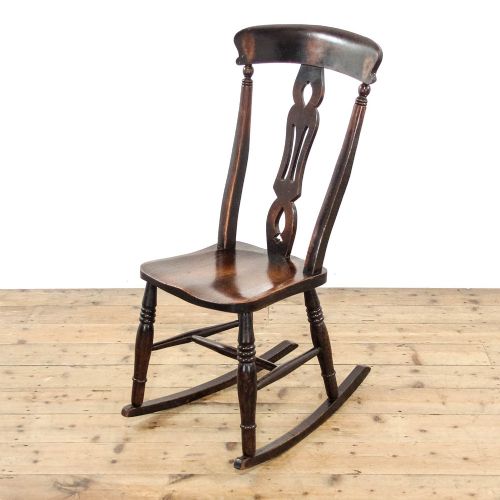


Wooden Windsor Rocker
A wooden windsor rocker brings substantial country character and steady movement to a fireside, formed from traditional timbers.
Wooden Windsor Rocker
A wooden windsor rocker combines the sturdy frame of a traditional country chair with a pair of curved base rockers. When buyers search for a wooden windsor rocker, they encounter examples originating from various regional workshops across the eighteenth, nineteenth, and early twentieth centuries.
The selections span standard armchairs, low fireside seats, nursing chairs, and smaller child-size pieces. English country vernacular forms dominate the selection, alongside regional variations such as Yorkshire farmhouse models and Thames Valley designs.
How they were made
Makers built these chairs using a combination of native timbers, frequently pairing elm seats with bent ash or beech for the spindles and steam-bent back bows. Hardwood components like oak, yew, and sycamore appear across different structural elements.
Traditional construction relies on wedged tenon joints where the legs and spindles pierce directly through the solid saddle-shaped seat. Some regional versions retain painted surfaces or polished timber finishes that highlight the natural grain of the elm and ash.
Wooden Windsor Rocker Retail Price Guide 2026
Typical asking prices for wooden windsor rocker among the pieces listed under this phrase on Sellingantiques today, from the lower quarter to the upper quarter. They describe what is for sale here now, not the wider market.
The listings span multiple centuries, ranging from mid-eighteenth-century child-size chairs to 1930s variations.
What varies in quality
Quality rests upon the sculptural depth of the saddle seat and the grace of the bentwood back bow. Superior examples display balanced proportions, well-turned spindles, and harmonious combinations of contrasting timber grains.
The integrity of the original joints and the survival of the rocker runners determine the long-term character of the piece. Untouched surfaces and original timber patination elevate certain examples above standard workshop output.
The Wooden Windsor Rocker Glossary
- Comb-back
- A chair design where the central vertical spindles extend upward to support a horizontal top rail resembling a hair comb.
- Wheelback
- A chair style featuring a pierced central splat carved or shaped in the likeness of a spoked wagon wheel.
- Spindle back
- A supportive backrest constructed from multiple thin, turned wooden rods set between the seat and the top rail.
- Saddle seat
- A thick wooden seat base shaped with hollows and contours for ergonomic comfort.
- Vernacular
- An unpretentious style of object made by local craftsmen following regional traditions rather than high-fashion academic designs.
Wooden Windsor Rocker: Frequently Asked Questions
How do I date an old wooden windsor rocker?
Dating relies on examining the timber species, tool marks, and construction methods used in the seat and undercarriage. Earlier pieces often feature thick one-piece elm seats and hand-turned components.
Later nineteenth-century examples display more uniform machining and standardised spindle turning. Comparing regional design traits helps narrow the period of origin.
Where should I place a rocking chair at home?
These chairs suit fireside settings, quiet reading corners, or traditional bedrooms where their gentle motion functions well. Their substantial wooden frames require adequate clearance behind the runners for movement.
Keeping them away from direct heat sources protects the dry timbers and prevents joint shrinkage over time.
Are child-size windsor rockers rare?
Smaller rocking chairs were made historically for children and nurseries, following the exact construction methods of full-scale seating. They appear less frequently than adult versions due to their smaller surviving numbers.
Collectors value them for their diminutive proportions and traditional craftsmanship.
What woods were commonly used?
Elm served as the primary choice for the heavy saddle seats because its interlocking grain resisted splitting. Ash and beech provided strength and flexibility for the steam-bent bows and slender spindles.
Additional hardwoods like oak, yew, and sycamore appear in specific regional workshops.