

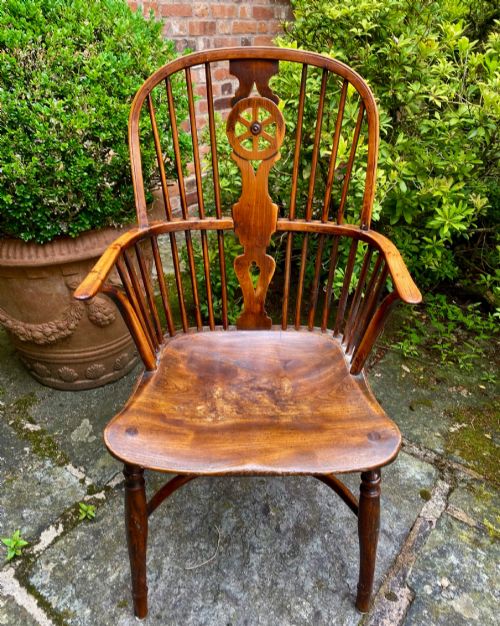
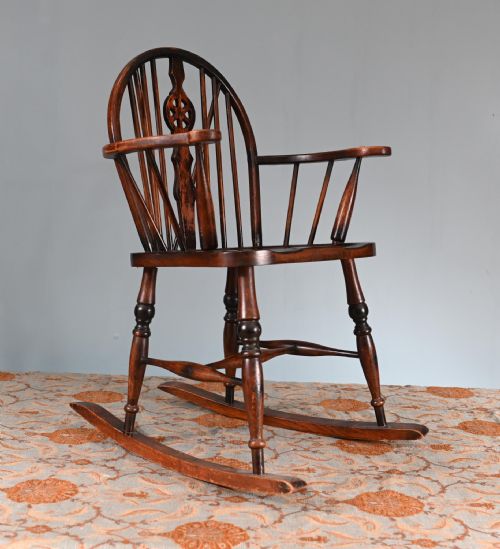


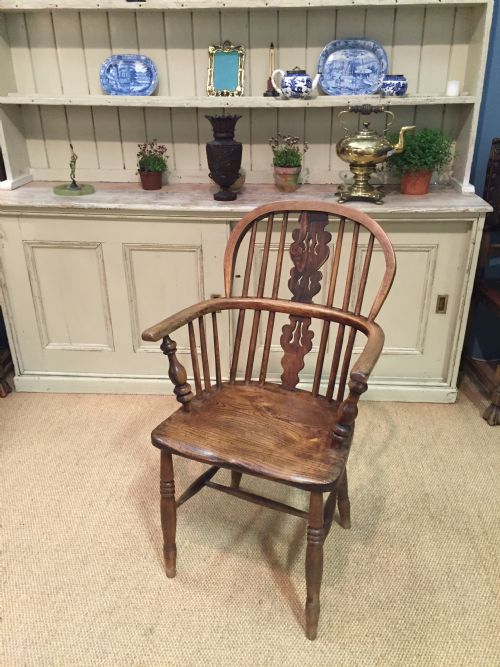


Carved Wheelback Armchair
A carved wheelback armchair brings sturdy regional craft into a room, offering robust seating built from honest timbers.
Carved Wheelback Armchair
The versions most commonly met on this page belong to the nineteenth century and the Victorian era, alongside Georgian examples and twentieth century iterations like rocking chairs. They function as desk chairs, kitchen armchairs, and masters chairs within English country and vernacular traditions.
How they were made
Maker workshops built these chairs using a combination of timbers such as elm, beech, ash, mahogany, yew wood, and hardwood, often pairing a thick solid seat with turned spindles and legs. Some pieces incorporate fabric upholstery for added comfort, while others rely entirely on shaped wooden construction.
The central wheel motif was pierced and carved into the splat of the backrest, requiring careful joinery to secure the bow and spindles. Regional makers utilised local woods like yew and elm to shape robust frames designed for daily domestic use.
Carved Wheelback Armchair Retail Price Guide 2026
Typical asking prices for carved wheelback armchair among the pieces listed under this phrase on Sellingantiques today, from the lower quarter to the upper quarter. They describe what is for sale here now, not the wider market.
What varies in quality
Quality rests in the choice of timber and the crispness of the carved wheel motif within the back splat. Chairs fashioned from figured yew wood or rich mahogany display greater refinement than standard utility pieces.
Structural integrity and the balance of the turned components dictate the standing of an armchair. Pieces featuring broad arms or sophisticated regional turning styles show a higher tier of vernacular craftsmanship.
The Carved Wheelback Armchair Glossary
- Windsor chair
- A chair built with a solid wooden seat into which the legs and back spindles are directly inserted. This construction method provides notable stability and strength.
- Wheelback
- A chair back featuring a pierced splat carved to resemble the spokes and rim of a cartwheel. It is a defining decorative element of many nineteenth century regional seats.
- Splatted back
- The vertical central slat within a chair backrest that provides lumbar support. In these pieces, it is shaped into the characteristic wheel design.
- Vernacular
- Objects made by local craftspeople using traditional regional styles and accessible materials rather than following high court fashions. These pieces serve practical household functions.
Carved Wheelback Armchair: Frequently Asked Questions
What is a carved wheelback armchair?
A carved wheelback armchair is a traditional wooden seat featuring a pierced back splat shaped like a cartwheel. These pieces typically combine a solid saddle seat with turned spindles and supportive armrests.
They emerged from regional furniture traditions, particularly within English country workshops, and span several periods from the Georgian era through the nineteenth century.
How were these armchairs used?
These armchairs served multiple domestic and working roles throughout the house. They functioned as kitchen seating, desk chairs, and masters chairs in formal rooms.
Certain variations were built as rocking chairs for relaxation, while others provided sturdy support for daily tasks in study spaces and parlours.
What woods were used to make them?
Craftspeople built these chairs using a variety of native hardwoods depending on regional availability and the desired finish. Common timbers include elm for solid seats, ash and beech for turned spindles, and rich yew wood or mahogany for finer examples.
Some pieces also incorporated fabric upholstery on the seat for added comfort.
How can I tell the period of a chair?
Dating relies on observing the timber choice, turning style, and overall construction methods. Georgian and early nineteenth century examples often display refined proportions and specific regional characteristics.
Later Victorian and 1930s pieces reflect shifts in domestic utility, sometimes incorporating rocking mechanisms or heavier framing.