





Wooden Wall Lights
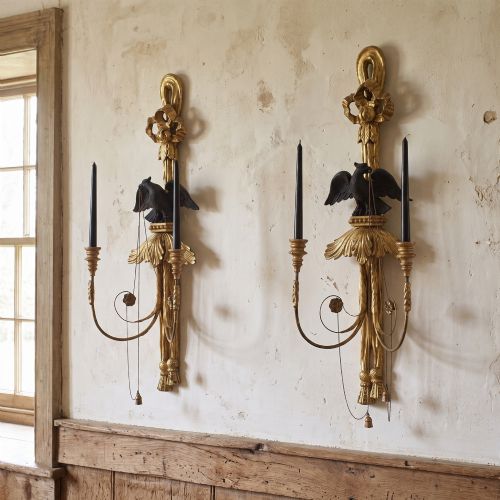
These wooden wall lights bring warm illumination and traditional craftsmanship to interiors through carved timber, giltwood, and polychrome finishes.
Wooden Wall Lights
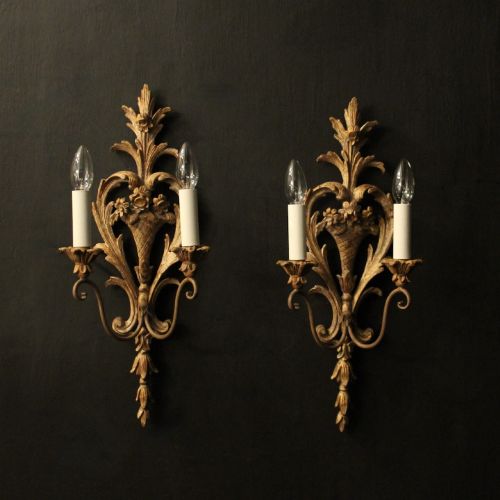
When you search for wooden wall lights, you encounter fixtures designed to mount onto interior vertical surfaces for illumination or decorative effect. The selection spans single arm, twin arm, and triple arm configurations.
Italian and French regional workshops dominate the offerings, particularly in styles referencing Florentine, Baroque, and Rococo traditions. Pieces date from the eighteenth century through to the early decades of the twentieth century, alongside Victorian examples.
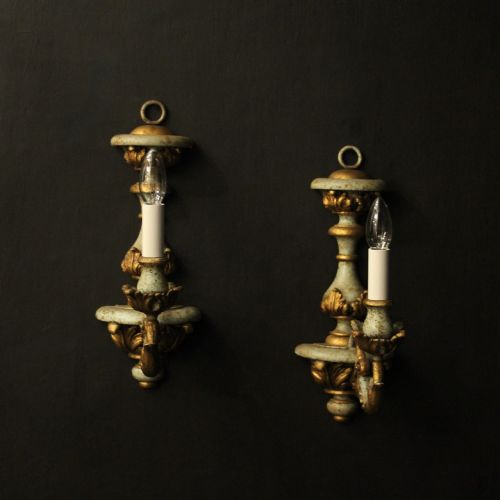
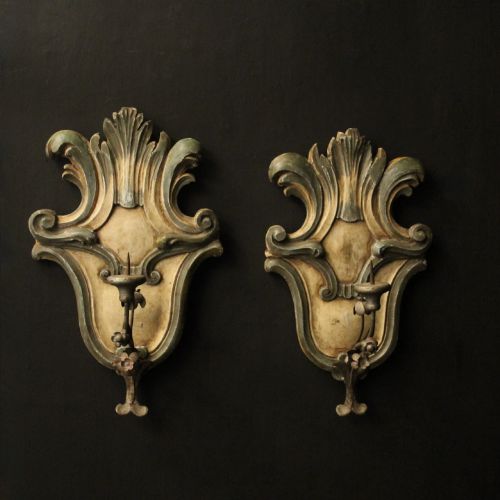
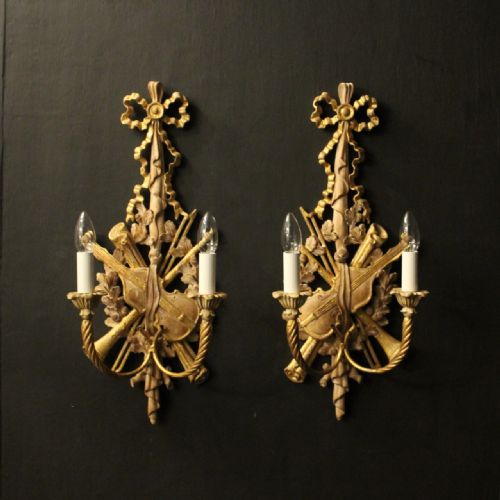
Pairs appear frequently among the options, often executed in carved wood with giltwood, silver leaf, or polychrome decoration. Alongside dedicated wall sconces, related forms include mirrored sconces and carved brackets.
How they were made
Carving forms the structural basis of these pieces, utilising timber foundations shaped into scrollwork, arms, and architectural details. Woods such as oak, maple, and fruitwood provide sturdy bases for subsequent decoration.
Gesso, gold leaf, and silver leaf layers are applied over the timber base to create reflective metallic surfaces, especially on Florentine and French provincial pieces. Polychrome painted finishes add colour and detail directly to the carved wooden elements.
Wooden Wall Lights Retail Price Guide 2026
Typical asking prices for wooden wall lights among the pieces listed under this phrase on Sellingantiques today, from the lower quarter to the upper quarter. They describe what is for sale here now, not the wider market.
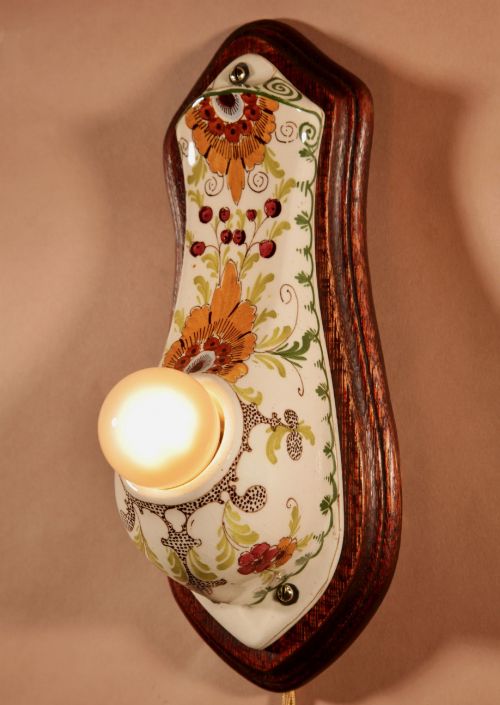
Among the illumination fittings, a solitary Victorian porcelain and wooden lever light switch makes a surprise appearance.
What varies in quality
The depth and crispness of the carving distinguish finer examples from simpler production, particularly in botanical motifs and scrollwork arms. Hand-applied gilding and polychrome work display varying degrees of nuance in layering and preservation.
Proportion and balance dictate the architectural success of multi-arm sconces, where symmetry and structural integration of the arms reflect the maker's skill.
The Wooden Wall Lights Glossary
- Giltwood
- Timber coated with fine gold leaf or gold paint over a prepared gesso ground. This technique creates a luminous metallic finish popular in Italian and French lighting.
- Polychrome
- Painted in several colours, often featuring floral or decorative motifs applied over a wooden or gesso base. It appears frequently on continental wall sconces.
- Sconce
- A wall-mounted lighting fixture designed to hold candles or electric bulbs. Historical examples often incorporate wooden backplates and arms.
- Gesso
- A plaster-like mixture applied to wood surfaces to provide a smooth base for gilding and painting. It allows for crisp relief details beneath metal leaf.
- Overmantel
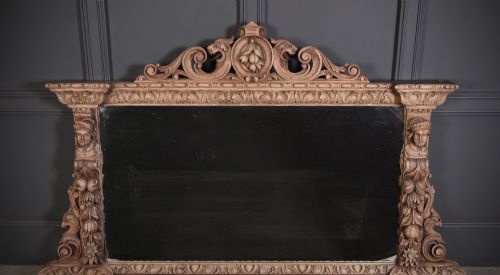
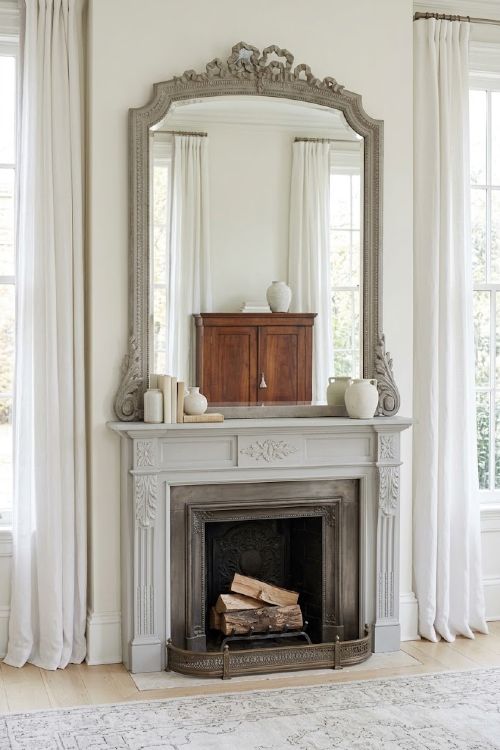
- A large mirror or decorative panel designed to hang above a fireplace mantel. Several examples incorporate carved wooden frames.
Wooden Wall Lights: Frequently Asked Questions
How do I wire antique wall lights?
Most wooden wall lights from the eighteenth to early twentieth centuries were originally designed for candles and require professional rewiring for modern electrical standards.
Qualified electricians can adapt the internal channels or discreetly run modern flex without damaging the historic timber structure.
Are these lights sold in pairs?
Many of the wall sconces and lighting fixtures listed appear as matched pairs, particularly the Italian and French provincial examples.
Single lights also occur within the selection for specific placement needs or asymmetrical interior schemes.
What periods do these pieces span?
The lighting fixtures and related wooden items range from eighteenth-century pieces through Victorian designs up to the nineteen-thirties.
Early twentieth-century Italian and French workshops produced substantial numbers of the giltwood and polychrome sconces available.
How do I clean giltwood sconces?
Giltwood surfaces require gentle dusting with a soft, dry brush to prevent abrasion to the delicate gold leaf layers.
Moisture and chemical cleaners must be avoided entirely to preserve the original gesso and metallic finishes.