


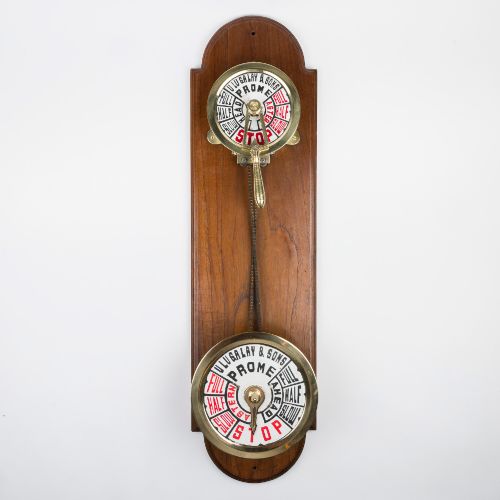
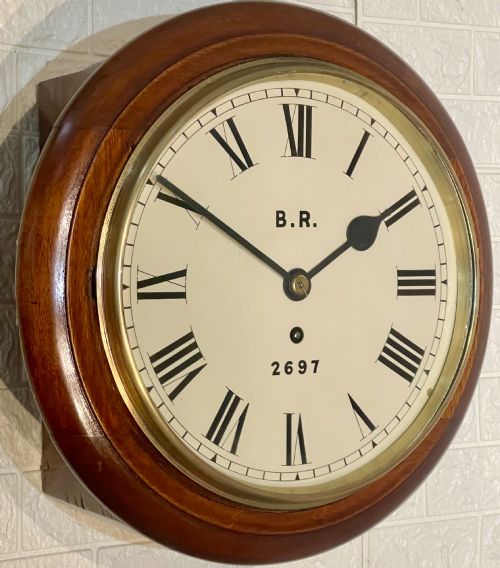
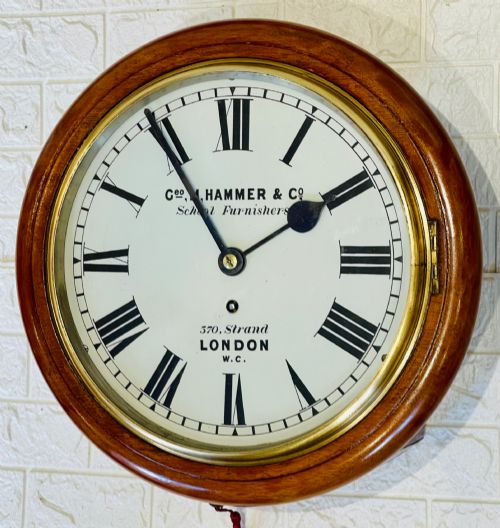
Wooden Wall Dial
A wooden wall dial brings time into a room with the straightforward honesty of a railway platform or a schoolroom.
Wooden Wall Dial
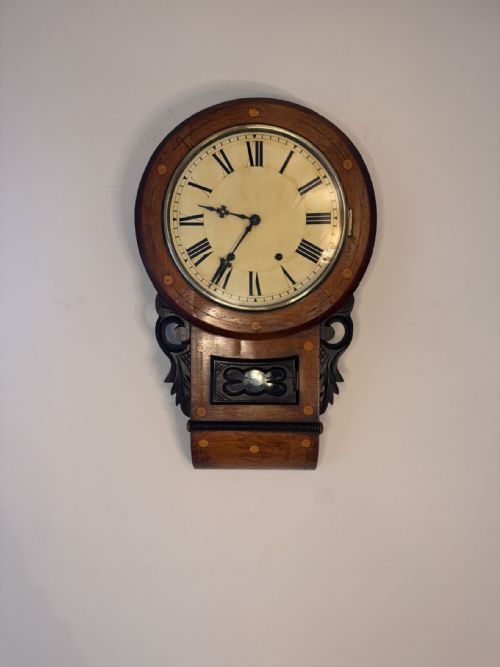
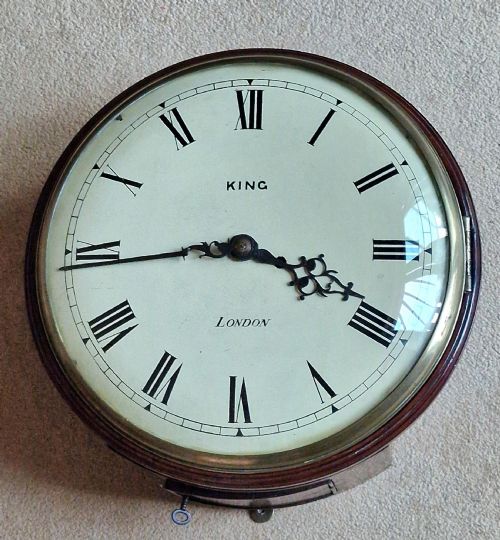
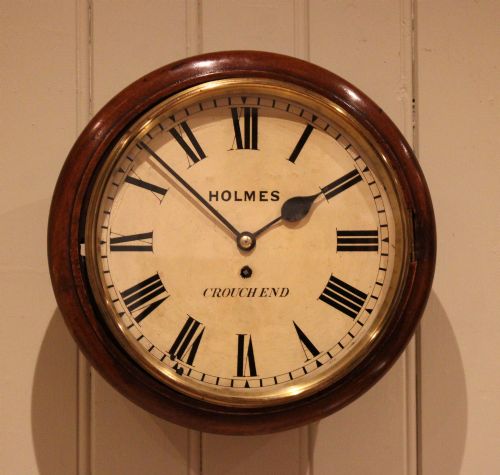
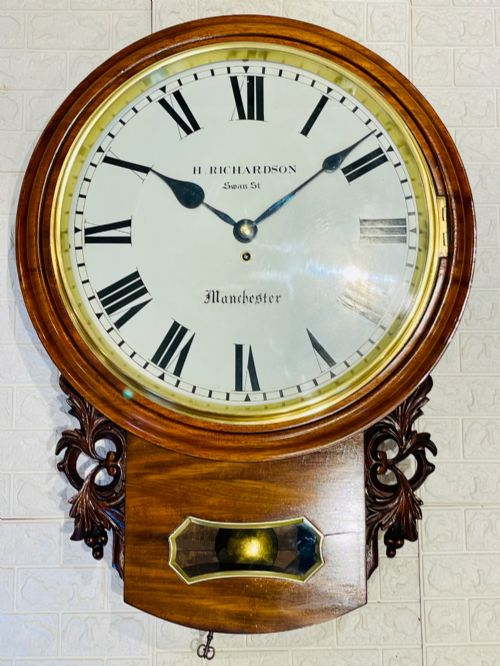
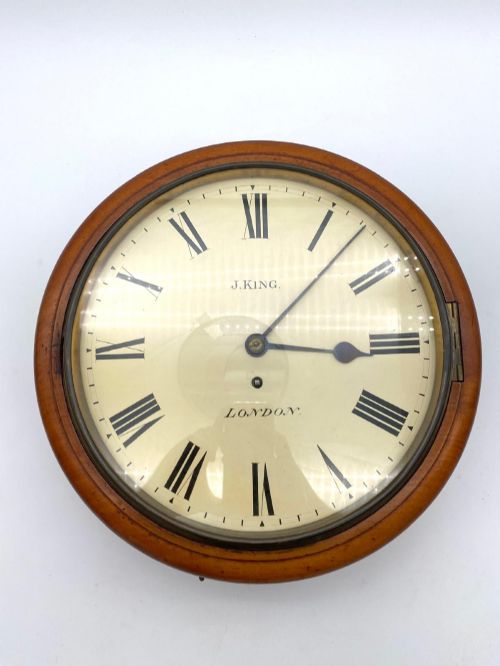
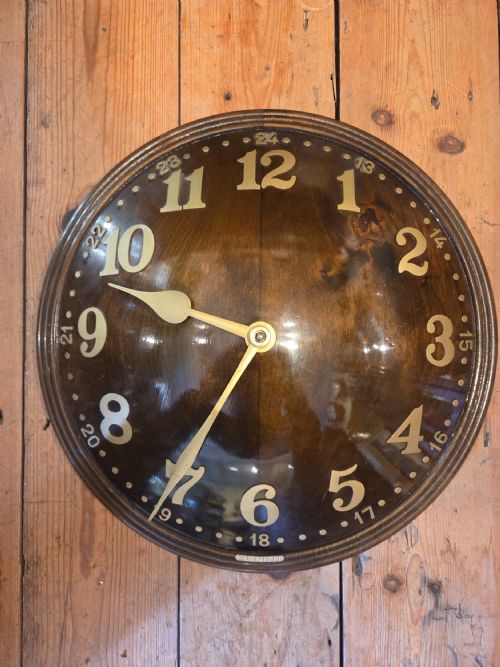
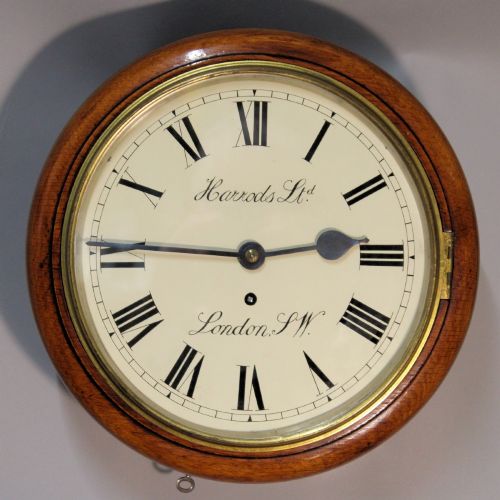
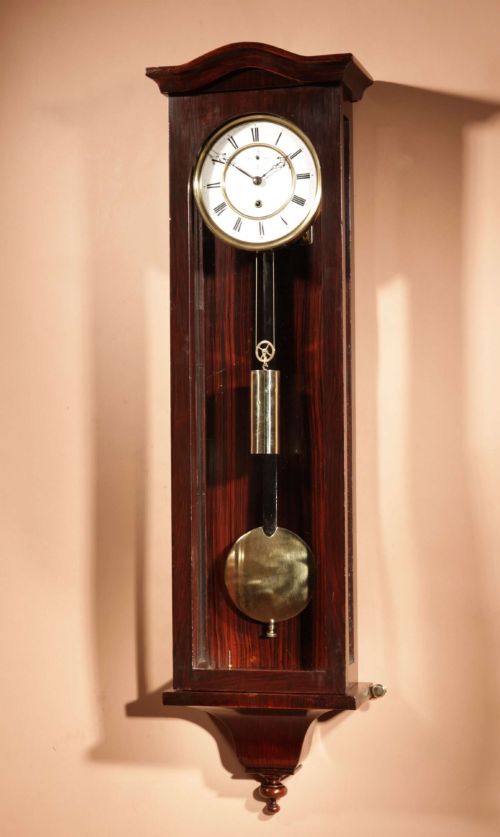
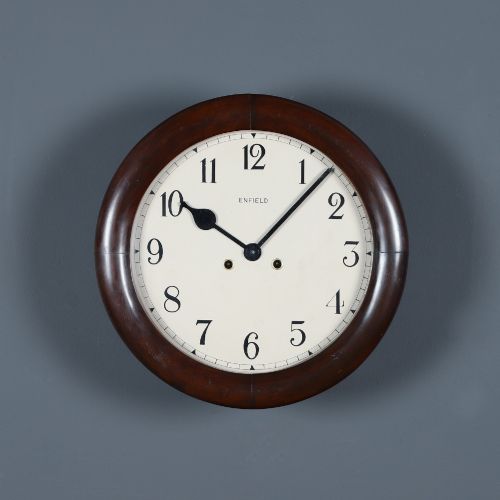
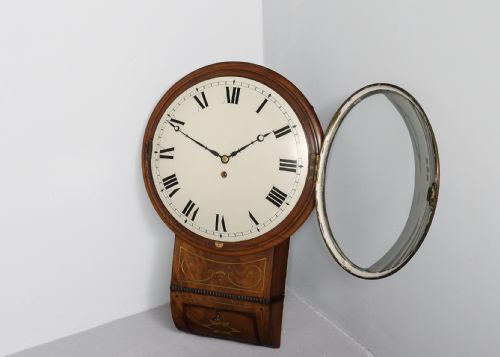
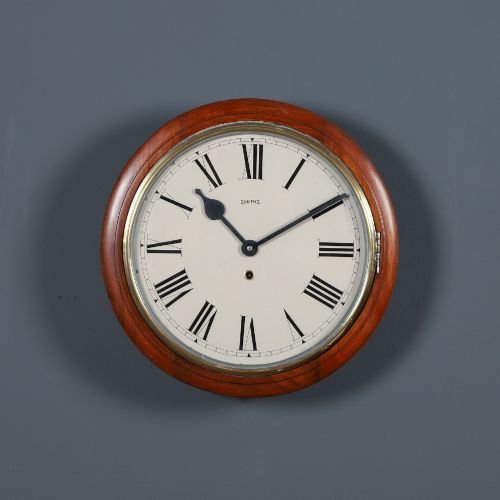
A wooden wall dial is a round-faced timepiece housed in a sturdy timber case, designed to be hung securely on a wall. When you search for a wooden wall dial, you encounter pieces spanning the Georgian, Victorian, and Edwardian eras, alongside later Art Deco examples. Most specimens met on this page take the form of fusee wall clocks or drop dial clocks housed in mahogany or oak.
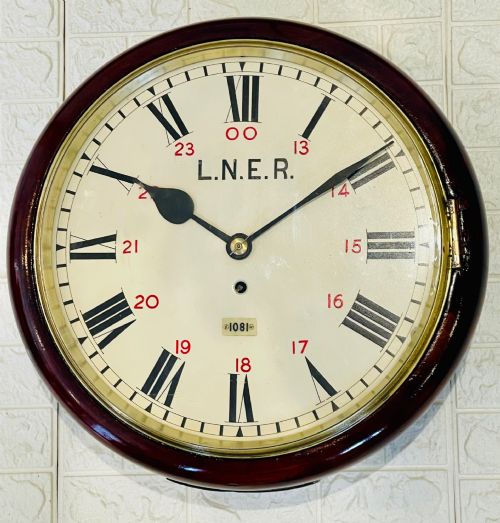
The selection ranges from utilitarian railway and station clocks bearing company initials to domestic models with brass inlays and carved details. Alongside standard timepieces, the listings include related wall-hung instruments such as barometers and calendars sharing the same circular wooden surrounds.
Materials and construction
Cases rely heavily on dense hardwoods like mahogany and oak, selected for their stability and ability to protect the delicate movement within. Walnut and pine also appear, sometimes finished with original paint or brass inlay work around the bezel.
The internal mechanics frequently utilise chain-driven or wire fusee movements, designed to maintain even power as the mainspring unwinds. Dials are constructed from painted wood, metal, or enamel, often protected by a heavy brass bezel and glass door.
Wooden Wall Dial Retail Price Guide 2026
Typical asking prices for wooden wall dial among the pieces listed under this phrase on Sellingantiques today, from the lower quarter to the upper quarter. They describe what is for sale here now, not the wider market.
Listings feature oak, mahogany, walnut, and pine timbers spanning the Victorian period, the Edwardian era, and the Art Deco movement.
Distinctions in quality
Quality rests in the crispness of the timber case joinery and the original integrity of the dial face. Better examples retain their matching numbered cases, original bezels, and unblemished painted numerals rather than repainted dials.
The sophistication of the movement itself separates standard utility clocks from finer pieces. A clean, well-maintained fusee movement with stamped maker details commands greater appreciation than a basic mass-produced mechanism.
Zenith·Ulugary And Sons·J Henry·George Clarke·D And J Wellby·B Besozzi
The Wooden Wall Dial Glossary
- Fusee
- A conical pulley connected to the mainspring by a chain or cord, designed to equalise the torque as the spring unwinds. This mechanism ensures consistent timekeeping throughout the 8-day run.
- Drop dial clock
- A wall clock featuring a circular dial mounted on a trunk or box that drops down to house a pendulum. This drop case often incorporates side inspection doors.
- Bezel
- The metal or wooden ring that holds the glass protecting the dial face. Hinged bezels allow easy access to set the hands.
- Tavern clock
- A large, long-case wall clock with a prominent round dial and a distinctively shaped wooden trunk. These were traditionally placed in public houses and railway offices for clear visibility.
Wooden Wall Dial: Frequently Asked Questions
Where should I hang a heavy wooden wall dial?
These clocks are exceptionally heavy due to their dense hardwood cases and brass movements. Hang them directly from a sturdy wall anchor or a solid wooden stud using appropriate fixings.
Avoid hanging them on drywall without proper support, as the vibrations from ticking and daily use can loosen insecure fastenings.
How do I tell an original railway dial from a reproduction?
Examine the timber case for authentic wear, shrinkage cracks, and stamped railway company initials or stock numbers. Genuine examples usually show distinct signs of working life on the bezel and dial.
Inspect the movement for maker signatures and period-correct construction rather than modern quartz conversions.
Why does my wall dial need to be beat set?
A wall clock must hang perfectly plumb against the wall so the pendulum swings with an even, symmetrical tick-tock rhythm. If the tick sounds uneven, the clock will eventually stop.
Adjust the bottom case screw or nudge the base gently left or right until the beat sounds completely regular.