


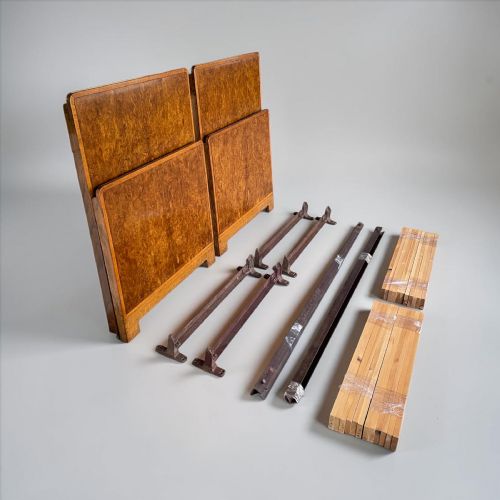
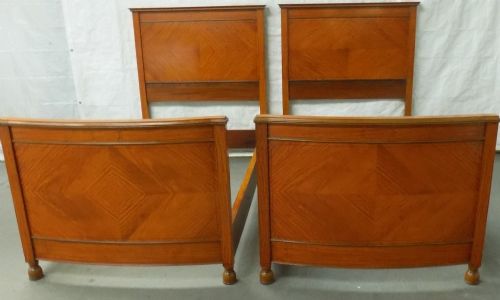


Wooden Twin Frames
Wooden twin frames are matched pairs of single beds and bed frames that bring period character and symmetry to a bedroom.
Wooden Twin Frames
Wooden twin frames comprise matched pairs of single beds and bed frames spanning the nineteenth century through the mid twentieth century. Buyers seeking wooden twin frames will predominantly find pairs of single beds from the Edwardian period and the nineteen-thirties.
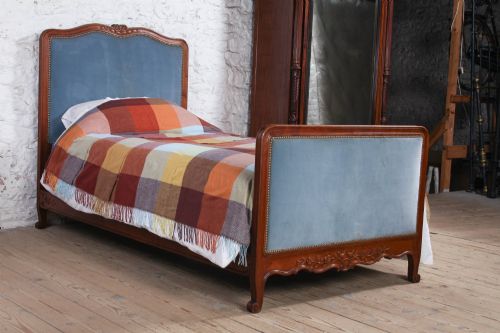
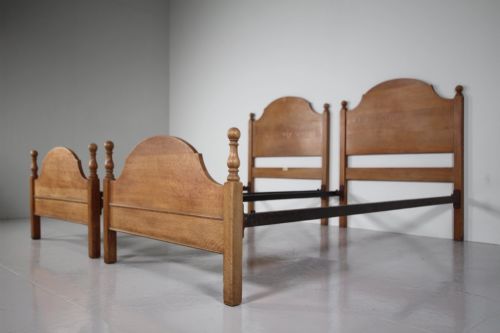
The selections range from Arts and Crafts oak frames and inlaid mahogany to French painted corbeille designs and fruitwood models. These pieces serve to furnish guest rooms or twin chambers with matching period aesthetic rather than mismatched single berths.
How they were made
Construction relies on solid timbers including oak, mahogany, walnut, fruitwood, and satinwood, frequently enhanced with parquetry, carving, or contrasting inlay. Iron, brass, and velvet appear as supporting hardware and upholstery details.
Joinery techniques span traditional cabinet making for panelled headboards and footboards to steam bending for curved elements like bow ends and French corbeille shapes.
Wooden Twin Frames Retail Price Guide 2026
Typical asking prices for wooden twin frames among the pieces listed under this phrase on Sellingantiques today, from the lower quarter to the upper quarter. They describe what is for sale here now, not the wider market.
Listings feature wooden twin frames spanning from eighteen-sixty through nineteen-forty, utilising oak, mahogany, walnut, fruitwood, and satinwood.
What varies in quality
Quality rests in the selection of timber figures, such as burr walnut or figured fruitwood, and the precision of inlaid details and carved ornament. Heavier timber frames with integrated panelling and maker attribution separate standard commercial output from superior workshop production.
The integrity of matching pairs dictates value, as matched bedframes surviving together with consistent patination and original hardware hold greater cohesion than assembled pairs.
Heal And Son·Oliver Morel·Betty Joel
The Wooden Twin Frames Glossary
- Bedstead
- A framework of wood supporting a mattress and bedding. It includes the headboard, footboard, and side rails.
- Corbeille
- A French style of bed featuring curved, basket-like ends that wrap around the sleeper. This form is often painted or upholstered.
- Inlay
- A technique of inserting pieces of contrasting wood into a solid timber surface to form decorative patterns. Edwardian makers utilised this extensively on mahogany frames.
- Parquetry
- Geometric wood mosaic work used for decorative flooring or furniture surfaces. Fruitwood frames sometimes display this precise patterning.
- Bergere
- A French-style enclosed armchair or bed end featuring cane panelling. Oak versions appear within Arts and Crafts designs.
Wooden Twin Frames: Frequently Asked Questions
How do I style wooden twin frames?
Pair matching wooden twin frames with symmetrical bedside cabinetry and coordinated linens to preserve the balance of the room. Keeping the surrounding decor restrained lets the timber grain and period details of the frames remain the focal point.
Position the beds with a shared central table or keep them apart across opposite walls depending on the proportions of the bedroom. The matching timber tones unify the space without requiring identical furniture elsewhere.
Will modern mattresses fit antique frames?
Many antique single beds were built to nineteenth or early twentieth-century dimensions, which can differ slightly from modern standard single mattress sizes. Checking the internal length and width between the side rails before purchasing ensures a proper fit.
Custom mattress makers can supply bespoke sizes if the frame dimensions fall outside modern standard manufacturing. Slatted bases can also be adjusted or inserted to support contemporary mattresses safely.
How do I care for antique wood?
Dust the timber surfaces regularly with a soft, dry cloth to prevent grit accumulation. Avoid placing wooden frames in direct sunlight or near heat sources to prevent the wood from drying out and splitting.
Apply a traditional beeswax polish occasionally to nourish the grain and maintain the natural lustre of the finish. Avoid silicone-based sprays that can penetrate the timber and damage the surface over time.
How can I date a wooden frame?
Examine the timber species, construction methods, and decorative style to determine the era of manufacture. Edwardian frames often feature inlaid mahogany or satinwood, while nineteen-thirties pieces favour stripped fruitwood, oak, or streamlined Art Deco forms.
Look for maker labels, stamps, or retail tags affixed to the inner rails or headboards. Tool marks, screw types, and hardware fixings also provide clear indicators of nineteenth or twentieth-century production.