



Wooden Towel Horse
A wooden towel horse is a practical piece of domestic furniture designed for drying and airing linens, combining utility with period charm.
Wooden Towel Horse
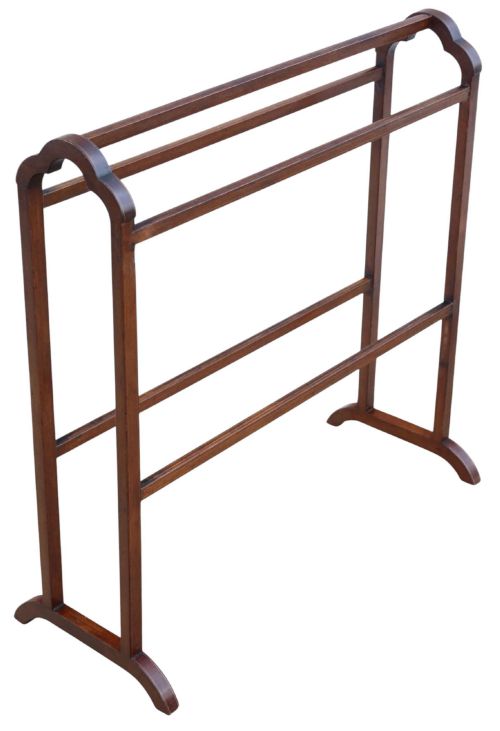
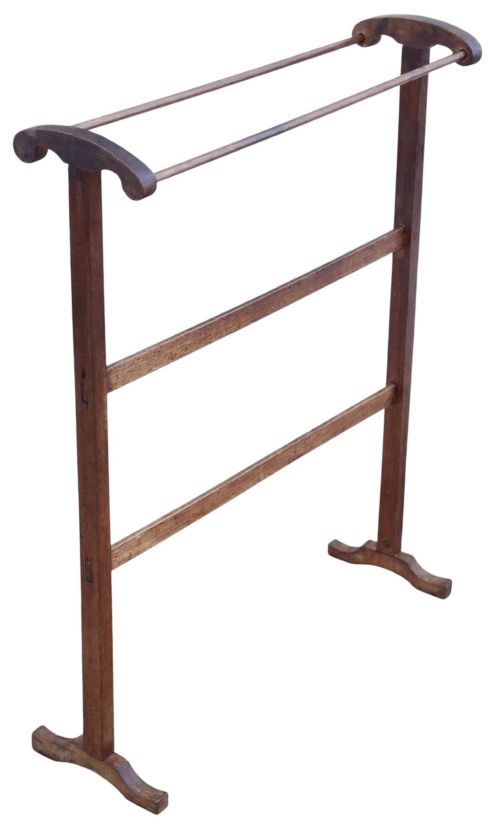
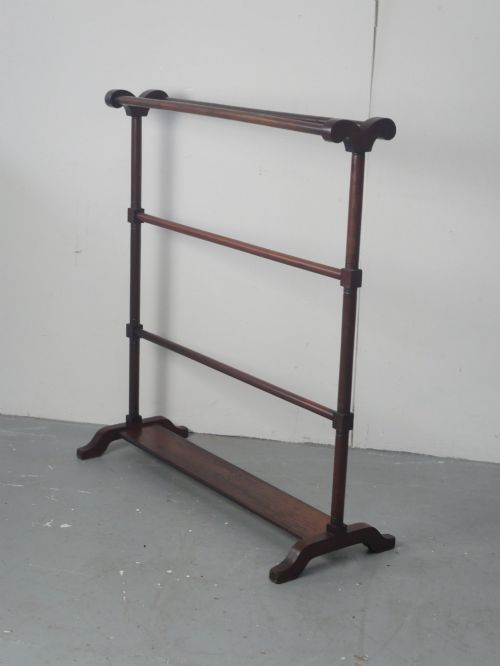
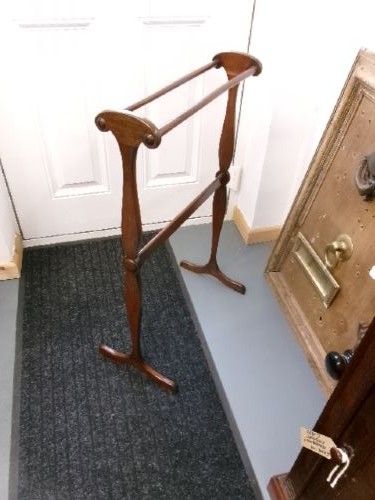
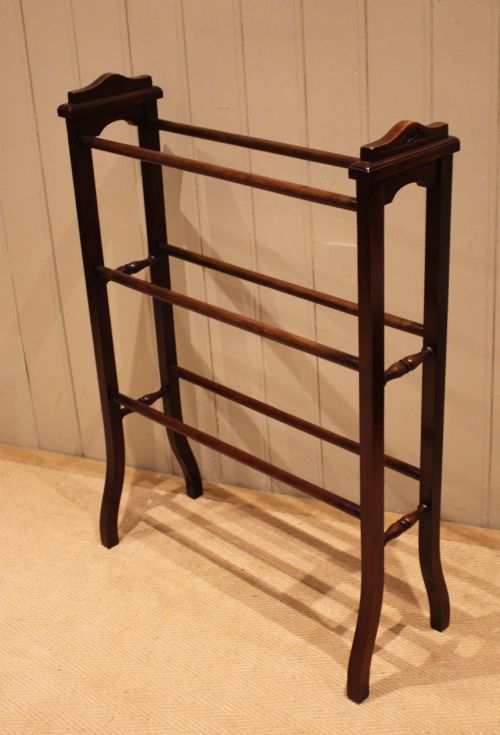
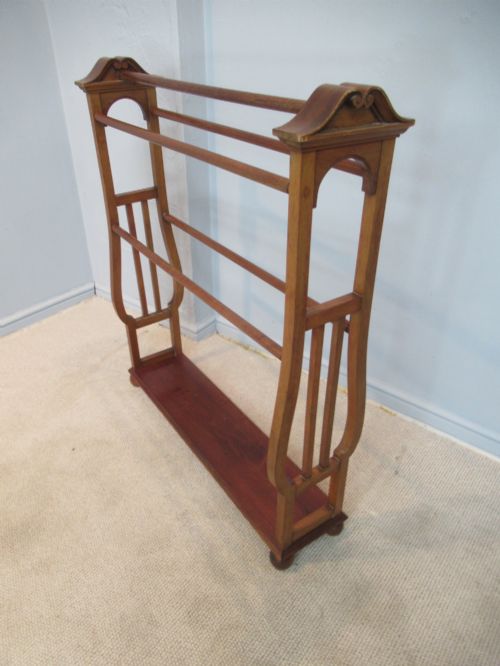
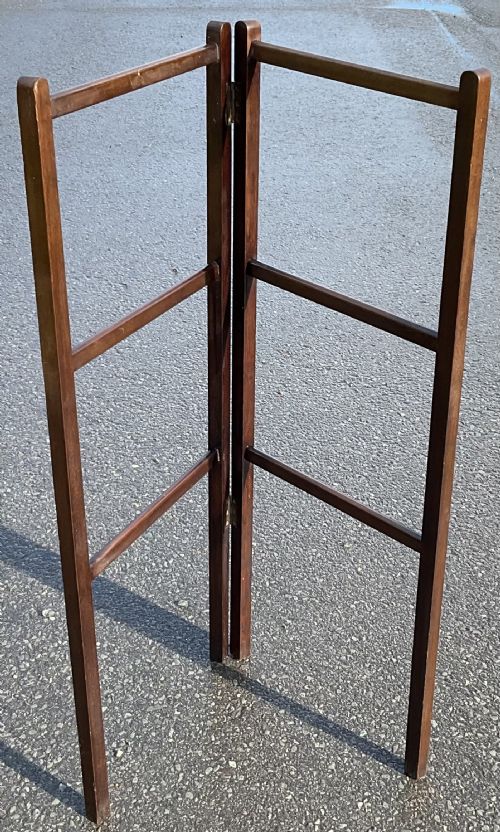
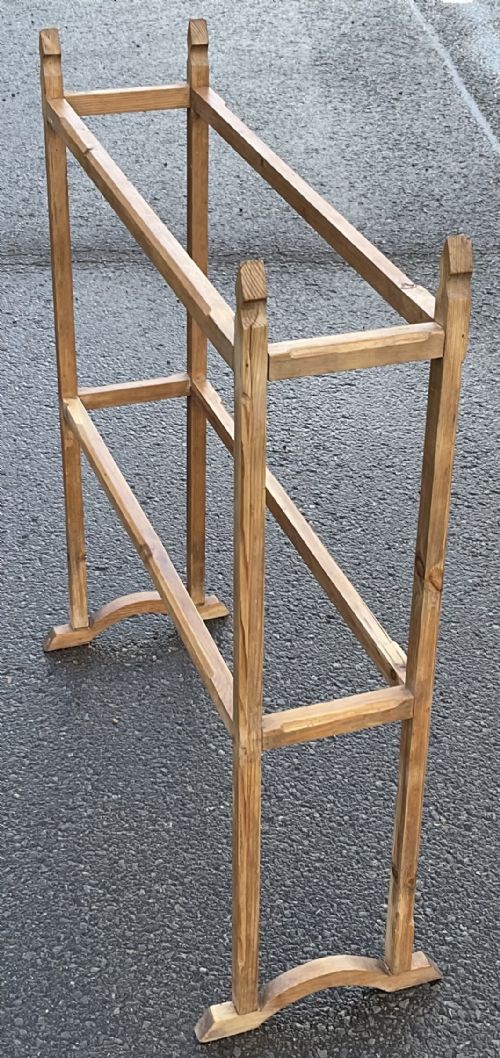
A wooden towel horse is a functional piece of period utility furniture designed to hold and dry household linens. These items appear in various forms, including folding designs, standing rails, and clothes racks suited for bedrooms and dressing rooms.
The versions most commonly met on this page date from the nineteenth and early twentieth centuries, spanning Victorian, Edwardian, and Regency periods. They range from simple pine frames to substantial mahogany and oak stands with multiple rails.
Materials and construction
Cabinet makers utilised a variety of timbers for these frames, predominantly mahogany, pine, oak, and walnut, occasionally incorporating satinwood inlay or brass details for decorative effect. Ebonised wood also appears among the surviving examples.
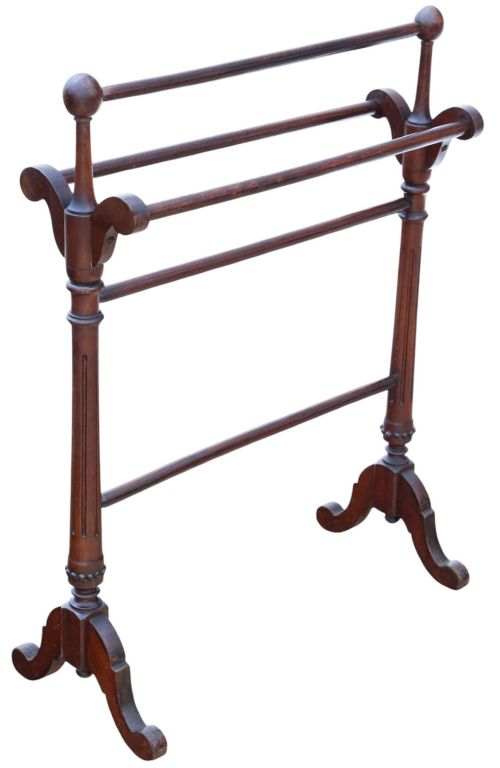
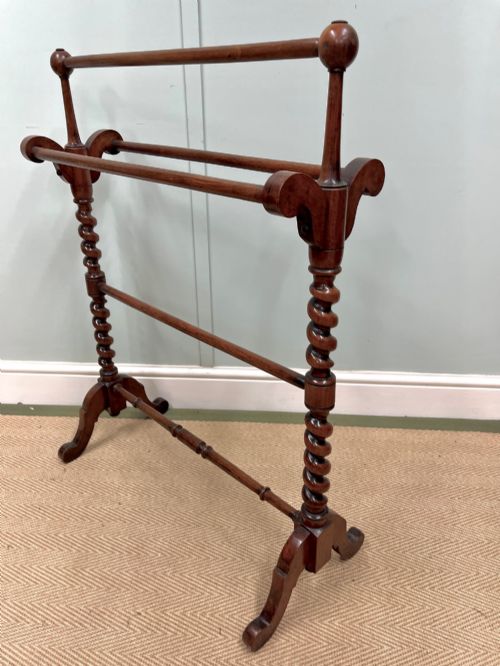
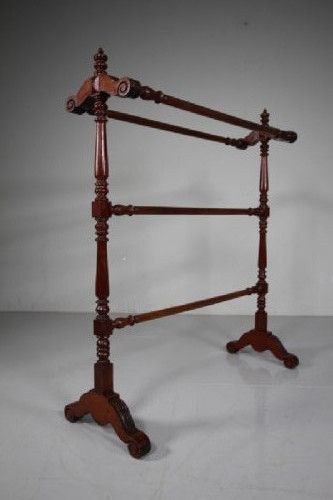
Construction methods varied from simple pegged joints in country pieces to finer turned uprights and hinged folding frames in mahogany and walnut, designed to stand independently and support the weight of wet textiles.
Mahogany and pine dominate the materials seen, while Edwardian and Victorian eras account for the majority of listed periods.
Judging quality and proportion
The distinction between standard utility items and finer examples rests on timber selection, such as figured mahogany or quarter-sawn oak, and the sophistication of the turning on the uprights and rails. Scale also dictates quality, with larger William IV or oversized pieces showing more ambition in design.
Subtleties like inlaid satinwood decoration, secure hinge mechanisms on folding multi-bar rails, and balanced proportions elevate certain stands from simple domestic laundry accessories to accomplished pieces of period furniture.
The Wooden Towel Horse Glossary
- Cheval towel rail
- A freestanding pivoting frame that swings within a fixed supporting structure, allowing air to circulate around the hanging laundry. This form often appears in larger Victorian bedrooms.
- Ebonised wood
- Timber treated with a dark finish to imitate expensive ebony, a technique frequently applied during the late nineteenth century to create stark contrast.
- Gothic Revival
- A nineteenth-century design movement drawing inspiration from medieval architecture, often recognised in these pieces through pointed arches or heavier structural framing.
- Satinwood inlay
- Contrasting blonde wood inserted into the primary timber surface in geometric or floral patterns, characteristic of Edwardian cabinet work.
Wooden Towel Horse: Frequently Asked Questions
How do I use a wooden towel horse today?
These pieces serve well in bathrooms and bedrooms for hanging towels, blankets, or clothes. Their folding designs allow them to be tucked flat against a wall when not in use.
Positioning them away from direct heat sources prevents the timber from drying out or warping over time, preserving the joints and finish.
How do I date a wooden towel horse?
Dating relies on timber choices, construction techniques, and prevailing styles visible in the turned supports and feet. Regency and William IV pieces often display heavier proportions and rich mahogany surfaces.
Edwardian and later Victorian versions frequently feature lighter pine or inlaid mahogany, reflecting changing domestic interiors and manufacturing methods of the early twentieth century.
Are these pieces sturdy enough for daily use?
Most standing and folding rails remain robust enough for holding household textiles. Regular checking of hinges and tenon joints ensures stability under weight.
Careful handling prevents strain on the pivoting arms of multi-bar stands, maintaining the structural integrity of the frame during daily domestic routines.
What is the difference between a towel rail and a clothes rack?
Towel rails generally feature lower horizontal bars specifically spaced for hanging linens in bedrooms or bathrooms. Clothes racks often provide taller or wider frames for garments.
Both serve similar functional purposes in period homes, though larger oversized formats indicate utility spaces or dressing rooms rather than standard washrooms.