

Wooden Three Legged Table
A wooden three legged table provides a sturdy tripod base that sits firmly on uneven floors, offering compact charm for any room.
Wooden Three Legged Table
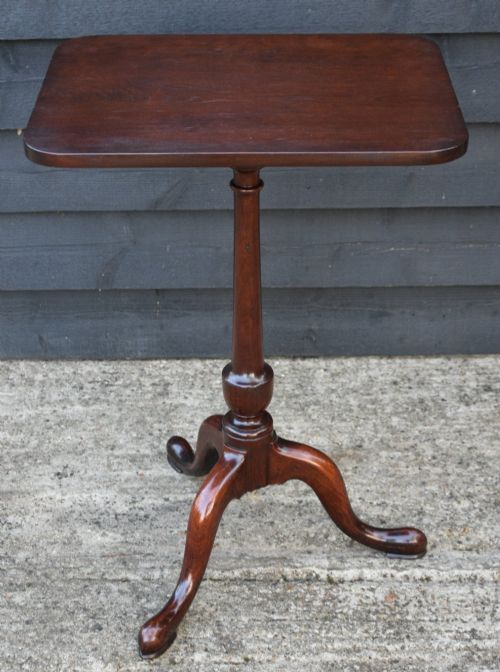
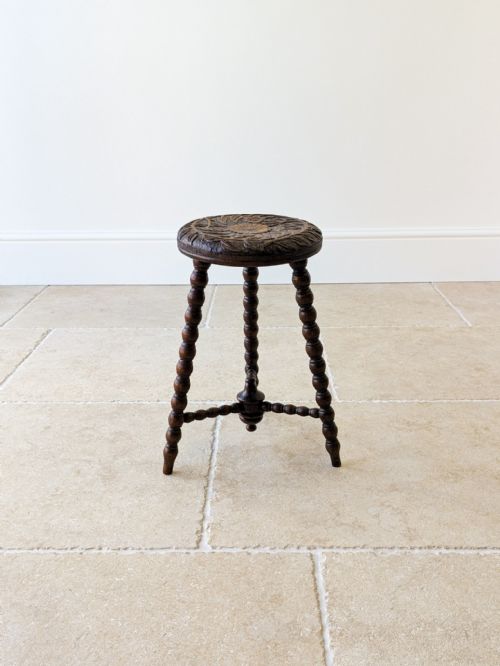
A wooden three legged table typically appears as a traditional cricket table, an occasional piece, or a rustic chopping block. These utilitarian objects span periods from the Georgian era through the Victorian period and into the early twentieth century.
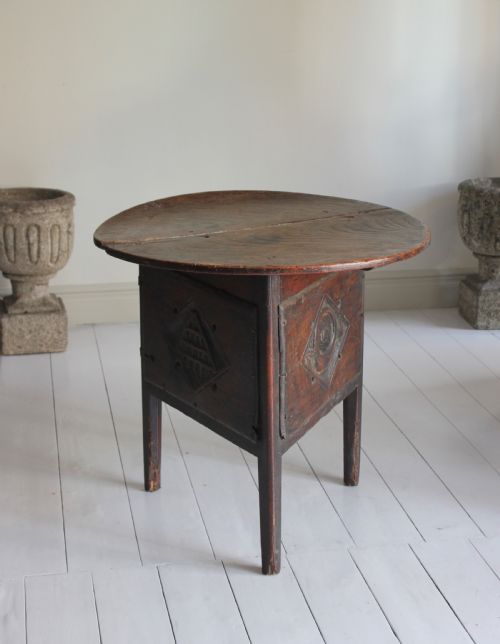
The version most commonly met on this page is the oak or elm cricket table, originating from English country workshops. These simple tripod designs served everyday domestic purposes in rural settings.
Beyond the standard tripod tables, the selection includes related forms such as milking stools and small lamp tables. Materials range from native hardwoods like oak and elm to imported timber such as mahogany.
Materials and Technique
Makers constructed these tripod tables using native British timbers like oak, elm, and ash, alongside cabinet woods such as mahogany and walnut. Joinery often relied on simple pegged or wedged tenons to secure the three legs firmly into the underside of the tabletop.
Turned legs feature prominently on many examples, showing the use of a lathe to shape ash, pine, or beech components. Other pieces employ gnarled or rustic natural branches for legs, reflecting a straightforward vernacular approach.
Surfaces received minimal finishing beyond basic oiling, waxing, or occasional painted decoration, allowing the natural grain of the hardwood to show. Carving remains restrained, limited to chip-carving or simple geometric mouldings on select tables.
Wooden Three Legged Table Retail Price Guide 2026
Typical asking prices for wooden three legged table among the pieces listed under this phrase on Sellingantiques today, from the lower quarter to the upper quarter. They describe what is for sale here now, not the wider market.
Some chopping blocks retain their original gnarled legs, having spent generations battered by kitchen cleavers.
Judging Quality
The distinction between ordinary and superior pieces rests on the choice of timber and the harmony of proportion. Tables fashioned from well-figured oak or rich mahogany with balanced, slender legs demonstrate superior craftsmanship compared to utilitarian kitchen blocks.
Construction integrity defines the upper tier of these items. Original timber, intact pegging, and minimal replacement parts maintain the historical integrity that distinguishes a fine antique from a heavily restored utilitarian object.
Liberty of London
The Wooden Three Legged Table Glossary
- Cricket table
- A small, three-legged wooden table traditionally featuring a round top and pegged construction. This form originated in English vernacular furniture for domestic use.
- Vernacular
- Everyday furniture made by regional craftsmen using local materials rather than following high-style urban fashions. These pieces prioritize function over ornament.
- Tripod
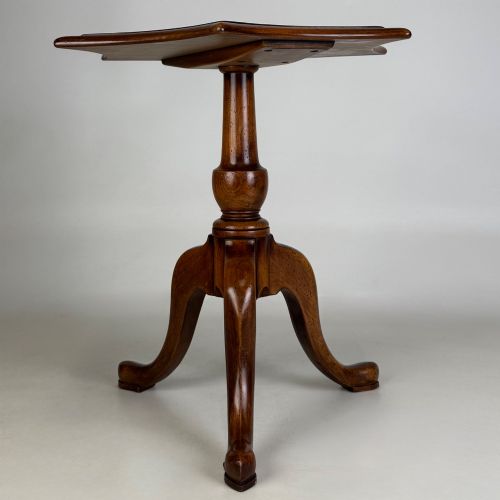
- A base configuration utilising three supporting legs. This design ensures the table remains stable on uneven flagstone or wooden floors.
- Pad foot
- A simple rounded foot found at the base of a cabriole or straight leg. It spreads the weight of the furniture evenly across the floor.
Wooden Three Legged Table: Frequently Asked Questions
How old are these tables?
The pieces span several centuries, with examples originating from the Georgian and Victorian periods, as well as the Edwardian era and the early twentieth century.
Dating relies on timber characteristics, tool marks, and construction methods rather than strict chronological labels.
Where were they used?
These tables served various domestic functions, from bedside lamp stands and wine tables to kitchen chopping blocks and general household surfaces.
Their small scale allowed them to be easily moved around the home as needed.
What woods were used?
Makers utilised native British hardwoods such as oak, elm, ash, and pine, alongside imported cabinet timbers like mahogany and walnut.
Selection depended on regional availability and the intended function of the table.