

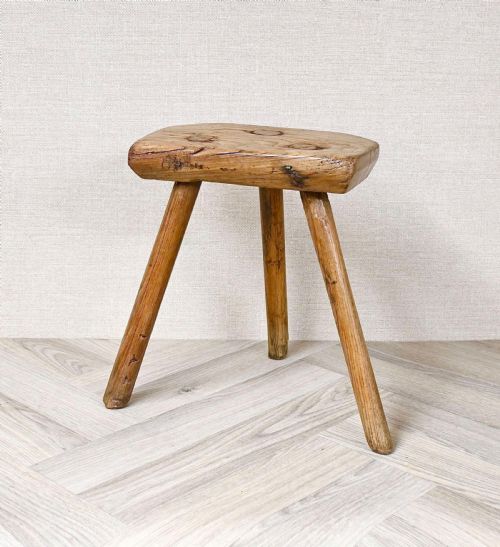


Primitive Three Legged Stool
These primitive three legged stool examples are honest rural seats built from solid native woods to handle hard daily farm and workshop life.
Primitive Three Legged Stool
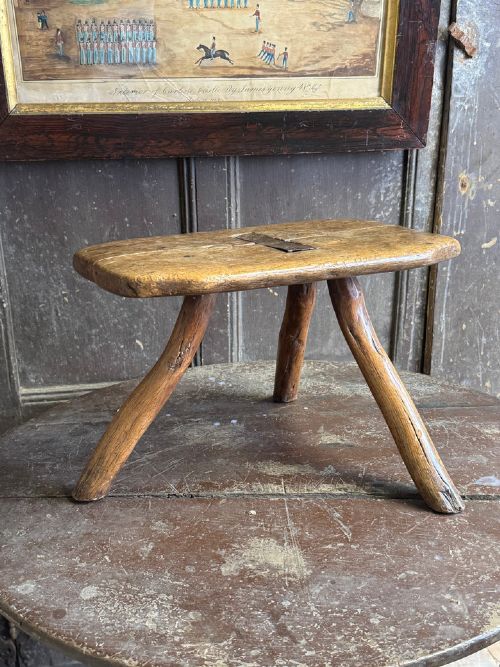
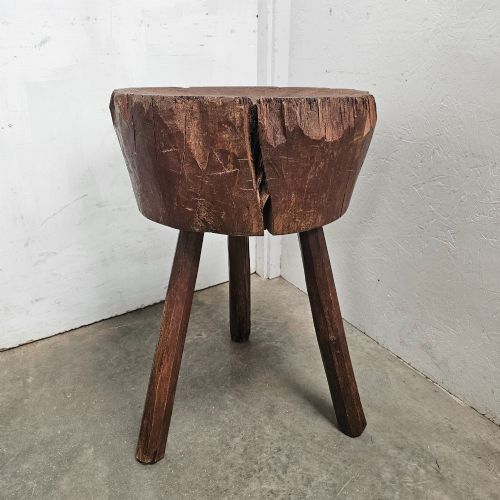
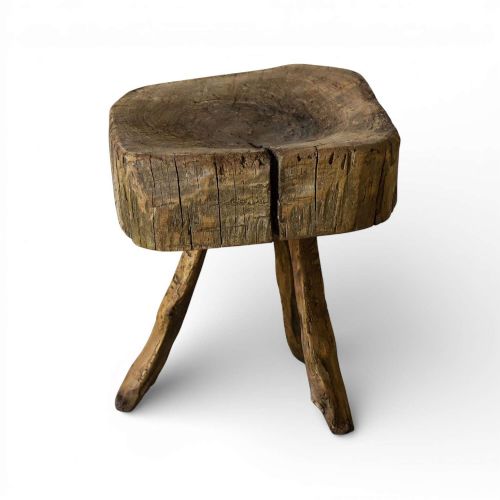
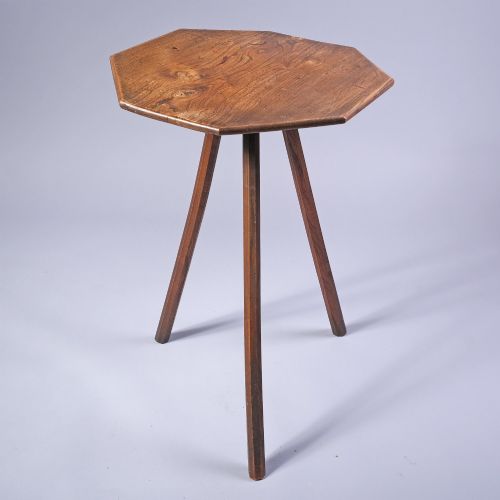
When you search for a primitive three legged stool, you encounter robust domestic and working seating shaped by country makers using whatever timber came to hand. The examples shown here span the eighteenth and nineteenth centuries, taking forms such as milking stools, cutler's stools and low side tables.
Most pieces on this page lean into rustic vernacular, Georgian vernacular and French country styles. Their three-legged construction ensures they remain stable on uneven floors, a practical necessity in barns, dairies and rural cottages.
How they were made
Maker-craftsmen built these seats using strong hardwoods like oak, elm, ash, beech and general timber. Legs were often splayed and wedged firmly into drilled seats, sometimes featuring blacksmith repairs or gnarled natural branches.
Surfaces bear the marks of adzes, drawknives and planes. Iron wire or hand-forged metal reinforcements appear where heavy working use required structural support.
Primitive Three Legged Stool Retail Price Guide 2026
Typical asking prices for primitive three legged stool among the pieces listed under this phrase on Sellingantiques today, from the lower quarter to the upper quarter. They describe what is for sale here now, not the wider market.
Several stools arrive complete with historic blacksmith repairs, proving that a solid farm seat was too useful ever to throw away.
What varies in quality
Quality rests in the honesty of the materials and the integrity of the original construction. Pieces with untouched surface patination and honest blacksmith repairs sit at the upper end of the range.
Lesser pieces lose their character through excessive cleaning or unsympathetic modern intervention that strips away the tactile evidence of working life.
The Primitive Three Legged Stool Glossary
- Vernacular
- Everyday objects made by local craftsmen for practical use rather than high-style design. This term defines the honest character of country furniture.
- Splayed legs
- Legs angled outwards from the centre for greater stability. This technique prevents tipping on uneven flagged or earthen floors.
- Elm
- A tough, interlocking hardwood frequently chosen for seats and chopping blocks because it resists splitting. Makers valued its resilience under heavy loads.
- Patina
- The surface sheen and colour developed through decades of handling, wear and waxing. It reveals the age and history of a wooden object.
Primitive Three Legged Stool: Frequently Asked Questions
What were primitive stools used for?
These stools served practical roles around the farm, dairy and workshop. Milkers, cutlers and shepherds relied on them for low seating during long hours of physical work.
Their simple build meant they could be easily grabbed and moved around tight cottage interiors or muddy yards.
How do I care for antique timber?
Keep these pieces away from direct heat sources and dramatic humidity shifts to prevent the wood from splitting. Feed dry surfaces occasionally with a traditional beeswax polish.
Avoid modern liquid cleaners that strip away the historic surface sheen.
How old are these stools?
The examples on this page date primarily from the eighteenth and nineteenth centuries. Makers built them by hand using traditional regional tools and native timbers.
Their age shows through tool marks, wear patterns and structural repairs.