

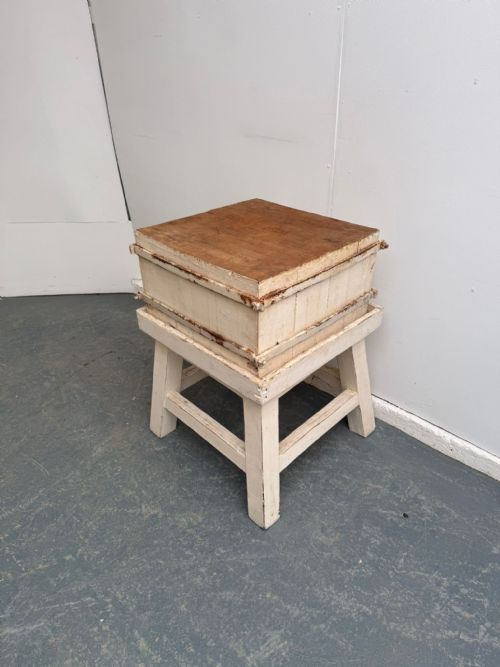


Antique Meat Chopping Block
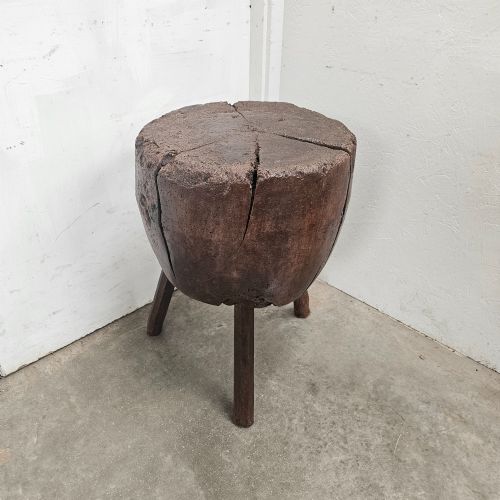
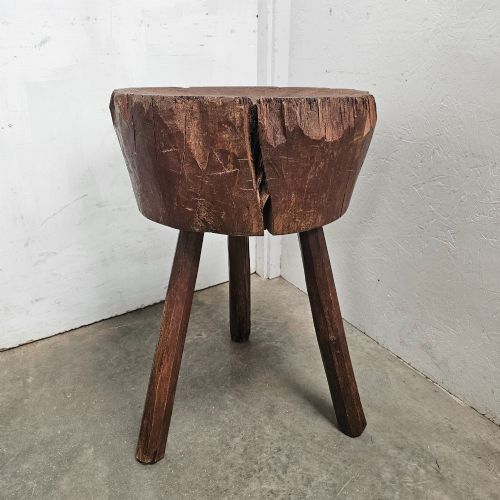
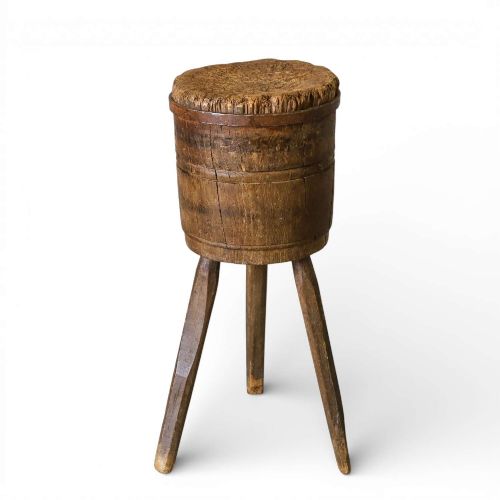
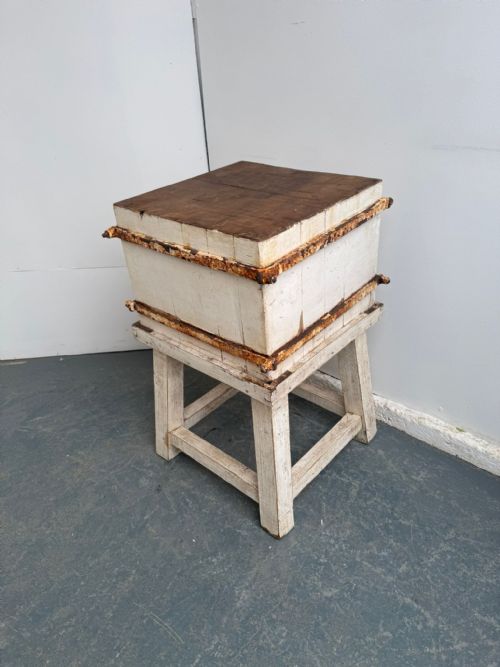
These heavy utility pieces of antique meat chopping block combine dense end-grain timber and sturdy bases to anchor a kitchen.
Antique Meat Chopping Block
An antique meat chopping block is a substantial culinary counter built to withstand heavy cleaver work and daily preparation in professional kitchens and domestic larders. The pieces gathered here range from compact game blocks to large freestanding butcher tables.
Most examples hail from the nineteenth and early twentieth centuries, spanning Victorian Britain and provincial France alongside Hungarian workshops. Buyers frequently encounter French elm and beech surfaces alongside painted Hungarian variants set on tripod or four-legged stands.
Form follows strict utility, with thick timber tops supported by robust wooden or iron frames designed to absorb shock without shifting. These survivors of trade now find new purpose as kitchen islands and preparation tables.
How they were made
Maker construction relies on dense hardwoods such as beech, oak, elm, and miscellaneous dense hardwoods arranged to present end-grain or robust plank surfaces that resist deep scoring from blades. Iron, metal, and bronzed mounts provide structural bracing to keep the heavy timber tops secure.
Bases range from simple softwood frames to turned wooden legs and heavy metal tripod supports, occasionally finished with painted surfaces or glass tops in later adaptations. The integration of metal hardware ensures the weighty timber remains stable under intense downward force.
Antique Meat Chopping Block Retail Price Guide 2026
Typical asking prices for meat chopping block among the pieces listed under this phrase on Sellingantiques today, from the lower quarter to the upper quarter. They describe what is for sale here now, not the wider market.
One French block arrives complete with bronzed mounts and a glass top, proving that even a heavy butcher's table can dress up for the parlour.
What varies in quality
Quality rests in the depth and integrity of the timber top, where decades of heavy use leave an authentic topography of wear without compromising structural thickness. Pieces retaining their original stands, whether iron-mounted frames or turned wooden legs, hold greater architectural presence.
The choice of dense woods like beech and elm rather than softer timbers dictates longevity and the ability of the surface to withstand moisture and impact. Original painted finishes and distinct regional forms, such as French provincial or Hungarian round designs, elevate the visual character of the piece.
Hennes France
The Antique Meat Chopping Block Glossary
- End-grain
- Timber cut across the growth rings to present the hardest fibres upward. This grain orientation absorbs knife blows efficiently and heals better than face grain.
- Charcuterie block
- A specialised chopping surface traditionally used for pork preparation and cold meat slicing. These items often display distinct scaling and staining from regional European trade.
- Game block
- A compact chopping station designed for dressing small game birds and hares. These typically feature smaller surface areas than full butcher tables.
- Tripod base
- A three-legged support structure utilised on circular blocks for stability on uneven flagstone floors. This configuration prevents rocking under heavy downward pressure.
- Bronzed mounts
- Cast metal brackets and braces finished with a bronze tone to reinforce the wooden carcass. These elements add both structural rigidity and industrial detail.
Antique Meat Chopping Block: Frequently Asked Questions
How heavy is a butcher block?
These blocks are exceptionally heavy due to the thick solid timber tops and robust wooden or iron frames. Moving them requires multiple people and careful planning for floor weight.
Once positioned in a kitchen or dining space, they remain firmly in place without needing permanent floor fixings.
Can I use it for food preparation?
Many buyers oil the historic timber surfaces with food-safe oils to restore the wood for daily chopping tasks. The dense hardwood construction naturally resists knife penetration when properly maintained.
Some owners choose to place glass tops over the timber to preserve the aged patina for decorative display.
How do I clean an old block?
Routine maintenance involves scraping away residue and wiping the surface with a damp cloth and mild soap. Avoid soaking the timber in water to prevent warping or splitting.
Applying mineral oil periodically keeps the dry nineteenth-century hardwood nourished and protected.
Were these used in homes?
Most commercial blocks originated in butcher shops, country markets, and game larders rather than domestic kitchens. Their robust scale reflects the rigorous demands of daily trade work.
Today, their generous proportions make them ideal freestanding kitchen islands.