

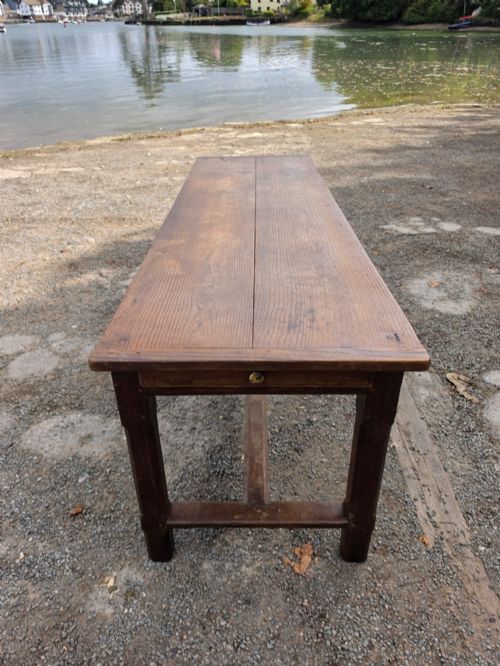
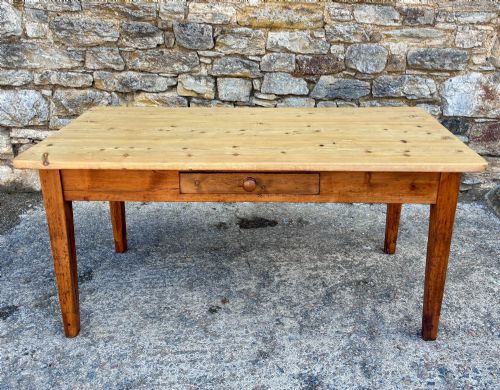
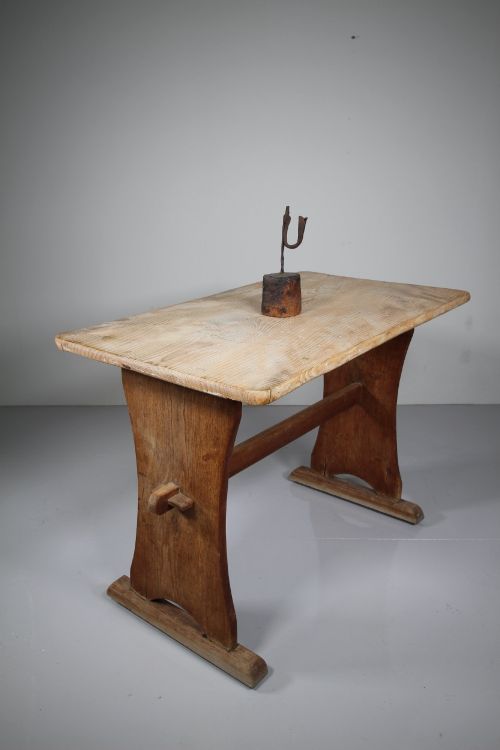
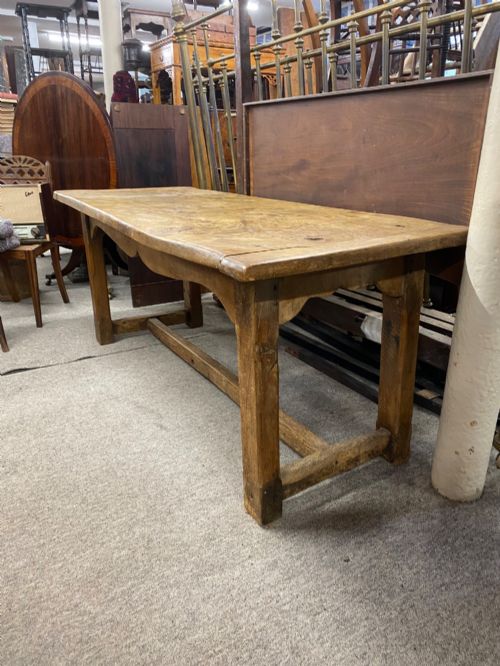
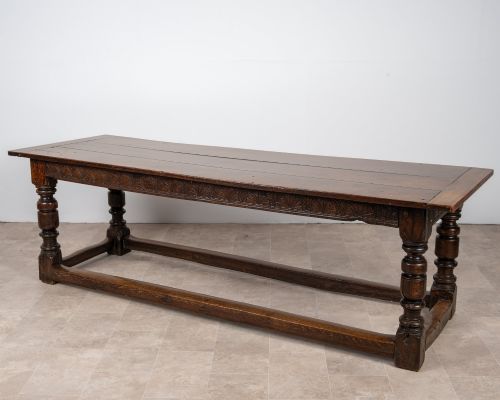
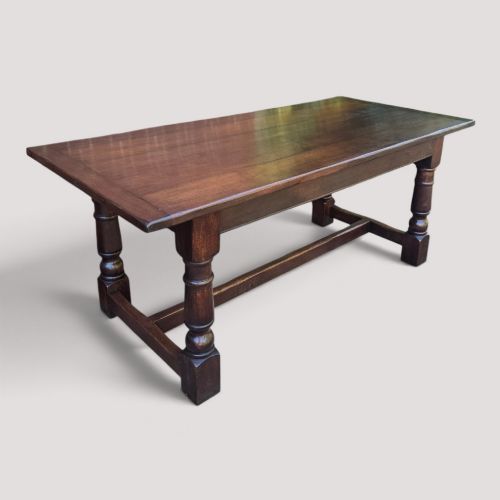
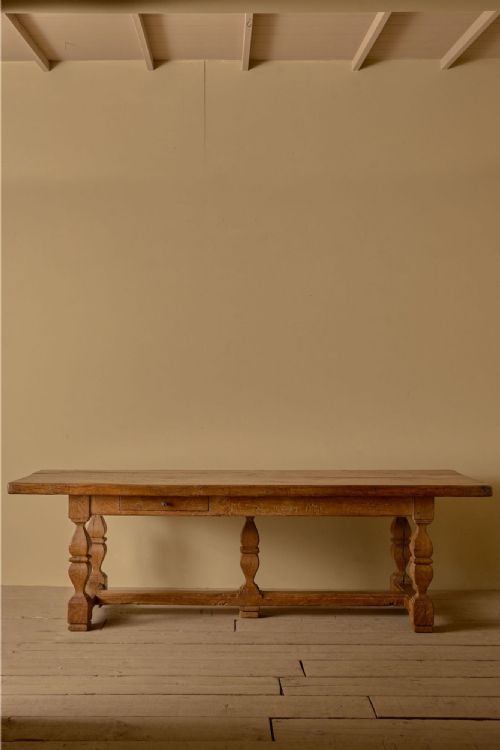
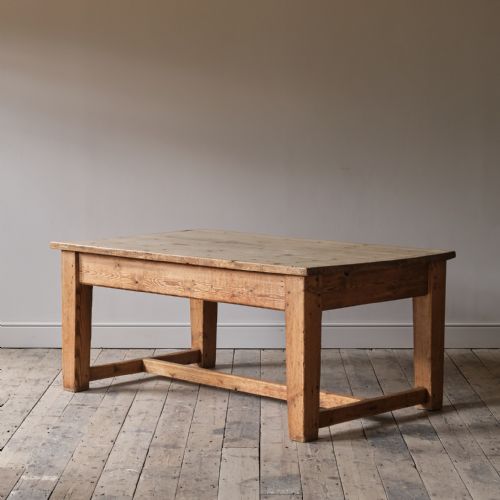
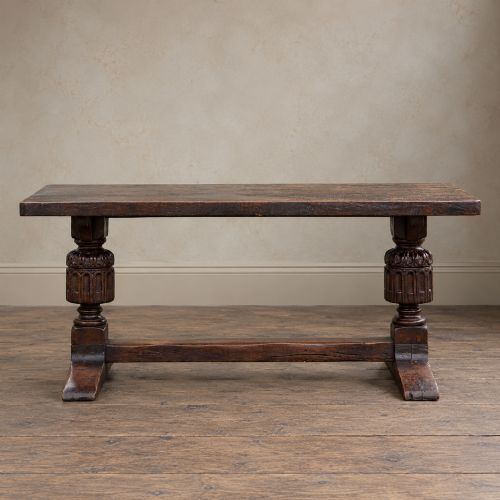


Wooden Tavern Dining Table
A wooden tavern dining table brings sturdy timber and centuries of hospitality straight into a modern interior.
Wooden Tavern Dining Table
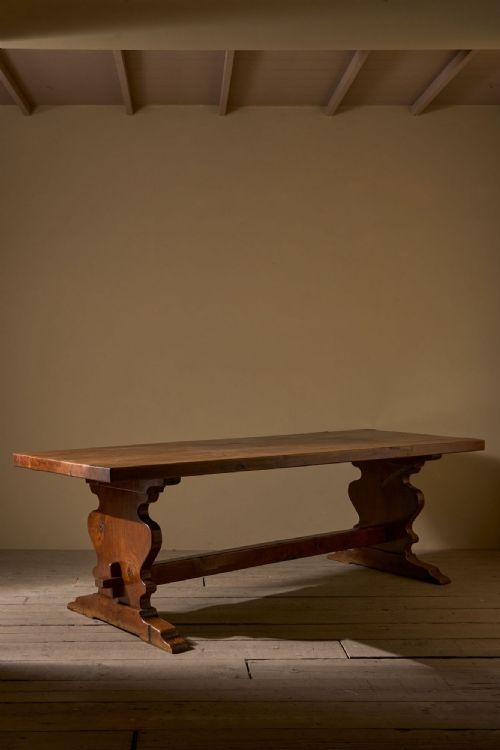
When you search for a wooden tavern dining table, you encounter robust refectory, trestle, and farmhouse forms designed for communal dining. These pieces originate across the 17th, 18th, and 19th centuries, alongside select early 20th-century examples.
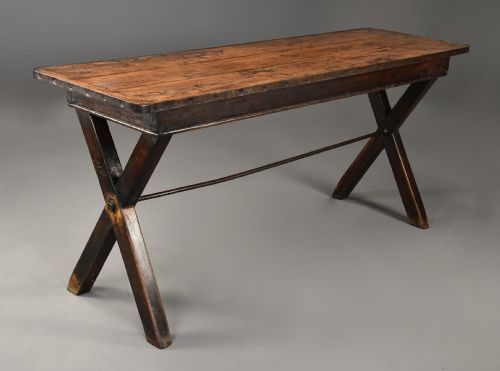
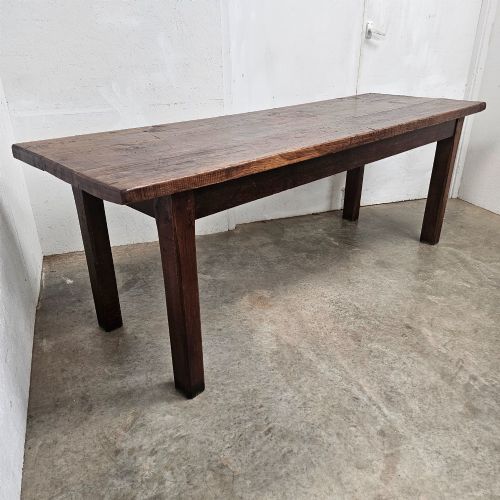
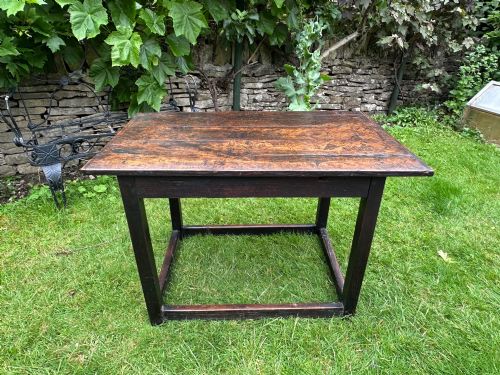
The versions most frequently met on this page combine thick timber tops with strong structural legs in oak, pine, elm, and chestnut. They span English, Welsh, French, and Spanish origins, taking the shape of kitchen tables, benches, and dedicated tavern tables.
Many items display straightforward utility, while others incorporate carved details, painted surfaces, or specific regional joints like the Jogltisch. Their practical surfaces accommodate heavy daily use in domestic and commercial settings alike.
How they were made
Makers constructed these tables using solid native hardwoods and softwoods, principally oak, pine, elm, chestnut, sycamore, mahogany, walnut, and yew wood. Single plank tops feature heavily, often supported by iron bracing or substantial timber framing.
Joinery methods rely on traditional carpentry techniques suited to heavy service, including trestle ends, X-legs, and refectory bases. Surface treatments range from natural waxed patinas and stained pine to original painted finishes.
Wooden Tavern Dining Table Retail Price Guide 2026
Typical asking prices for wooden tavern dining table among the pieces listed under this phrase on Sellingantiques today, from the lower quarter to the upper quarter. They describe what is for sale here now, not the wider market.
Listings feature wooden tavern dining tables spanning the 17th century through to 1920, constructed from oak, pine, elm, chestnut, and yew.
What varies in quality
The standard of a piece rests upon the integrity of its timber and the depth of its accumulated surface patina. Tables retaining their original plank tops and honest structural framing command greater attention.
Proportion and regional character also dictate distinction, where distinct regional forms and tactile finishes distinguish standard utility furniture from finer vernacular examples.
The Wooden Tavern Dining Table Glossary
- Refectory table
- A long dining table traditionally used in communal dining halls. These examples typically feature substantial wooden legs connected by a central stretcher.
- Trestle table
- A table supported by two or more upright structures connected by a horizontal beam. This design provides robust stability for large timber tops.
- Plank top
- A tabletop constructed from wide boards of solid timber joined edge to edge. Single plank versions are particularly prized for their unbroken grain.
- Jogltisch
- A traditional form of regional table construction utilising specific interlocking wooden joints. It represents distinct continental craftsmanship.
- Patina
- The surface sheen and coloration developed by wood through age, handling, and regular waxing. Good patina indicates long service and natural wear.
Wooden Tavern Dining Table: Frequently Asked Questions
Where were wooden tavern dining tables used?
These tables served in public inns, farmhouses, and communal dining spaces where sturdy seating was required.
Their robust timber construction allowed them to withstand heavy daily use by large groups of people.
How do I care for an old wooden table?
Maintain the timber surfaces by applying appropriate natural waxes rather than modern silicone polishes.
Keep the wood away from direct heat sources and sudden humidity shifts to prevent timber movement.
What woods were commonly used?
Carpenters utilised available regional hardwoods and softwoods such as oak, elm, pine, chestnut, and sycamore.
Oak and elm provided exceptional durability for heavy tabletops and structural bases.
How do I identify the period?
Dating relies on observing construction joints, timber selection, tool marks, and the overall style of the base.
Earlier pieces from the 17th and 18th centuries display hand-worked joinery distinct from later 19th-century production.