
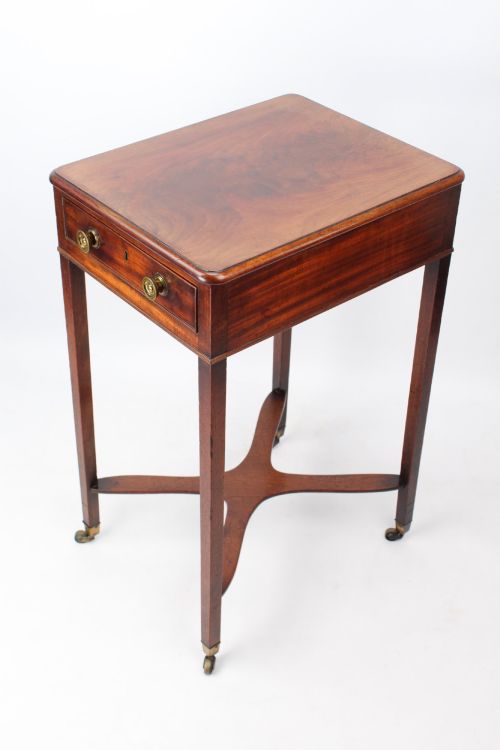
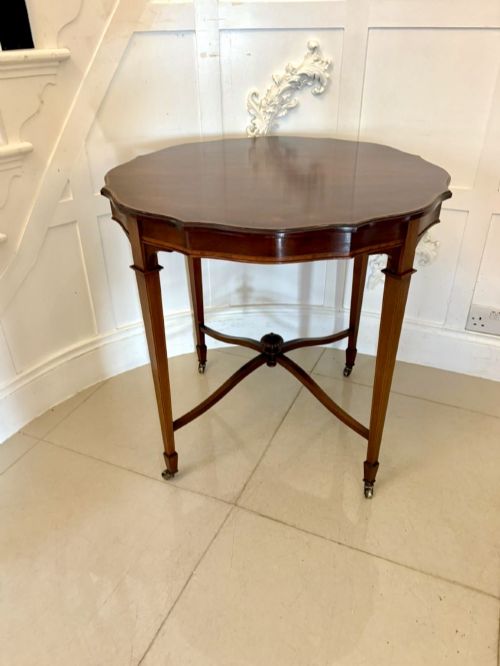
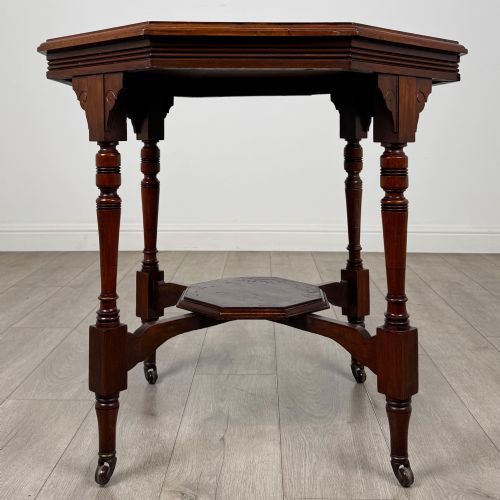
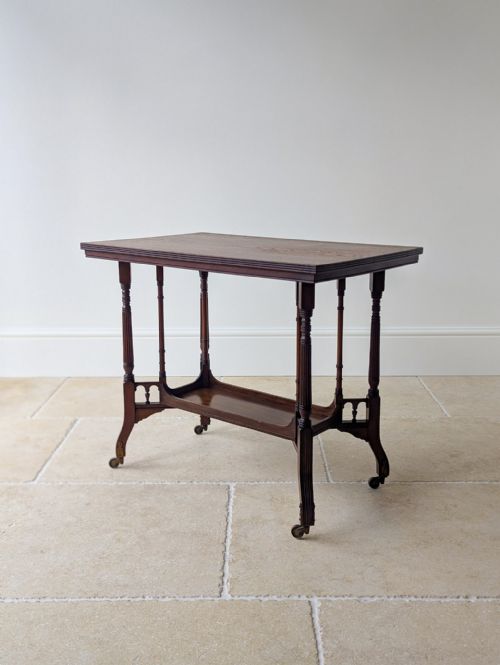
Wooden Table with Castors
A wooden table with castors gives you a movable surface that glides smoothly across the floor for serving, writing or dining.
Wooden Table with Castors
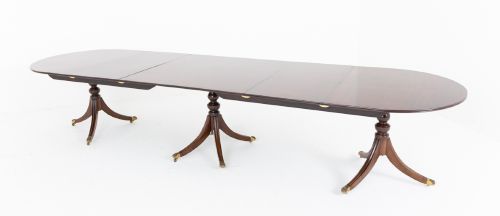
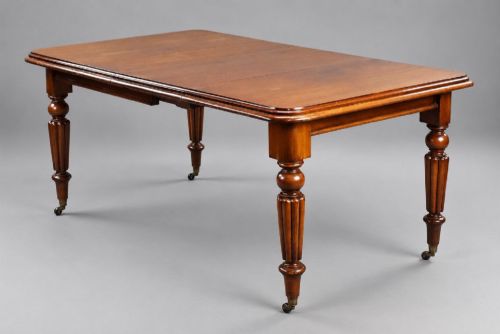
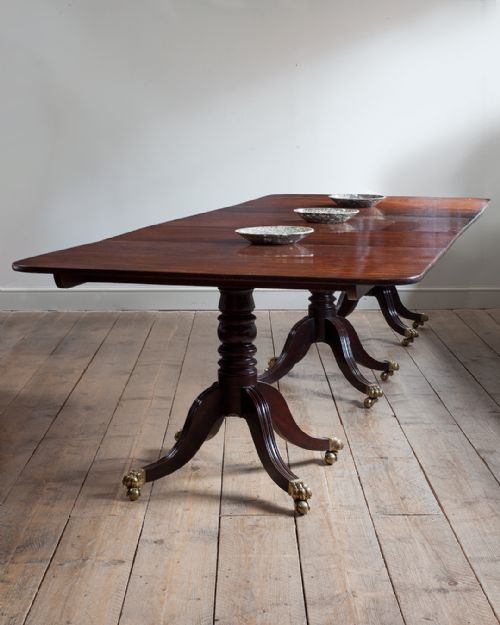
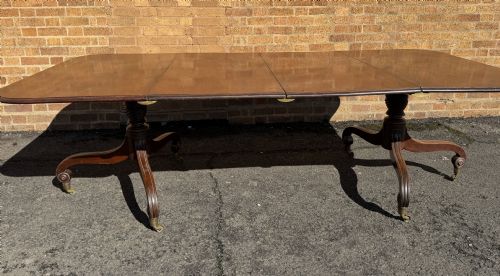
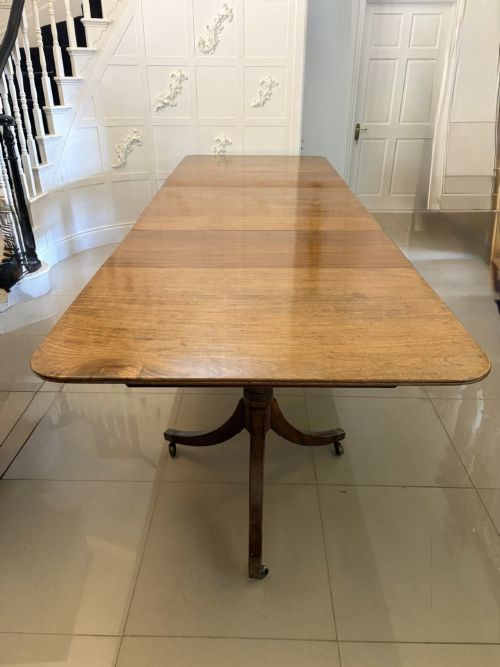
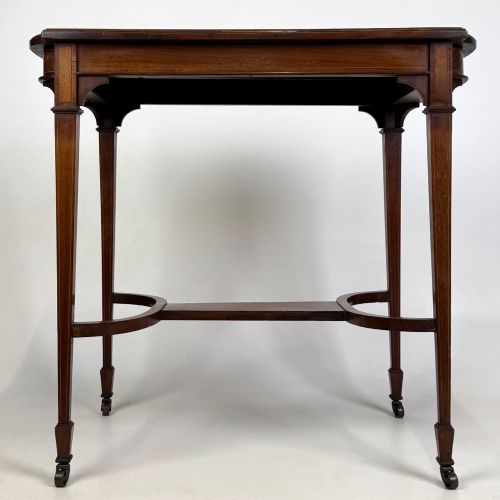
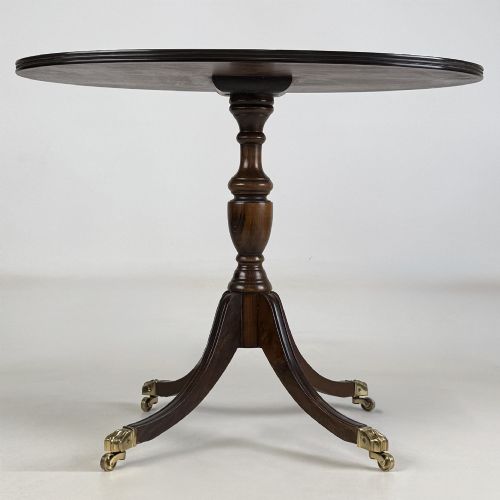
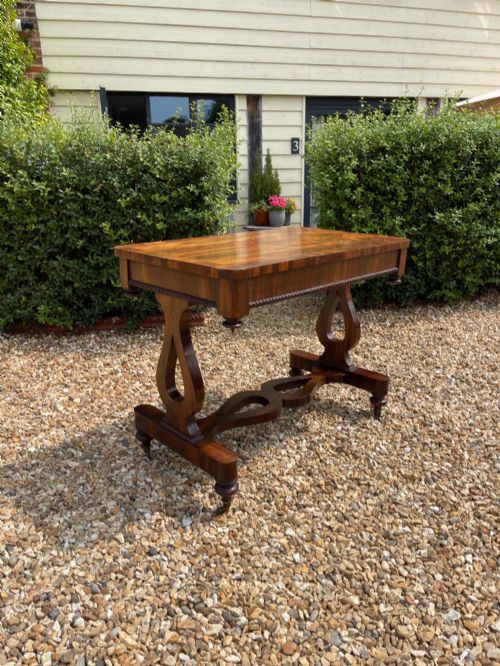
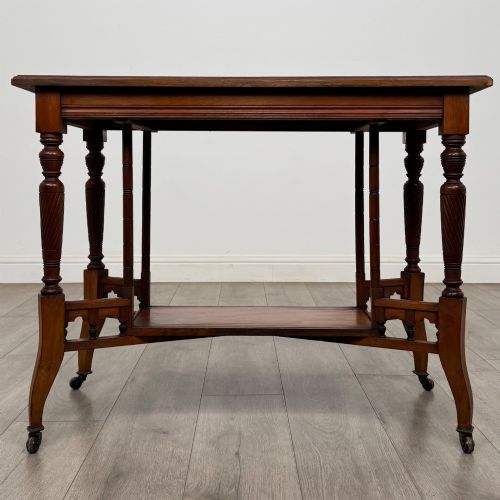
A wooden table with castors spans functional forms such as side tables, dining tables, writing desks, pembroke tables and washstands. You will most frequently encounter nineteenth-century mahogany side tables and occasional pieces fitted with original metal wheels.
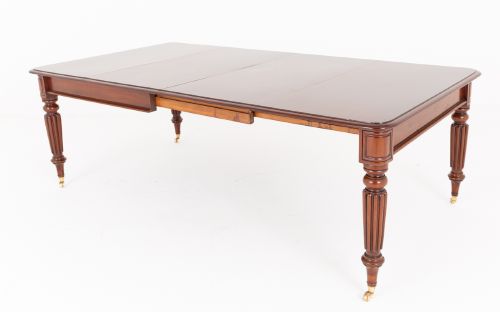
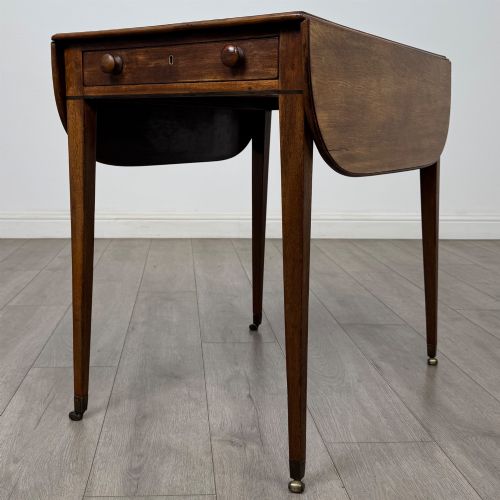
The selection ranges from compact Georgian drop-leaf tea tables to substantial Victorian extending dining tables and George IV reading desks. Makers such as Gillows, Gregory and Co, and Johnstone and Jeanes contributed notable examples across these periods.
Originating primarily from English workshops, these items served practical domestic purposes in drawing rooms, libraries and country houses. Their mobility allowed domestic staff and residents to reposition heavy furniture with ease.
How they were made
Cabinet makers built these pieces predominantly from solid mahogany, oak, satin birch and pine, frequently selecting flame mahogany veneers for prominent surfaces. Boxwood inlay added delicate contrast to Edwardian and Sheraton Revival designs.
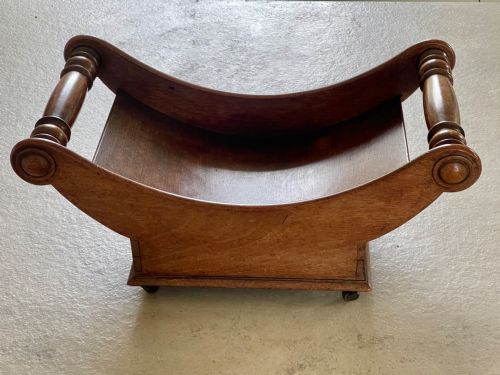
Hardware played an essential mechanical role, utilising brass castors secured to the base of each leg to facilitate movement. Drop-leaf actions, tilt-top mechanisms and sliding drawers relied on precise joinery and metal hinges.
Listings feature eighteenth-century, nineteenth-century and early twentieth-century periods spanning Georgian, Regency, Victorian, Edwardian and Aesthetic Movement styles.
What varies in quality
The refinement of the timber selection and the crispness of the cabinet work separate standard utility items from top-tier productions. Finer examples display meticulous cross-banding, precise boxwood inlay and substantial flame mahogany grains.
Originality of the brass castors, turning and structural hardware heavily influences the standing of a piece. Maker attribution, such as documented stamps from Gillows, elevates historical significance.
Gregory and Co·Johnstone and Jeanes·Gillow of Lancaster·Gillows
The Wooden Table with Castors Glossary
- Castor
- A small wheel mounted on a swivel assembly attached to the bottom of a table leg. This mechanism allows heavy furniture to be rolled across carpets and floorboards without lifting.
- Pembroke table
- A small occasional table featuring two hinged drop leaves on opposing sides. It often includes one or two drawers and rests on castors for easy relocation.
- Cross-banding
- A decorative border technique where strips of veneer are laid with the grain running perpendicular to the central panel. This frames the top surface of high-grade tables.
- Drop-leaf table
- A table with a fixed central section and hinged flaps that fold down when not in use. Supporting brackets swing out to hold the leaves horizontal.
- Tilt-top action
- A mechanism allowing the tabletop to pivot vertically against the pedestal or base for compact storage. It typically locks flat with a brass catch.
Wooden Table with Castors: Frequently Asked Questions
Why did these tables have wheels?
Castors allowed domestic staff to reposition heavy furniture easily for dining, writing or tea service without damaging floorboards.
This mobility made tables practical for shifting between rooms or clearing floor space in large reception areas.
How do I identify the period?
Cabinet proportions, timber choices and furniture styles offer clear clues to the date of manufacture. Georgian pieces lean towards restrained elegance while Victorian examples often feature bolder mouldings.
Hardware details like brass castor design also help narrow down whether a table dates from the eighteenth or nineteenth century.
Are the castors usually original?
Many surviving tables retain their original brass or metal wheels, though some replacements occurred during centuries of use.
Matching patination between the leg timber and the castor mountings usually indicates an authentic factory fitting.
Where were they used?
These tables served diverse functions across drawing rooms, libraries, bedrooms and dining halls. Smaller pembroke and side variants moved readily where extra surface space was needed.
Larger extending dining versions remained anchored in principal reception rooms despite their rolling mechanisms.