
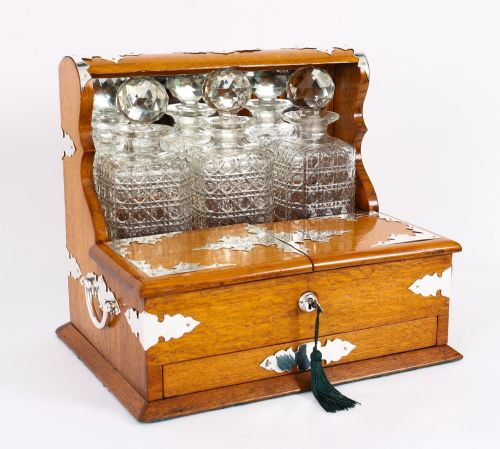
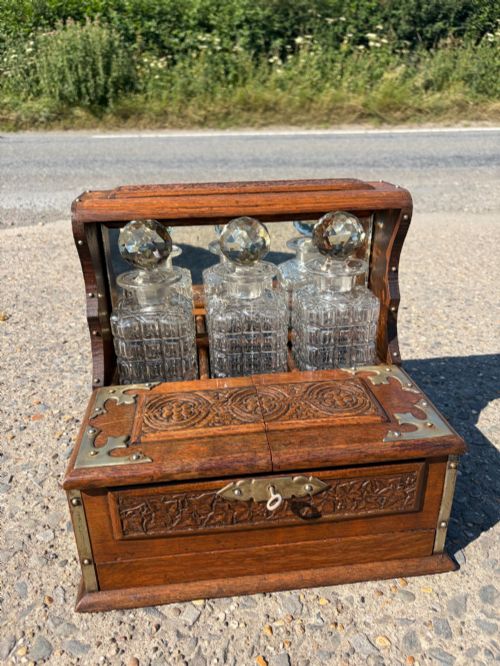
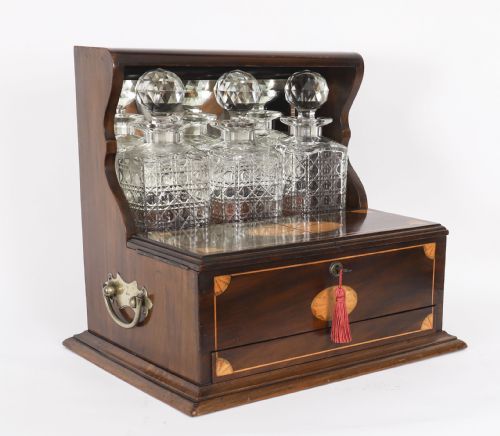

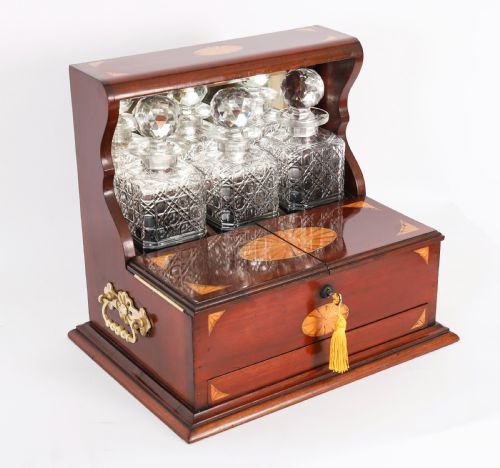
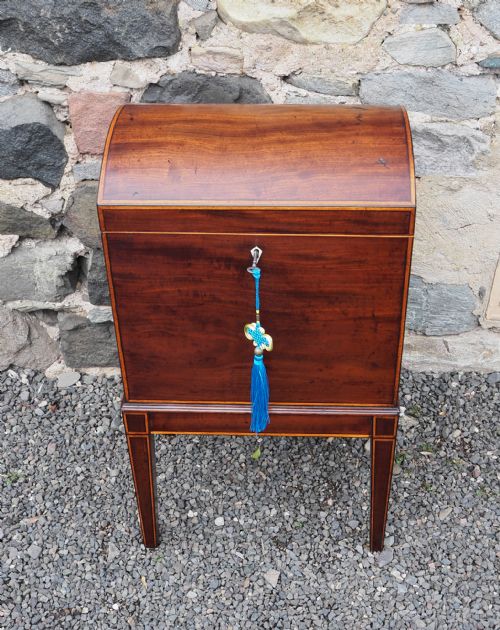


Wooden Spirit Decanter Chest
These wooden spirit decanter chest pieces are sturdy, fitted table boxes designed to keep fine liquors safely locked away in style.
Wooden Spirit Decanter Chest
A wooden spirit decanter chest is a solid timber container built to house glass bottles securely for entertaining or private use. The versions on this page span from Georgian and Regency eras through to the Victorian, late Victorian, and Edwardian periods.
Most examples you will encounter take the form of tantalus systems, wine boxes, cellarettes, or fitted decanter boxes holding cut glass and cut crystal bottles. They combine practical drinks storage with fine cabinetwork intended for the sideboard or table.
Timbers range from rich mahogany and blonde oak to walnut and satinwood, frequently paired with brass hardware and mirrored interiors. These pieces reflect the hospitality customs of the nineteenth and early twentieth centuries.
How they were made
Cabinetmakers constructed these chests using durable hardwoods such as mahogany and oak, often enhancing the surfaces with satinwood inlay or marquetry stringing. Joints were joined firmly to bear the heavy weight of glass bottles and liquid contents.
Metal components like brass bands, locks, and handles were integrated to protect the wood and secure the contents from unauthorized access. Fitted internal compartments held cut crystal decanters and sometimes incorporated games compendiums.
Glassmakers produced heavy cut glass and cut crystal decanters designed to fit precisely into the wooden partitions. Interior mirrors were frequently added to reflect light through the glass bottles when the chest was opened.
Listings feature items from the Georgian, Regency, Victorian, and Edwardian periods, constructed in mahogany, oak, walnut, and satinwood with brass and glass.
What varies in quality
The refinement of the timber grain and the precision of the inlay work set finer examples apart from simpler utilitarian boxes. Finer specimens display detailed marquetry stringing, high-grade mahogany or satinwood, and robust structural joinery.
The complexity of the internal fittings defines the grade of the piece, particularly whether it includes a functional locking tantalus mechanism or an integrated games compendium. Original cut crystal decanters matching the exact age and contours of the box elevate the integrity of the whole object.
The Wooden Spirit Decanter Chest Glossary
- Tantalus
- A locking drink container that holds decanters securely within a wooden frame so they cannot be removed without a key. This clever device kept expensive spirits safe from domestic staff.
- Cellarette
- A freestanding or table-standing box designed to hold wine bottles and spirits. These receptacles date primarily from the Georgian period.
- Decanter box
- A fitted wooden case constructed to transport or store a set of glass bottles safely. Interiors are divided into padded or partitioned sections to prevent the glass from shifting.
- Marquetry
- Decorative woodwork using thin slices of different timbers to create patterns on the surface. This technique appears on Victorian chests to add visual depth.
Wooden Spirit Decanter Chest: Frequently Asked Questions
What is a wooden spirit decanter chest?
A wooden spirit decanter chest is a secure cabinet or box designed to hold glass liquor bottles. These pieces range from Georgian wine boxes to Victorian tantalus sets.
They were kept in dining rooms and parlours to dispense drinks while keeping the contents locked away from servants or guests.
How do you date a decanter box?
Dating depends on the timber used, the style of the brass hardware, and the construction methods. Georgian examples often feature plain mahogany, whereas Victorian pieces frequently include elaborate brass mounts and marquetry.
Looking at the cut glass decanters inside can also provide clues to the period of manufacture.
How were tantalus sets used?
A tantalus holds decanters with a metal bar locking over the stoppers, preventing the bottles from being pulled out without a key. Hosts kept the spirits locked while still displaying the cut crystal bottles.
Guests could admire the collection, hence the name deriving from the mythological figure Tantalus.
Where should I place a decanter box?
These chests suit sideboards, side tables, or drinks cabinets where their wooden grain and glass contents can be appreciated. Keeping them out of direct sunlight protects the timber and polished finish.
Ensure the surface is stable enough to bear the weight of the solid wood and glass bottles.