




Wooden Slant Top Bureau
A wooden slant top bureau offers a drop-down writing flap revealing fitted compartments, bringing timeless writing utility to any study or living space.
Wooden Slant Top Bureau
A wooden slant top bureau combines a writing surface with concealed storage, appearing in forms such as compact writing desks, bureau bookcases, and clerks desks. These pieces span periods from the eighteenth century through the Edwardian era, reflecting shifting domestic habits and workspace requirements.
You are most likely to encounter Georgian and Victorian examples fashioned from timbers like mahogany and oak, alongside distinct regional variations including Scandinavian country pieces. The form adapts from modest country house desks to elaborate bureau bookcases fitted with satinwood interiors and brass hardware.
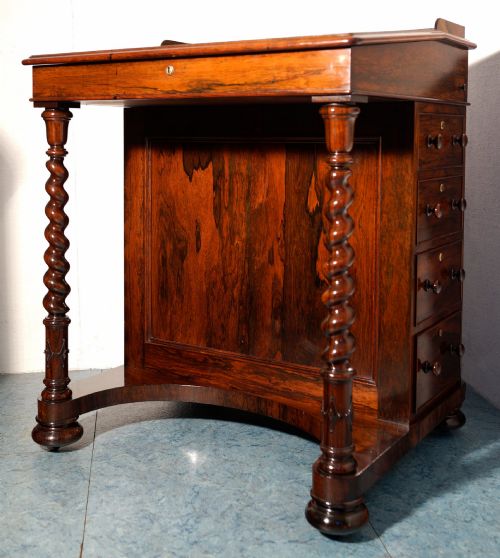
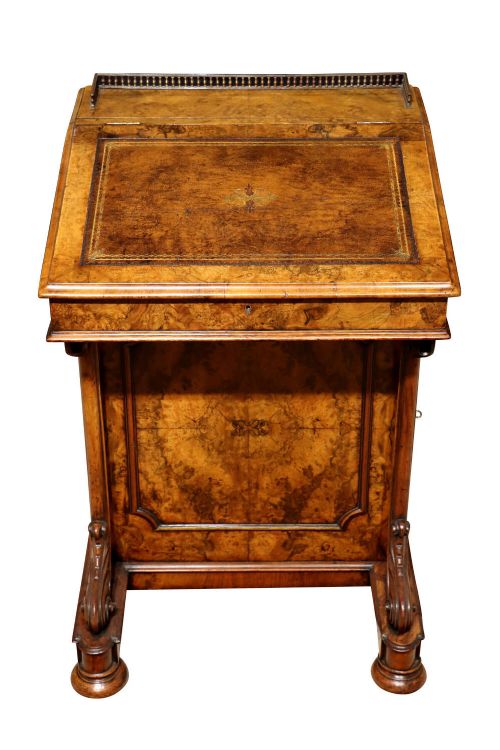
The defining characteristic remains the angled fall-front that conceals pigeonholes and small drawers. Whether selected as a Davenport or a larger estate desk, each version provides a practical writing station anchored by traditional cabinet-making.
How they were made
Makers constructed these writing pieces primarily using solid hardwoods and decorative veneers, selecting mahogany, oak, and walnut for their structural durability and grain pattern. Burr walnut and amboyna provided highly figured surfaces for finer examples, while secondary timbers formed internal drawer linings and hidden compartments.
Construction techniques combined traditional joinery with decorative embellishments like marquetry inlay and brass fittings. Ironwork hinges and handles secured moving parts, while specialised interiors incorporated satinwood and exotic woods to elevate the concealed writing spaces.
Some slant top desks hide secret compartments behind dummy pigeonholes, rewarding owners who enjoy historic cabinetry puzzles.
What varies in quality
The choice of primary timber and veneer selection dictates the visual hierarchy of the piece, moving from straightforward oak and mahogany to highly figured burr walnut, olivewood, and amboyna. Superior examples exhibit continuous grain matching across the fall-front and drawer fascias, demonstrating the maker's mastery over the material.
Internal architecture separates standard utility pieces from exceptional commissions, particularly the complexity of the fitted interior behind the slant top. The presence of original brass hardware, secondary satinwood veneers, and intact ironwork defines the integrity of the surviving desk.
The Wooden Slant Top Bureau Glossary
- Bureau
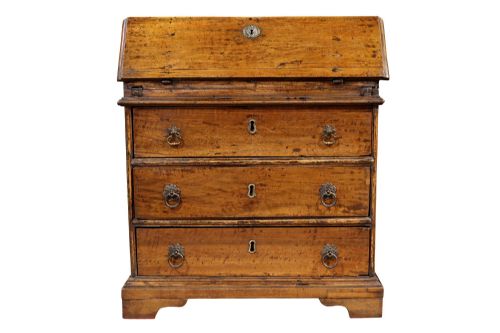
- A writing desk featuring a sloping hinged lid that drops down to form a writing surface. It typically encloses a set of small drawers and pigeonholes.
- Davenport
- A compact form of small writing desk with a sloping top, originating in the early nineteenth century. It usually incorporates side drawers accessed from a seated position.
- Bureau bookcase
- A combination furniture form comprising a slant top writing desk base surmounted by a glazed or panelled bookcase cabinet. These pieces provide extensive storage for both books and writing materials.
- Marquetry
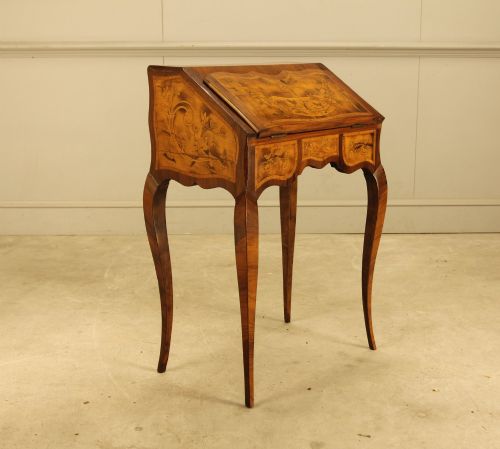
- The art and craft of applying pieces of veneer to a structure to form decorative patterns and pictures. It appears frequently on Edwardian and Georgian mahogany surfaces.
- Satinwood
- A durable, lustrous yellowish timber used primarily for stringing, inlay, and internal drawer construction in finer furniture pieces.
Wooden Slant Top Bureau: Frequently Asked Questions
What is a wooden slant top bureau?
A wooden slant top bureau is a traditional writing desk featuring a hinged, angled flap that folds down to create a writing surface. Inside, it conceals a collection of small drawers and pigeonholes for correspondence and documents.
These desks evolved through various periods, from early Georgian masterworks to compact Edwardian variations, serving as both functional workspaces and statement furniture in domestic interiors.
How were these desks used?
These pieces served as private writing stations for managing correspondence, household accounts, and personal journals. The sloping lid provided a comfortable angle for handwriting while keeping working papers concealed when closed.
In larger country houses and estate offices, they functioned as central administration hubs, whereas smaller Davenport forms suited parlour and drawing room use.
Where should I place a bureau?
A bureau suits studies, living rooms, and bedrooms where its compact footprint and dual purpose as a desk and cabinet can be fully utilised. Position it away from direct heat sources to protect the wooden veneers and solid timbers.
Ensure sufficient clearance in front of the piece for the fall-front to drop down and a chair to be comfortably pulled up.
How do I tell periods apart?
Dating relies on examining construction methods, timber choices, and decorative styles characteristic of specific eras like the Georgian or Victorian periods. Early eighteenth-century pieces often feature simpler walnut or oak structures with original ironwork, while later Victorian examples display burr walnut veneers and more elaborate internal layouts.
Hardware styles, dovetail construction, and secondary woods also provide reliable clues to the age of the desk.