


Wooden Silver Storage Box
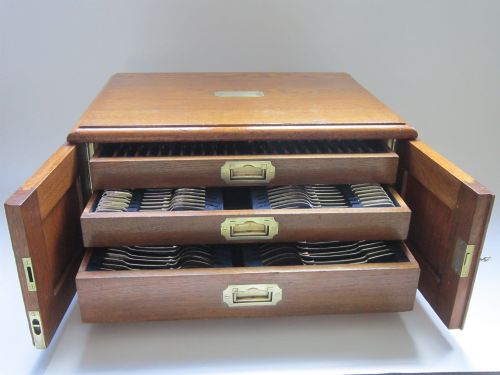
These wooden silver storage box pieces are sturdy chests and fitted canteens built to protect valuable tableware and precious items from damage or tarnishing.
Wooden Silver Storage Box
A wooden silver storage box primarily takes the form of a substantial oak silver chest, iron-bound trunk, or fitted cutlery canteen designed for domestic utility.
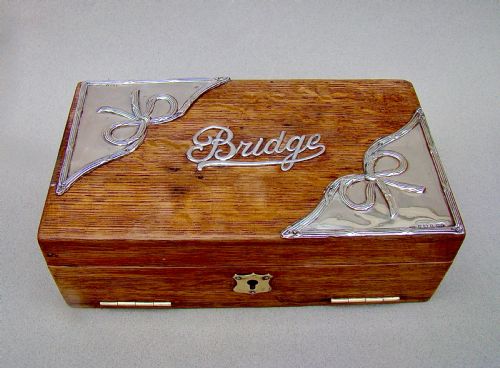
The selections span periods from the Georgian era through to Victorian and Edwardian times, alongside specific tea caddies and games boxes.
Buyers frequently encounter robust English oak chests featuring metal banding and brass carrying handles, alongside mahogany and walnut cased canteens.
How they were made
Joiners and cabinetmakers utilised dense hardwoods such as oak, mahogany, walnut, and burr maple to construct the primary carcase of each chest or canteen.
Strength was reinforced using iron bands, steel bindings, and brass mounts, securing heavy lids and corners for domestic travel or estate storage.
Interiors were often lined with materials like velvet and fitted specifically to hold flatware, tea, or playing cards securely.
Listings feature oak, mahogany, walnut, and rosewood timbers paired with iron, steel, and brass hardware.
What varies in quality
The standard of timber selection and complexity of the internal fittings differentiate standard utility trunks from fine country house pieces.
The robustness of the metalwork, from plain iron bands to detailed brass mounts and maker-signed locks, dictates the refinement of the construction.
Levi & Salaman·Walker & Hall·Parkins and Gotto
The Wooden Silver Storage Box Glossary
- Silver chest
- A heavy timber trunk, typically bound in iron or steel, designed to store and transport family plate securely. These often feature robust drop handles and reinforced corners.
- Cutlery canteen
- A fitted box or chest engineered specifically to hold sets of forks, spoons, and knives. The interior contains partitioned trays or slots lined to prevent friction damage.
- Tea caddy
- A small lidded box used to store dried tea leaves safely away from light and moisture. Early examples frequently utilise tortoiseshell, burr maple, or mahogany.
- Campaign chest
- Portable furniture built for travel, featuring recessed brass handles and reinforced edges to withstand transit. These items were constructed to endure the rigours of movement.
- Fiddle pattern
- A traditional silhouette for flatware handles, widening at the base with a slight notch, commonly found in Victorian service sets. It represents a classic shape in formal dining history.
Wooden Silver Storage Box: Frequently Asked Questions
What were silver chests used for?
Silver chests served as secure receptacles for storing heavy family plate, candelabras, and flatware collections when not in daily use. Their robust timber construction and metal bindings protected valuable metalwork from theft and tarnishing.
Wealthy households kept these heavy trunks in dedicated service rooms or travelled with them during estate relocations. The internal fitted trays kept individual pieces separated to prevent scratching.
How do I date an oak silver chest?
Dating an oak silver chest involves examining the construction methods of the timber carcase, the style of the iron or steel banding, and any maker stamps. Earlier Georgian pieces often display hand-cut dovetailing and simpler forged ironwork.
Victorian and Edwardian examples typically incorporate machine-cut elements, heavier brass handles, and robust locking mechanisms. The presence of specific maker plates or retailer signatures also helps narrow down the decade of production.
How should I clean a wooden storage box?
Cleaning these timber boxes requires gentle dusting with a dry, soft cloth to remove surface particles without disturbing the aged patina of the wood. Harsh chemical cleaners and excessive moisture must be avoided to protect the original finish.
Wax polish suited for antique hardwoods can be applied sparingly to nourish dry oak or mahogany surfaces. Metal mounts should be treated with care to preserve their existing character.
What is the difference between a canteen and a trunk?
A canteen is specifically engineered with fitted, velvet-lined interior trays designed to hold organised sets of cutlery. These items remain primarily intended for stationary indoor table service.
A trunk or chest is a larger, deeper storage container built with exterior metal banding and heavy carrying handles for transport. These heavier vessels held bulk silver services or general household valuables.