




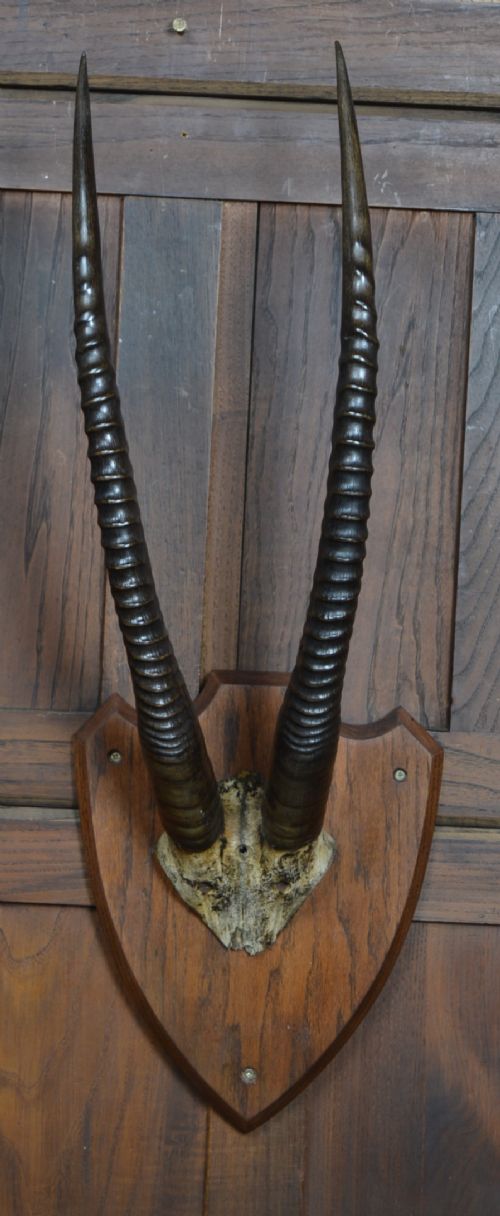

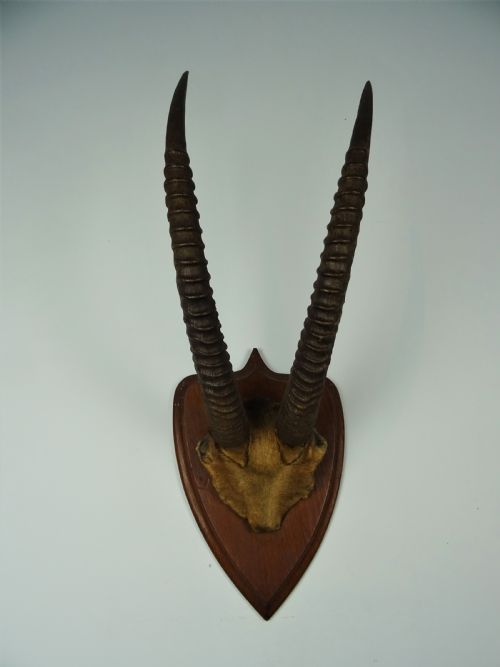
Wooden Shield Taxidermy
Wooden shield taxidermy brings together natural history and traditional woodwork, offering robust wall mounts designed to display animal heads, horns and antlers.

Wooden Shield Taxidermy
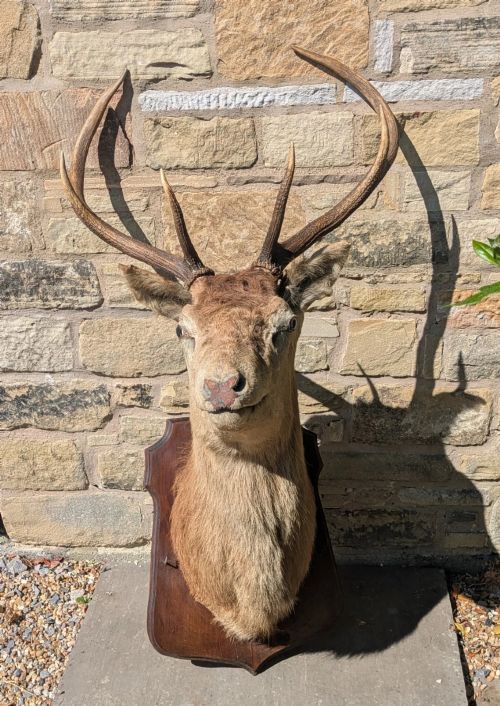
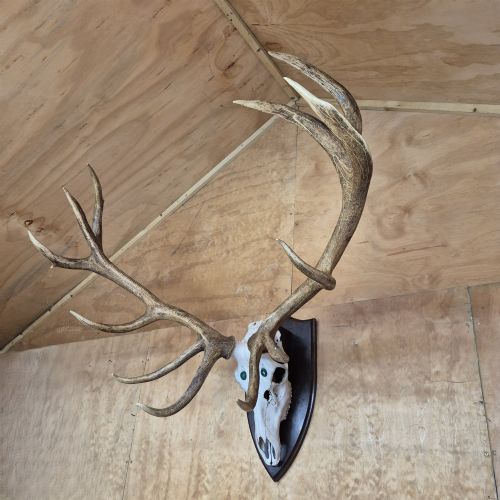
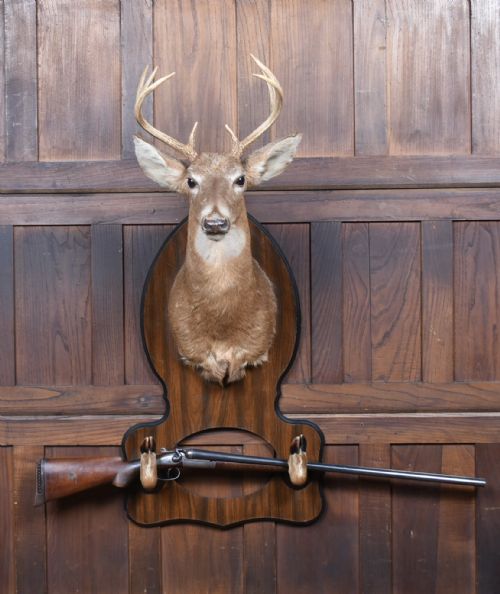
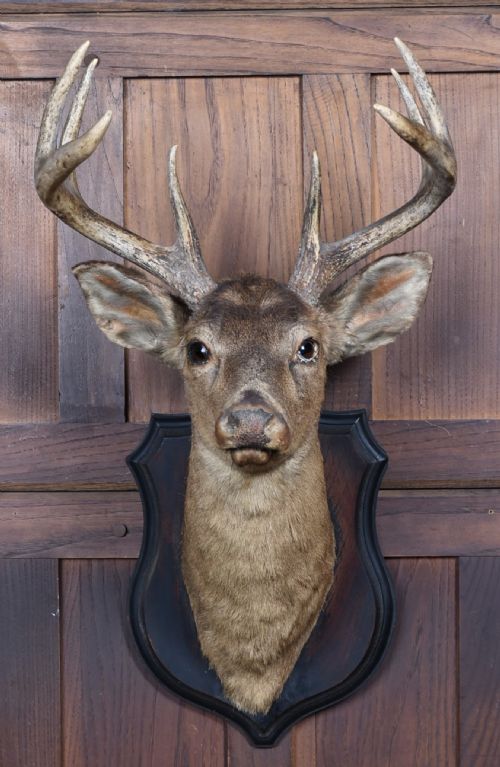
Wooden shield taxidermy comprises mounted animal trophies displayed upon shaped timber backing boards, which are designed to hang directly on interior walls. When exploring wooden shield taxidermy, buyers encounter a diverse selection of forms including complete stags' heads, gazelle and antelope horns, fox masks, and wall racks originating from the nineteenth and twentieth centuries.
The pieces appearing on this page span several distinct periods, reaching from the late nineteenth century through the Edwardian era and into the nineteen-fifties. Stylistically, the selection leans heavily towards Highland lodge and traditional country aesthetics, alongside French hunting lodge examples.
Most items combine taxidermy hides, bone, horn and antler with solid timber shields. Whether examining a large red deer head or a set of mounted oryx horns, the core format remains consistent: natural specimens secured firmly to wooden mounts for domestic display.

Materials and Construction
Makers utilised dense timbers such as oak for the mounting boards, shaping and carving the wood into shield or panel silhouettes to support heavy specimens. Taxidermy hides, natural fur, bone and horn were carefully prepared and fitted to these wooden backings.
Antlers and horns were securely bolted through timber panels to ensure stability, while taxidermy specimens utilised glass eyes and modelled forms beneath the hide. Metal hanging brackets were integrated into the reverse of the wooden shields for wall suspension.
Wooden Shield Taxidermy Retail Price Guide 2026
Typical asking prices for wooden shield taxidermy among the pieces listed under this phrase on Sellingantiques today, from the lower quarter to the upper quarter. They describe what is for sale here now, not the wider market.
Some foxes were immortalised with proper titles on their shields, such as Dairy Maid the hunts noted hound.
Assessing Quality and Craftsmanship
The prestige of the workshop responsible for the mounting heavily influences distinction, particularly when signed or attributed to noted taxidermists. Additionally, the scale and symmetry of antlers or horns, paired with well-preserved natural hides, elevate the standing of a piece.
Peter Spicer and Sons·Edward Gerrard and Sons
The Wooden Shield Taxidermy Glossary
- Taxidermy mount
- The preserved skin of an animal fitted over a sculpted form to mimic life. These mounts are typically fixed to walls for display.
- Shield mount
- A piece of taxidermy mounted upon a shaped wooden board resembling a heraldic shield. This traditional backing protects the wall and frames the trophy.
- Antler spread
- The horizontal distance measured across a set of mounted antlers. Larger spreads indicate more mature animals.
- Taxidermy mask
- The head and neck portion of an animal, frequently a fox, mounted as a wall trophy. These often include fitted brass collars or inscribed plaques detailing the hunt.
- Hall rack
- A functional piece of furniture incorporating taxidermy elements such as horns or antlers to hang coats and hats in an entranceway.
Wooden Shield Taxidermy: Frequently Asked Questions
How should I clean taxidermy mounts?
Dust natural hides and antlers gently using a soft brush or a cool hairdryer set to a low speed. Avoid using water, chemical cleaners or soaps on taxidermy fur and leather, as moisture damages the preserved materials.
Keep wooden shields clean by wiping them occasionally with a dry cloth to maintain the finish of the oak or timber.
How can I tell the period of a mount?
Examining the timber backing, fixings and any inscriptions on the wooden shield provides clear clues to the age of the piece. Nineteenth-century examples often feature hand-carved oak panels and older fastening methods on the reverse.
Twentieth-century pieces may include stamped maker details or paper trade labels attached to the wood, helping to narrow down the decade of production.
What rooms suit these wall trophies best?
These pieces suit traditional studies, hallways and living spaces where their rustic aesthetic complements heritage interiors. High ceilings provide the ideal backdrop for larger stags' heads and wide antler spreads.
Placing mounts away from direct sunlight and strong heat sources protects both the taxidermy hide and the wooden shield from drying out over time.