





Mounted Antelope Horns
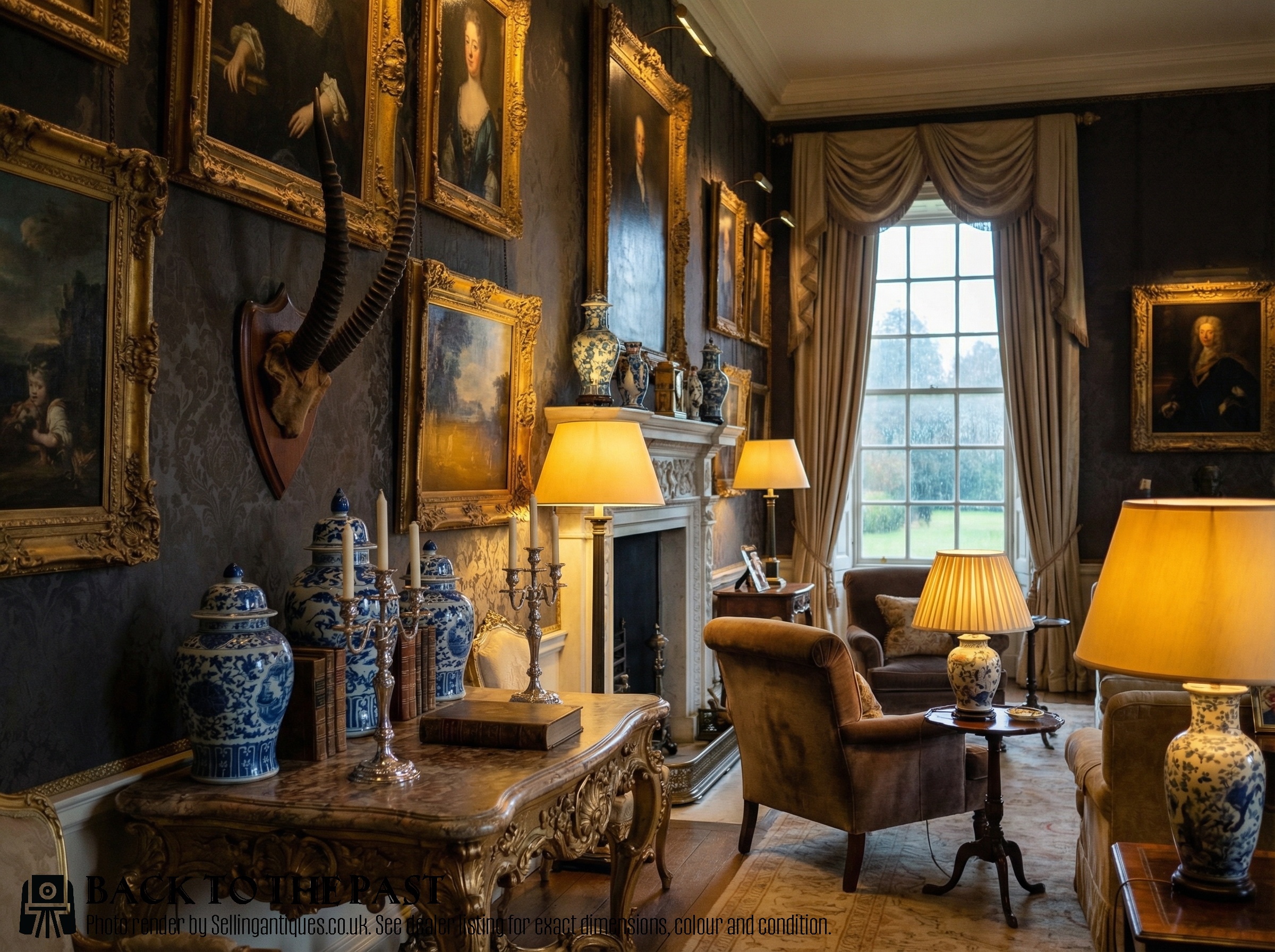
Mounted antelope horns bring the stark drama of the Edwardian sporting lodge straight into a modern interior.
Mounted Antelope Horns
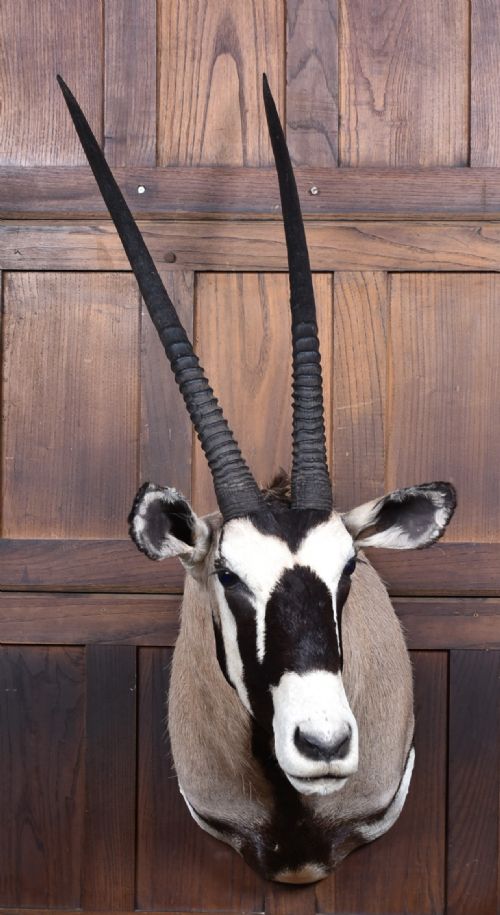
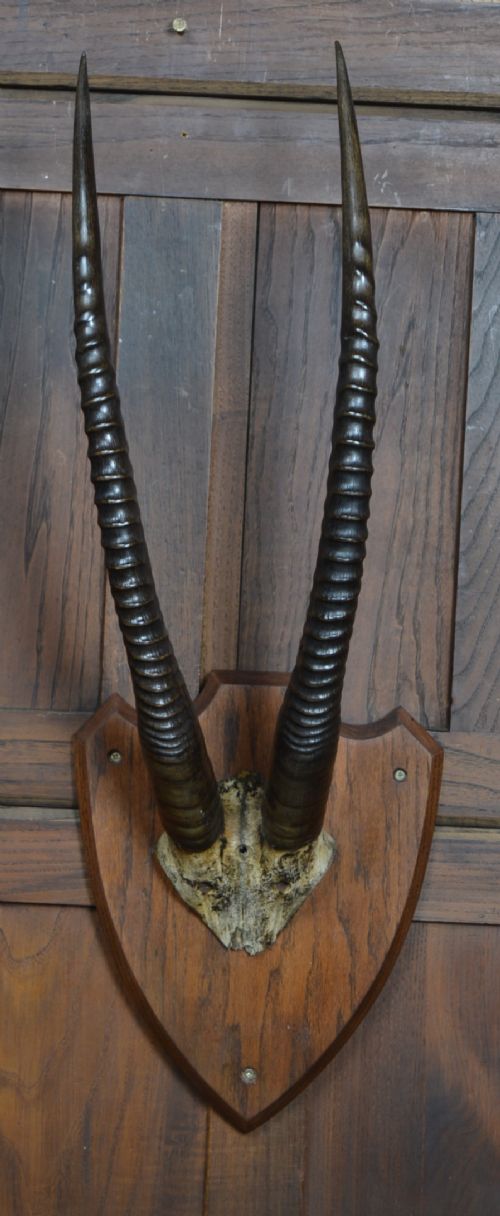
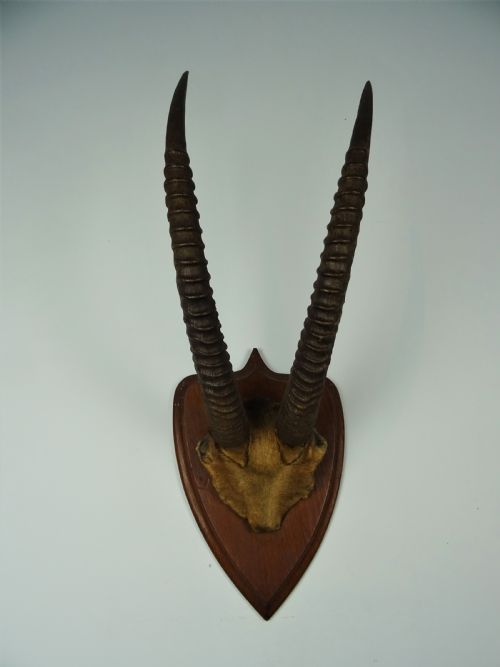
Mounted antelope horns are taxidermy trophies and horn mounts secured to wooden shields or wall plaques, taking forms such as Thomson's gazelle, Gemsbok, Waterbuck, Springbuck, Bushbuck, Sable antelope, Koodoo, Coke's Hartebeest, and Oryx. These pieces originate predominantly from the Edwardian era and the early twentieth century, spanning dates from 1898 through 1920.
The version you are most likely to meet on this page is an Edwardian taxidermy trophy head or horn mount, reflecting the Victorian natural history and sporting lodge aesthetic. They capture a specific period of naturalist collecting, mounted on timber shields for display on interior walls.
How they were made
These taxidermy mounts combine natural horn, bone, and taxidermy hide with carved wood backing boards or shields, often utilising oak for structural support. Glass eyes are fitted into the preserved hides of the trophy heads to recreate a lifelike appearance.
The construction relies on taxidermy preservation techniques of the early twentieth century, mounting the natural horns securely to wooden shields or preparing complete head mounts with natural hide and glass eyes for wall hanging.
Mounted Antelope Horns Retail Price Guide 2026
Typical asking prices for mounted antelope horns among the pieces listed under this phrase on Sellingantiques today, from the lower quarter to the upper quarter. They describe what is for sale here now, not the wider market.
Listings span the Edwardian period, featuring taxidermy hides, glass eyes, oak shields, and natural horn.
What varies in quality
Quality in mounted antelope horns rests upon the natural symmetry and span of the horns, the preservation condition of the taxidermy hide, and the fidelity of the glass eyes. Master taxidermists achieved a convincing, alert posture that separates superior specimens from simpler horn mounts.
The craftsmanship of the wooden shield and the documentation associated with the piece, such as clear period dating or attribution to known practitioners like Edward Gerrard and Sons, elevate the standing of a specimen within the field of natural history collecting.
Edward Gerrard and Sons
The Mounted Antelope Horns Glossary
- Taxidermy mount
- The art of preserving and displaying an animal's skin, horns, or head in a lifelike state. This forms the basis of all wall-hanging trophies.
- Trophy head
- A taxidermy preparation that includes the head, neck, and horns of an animal. These specimens provide a complete representation of the species.
- Edwardian natural history
- The decorative style and collecting movement of the early twentieth century focusing on natural specimens. It heavily influenced the presentation of sporting trophies in domestic interiors.
Mounted Antelope Horns: Frequently Asked Questions
How do I hang mounted antelope horns safely?
These pieces require sturdy wall anchors capable of supporting the combined weight of the timber shield and the natural horn or head mount. Ensure the fixing engages directly with wall studs or uses heavy-duty plaster fixings.
Position the mount at eye level where the natural contours and span of the horns can be appreciated without obstruction from surrounding furniture.
What periods do these pieces date from?
The available selection dates primarily from the Edwardian era and the early twentieth century, spanning the years between 1898 and 1920. Pieces from this timeframe reflect Victorian natural history traditions carried forward into Edwardian sporting culture.
Dates are often indicated by contemporary taxidermy labels, inscriptions on the wooden shields, or stylistic characteristics typical of pre-First World War mounting techniques.
How do I care for taxidermy hide and horns?
Keep mounted specimens away from direct sunlight and sources of heat to prevent the natural hide and wood shields from drying out and cracking. Gentle dusting with a soft brush helps maintain the surface without disturbing fragile hair or horn structures.
Maintain a stable room temperature and humidity level to preserve both the organic materials and the taxidermy preservation work over time.
What species are commonly found on these mounts?
The listings feature a variety of African antelopes including Thomson's gazelle, Gemsbok, Waterbuck, Springbuck, Bushbuck, Sable antelope, Koodoo, Coke's Hartebeest, and Oryx. Each species exhibits distinct horn shapes ranging from sweeping spirals to long, ridged daggers.
These variations provide a broad spectrum of forms, from compact gazelle heads to large, commanding Koodoo and Oryx horn displays.