



Wooden Sheet Music Canterbury
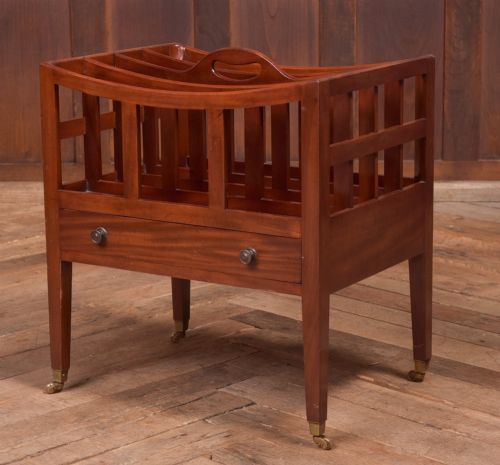
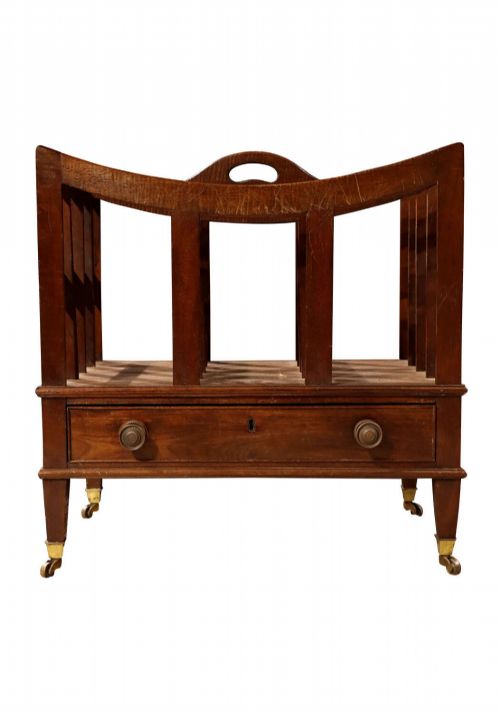
A wooden sheet music canterbury holds folios and scores beside the piano, bringing both order and traditional craft to a room.
Wooden Sheet Music Canterbury
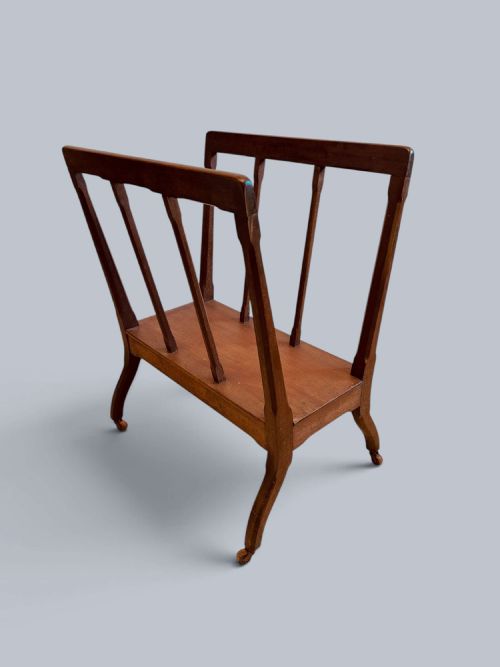
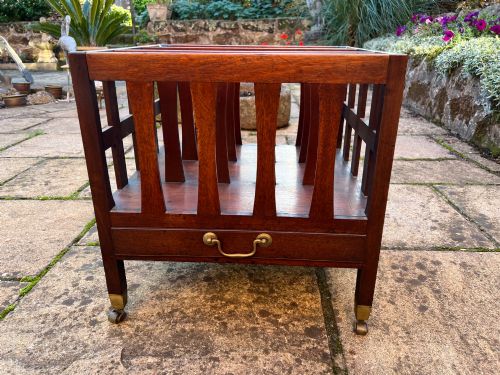
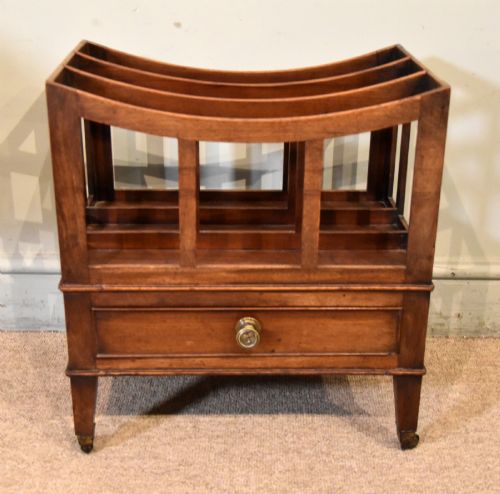
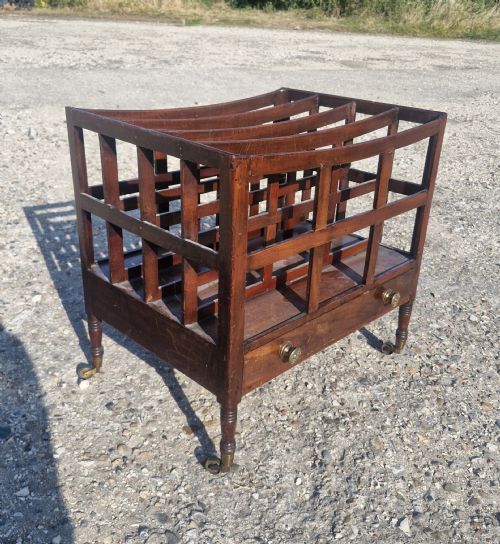
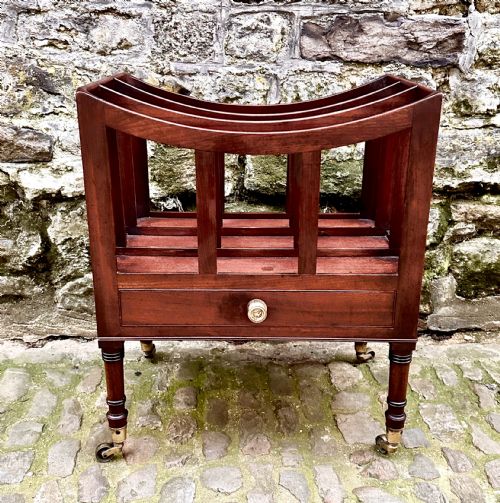
A wooden sheet music canterbury is a dedicated low stand featuring upright divisions designed originally for holding sheet music, folios and scores near a piano or in a parlour. You will most frequently encounter nineteenth-century examples on this page, spanning the Georgian, Regency, William IV and Victorian periods.
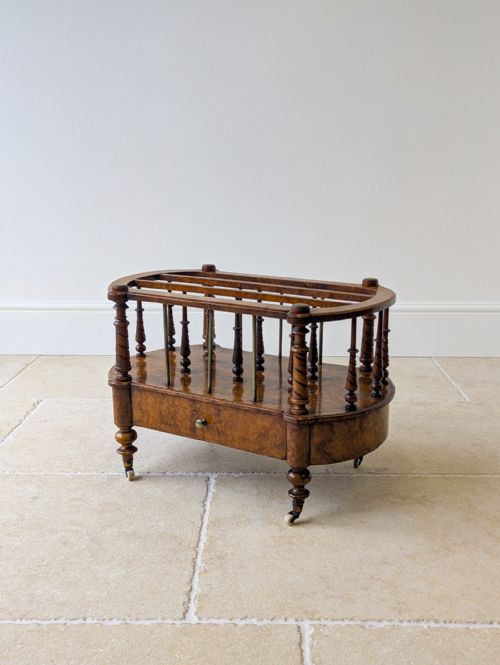
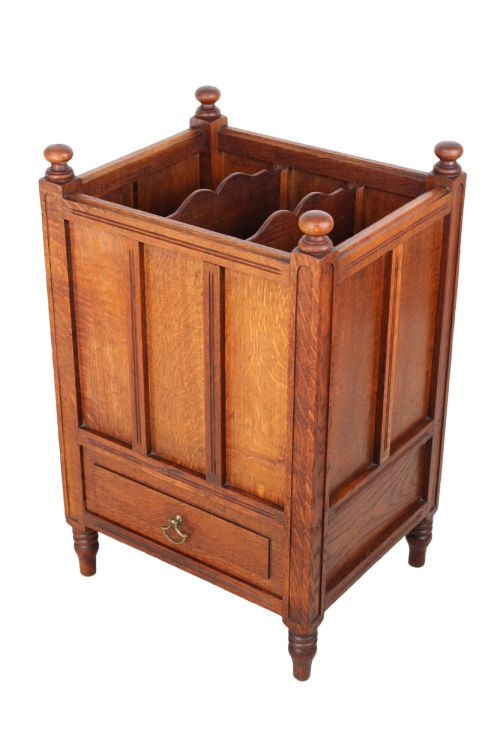
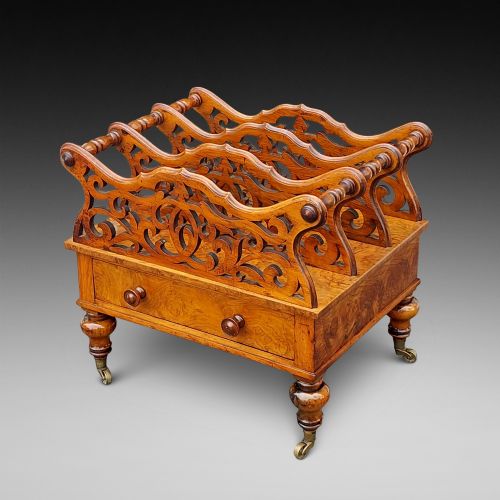
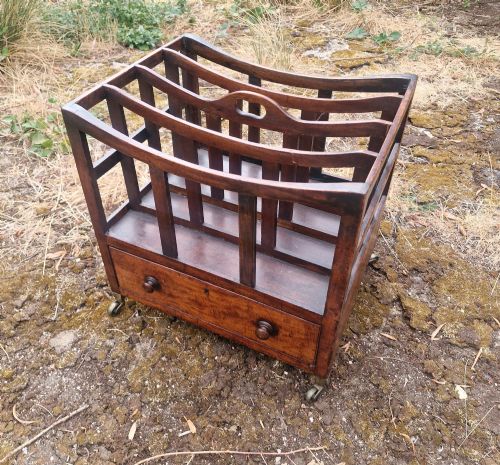
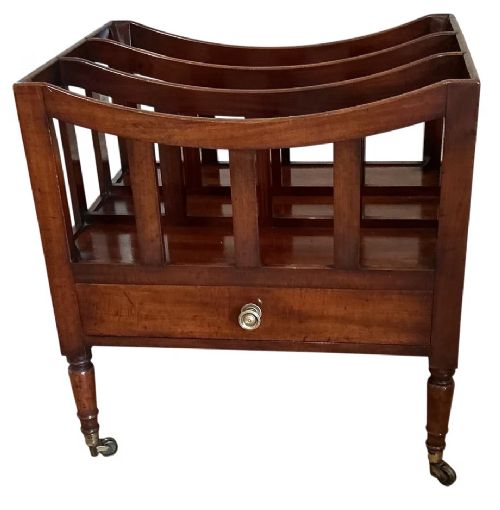
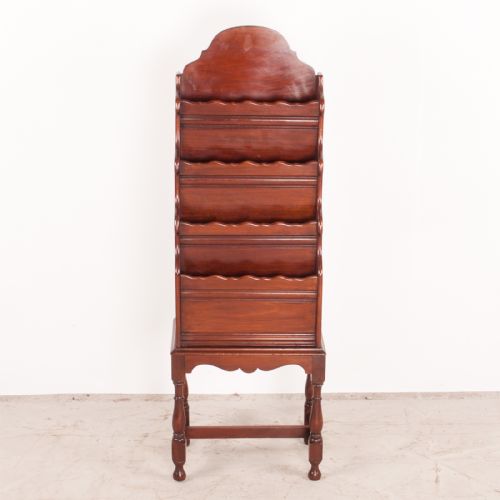
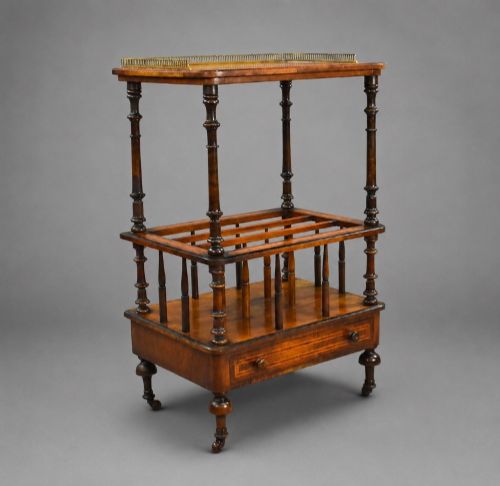
The form typically incorporates slated or railed partitions above a low drawer, mounted on turned legs fitted with castors for ease of movement across the floor. Variations on this page also include magazine racks, music cabinets, and combinations with étagères or occasional tables.
Makers produced these pieces to keep scores upright and accessible during musical evenings, reflecting the domestic habits of the period. Surviving examples demonstrate how the design evolved from formal open divisions to enclosed cabinets as musical tastes and storage needs shifted.
Materials and construction
Cabinet makers utilised dense hardwoods such as mahogany, rosewood and walnut, often selecting burr veneers to add rich grain patterns to the top surfaces and drawer fronts. Oak and satinwood also appear among the listed pieces, providing paler alternatives for Edwardian and Victorian interiors.
Construction methods relied on sturdy joinery for the upright slats and the lower plinth or drawer box, ensuring the piece could support the considerable weight of paper scores. Brass fittings, including castors and delicate handles, were standard additions to facilitate mobility and daily use.
Wooden Sheet Music Canterbury Retail Price Guide 2026
Typical asking prices for wooden sheet music canterbury among the pieces listed under this phrase on Sellingantiques today, from the lower quarter to the upper quarter. They describe what is for sale here now, not the wider market.
Named after an archbishop who requested a low music stand, these pieces rolled across nineteenth-century carpets to rescue loose scores from disaster.
Distinctions in quality
Quality in these pieces rests upon the choice of timber and the fineness of the turned or carved supports rather than mere ornamentation. Superior examples display carefully matched burr walnut or figured mahogany veneers that wrap naturally around the frame and drawer fronts.
Constructional refinement dictates the durability of the divisions, where slender, well-joined slats demonstrate greater care than thick, heavy partitions. The presence of original brass castors and tightly fitted drawer dovetails further separates standard production items from finer workshop pieces.
Henry Ogden And Son
The Wooden Sheet Music Canterbury Glossary
- Canterbury
- A low stand with partitions for holding sheet music or newspapers, often featuring a drawer beneath. The name derives from the Archbishop of Canterbury, who is said to have commissioned the first such rack.
- Division
- An upright wooden slat or partition forming the compartments of a rack. These dividers keep scores standing upright and separate.
- Castor
- A small wheel mounted on a swivel attached to the foot of a leg. They allowed heavy wooden stands to be rolled across carpets easily.
- Figured walnut
- Timber cut to reveal distinctive, swirling grain patterns. Cabinet makers prized this wood for decorative table tops and cabinet fronts.
- Étagère
- A piece of furniture consisting of a set of open shelves for displaying small objects. Some multi-tiered stands combine this display function with lower music storage.
Wooden Sheet Music Canterbury: Frequently Asked Questions
What is a wooden sheet music canterbury used for?
These stands were built to hold sheet music, scores and folios upright near a piano or within a music room. Their partitioned upper sections kept fragile paper organised and within arm's reach during performances.
Over time, owners also utilised them in living spaces for newspapers and periodicals. Today they function equally well as decorative side tables or magazine holders in modern sitting rooms.
How do I tell a Regency canterbury from a Victorian one?
Regency models generally exhibit cleaner architectural lines, restrained brass inlay, and light mahogany or rosewood timbers. Their turned legs often feature neat brass castors typical of the early nineteenth century.
Victorian versions frequently employ darker walnut or burr walnut veneers with heavier carved details, fretwork panels or added drawers. They reflect a shift towards richer ornamentation and multi-purpose occasional furniture.
Where should I place a music canterbury in my home?
They fit naturally beside a piano, writing desk or beside a sofa where you can reach stored folios or periodicals easily. Their compact footprint makes them suitable for smaller corners.
Because many examples feature finished backs and detailed tops, they also work well freestanding in the middle of a room or as an occasional table displaying small objects.
How do I care for antique wood furniture?
Keep wooden pieces away from direct sunlight and heat sources to prevent the timber and delicate veneers from drying out or cracking. Regular dusting with a soft, dry cloth preserves the polished finish.
Applying a traditional beeswax polish occasionally helps nourish hardwood surfaces and maintains their natural lustre without building up heavy chemical residues.