





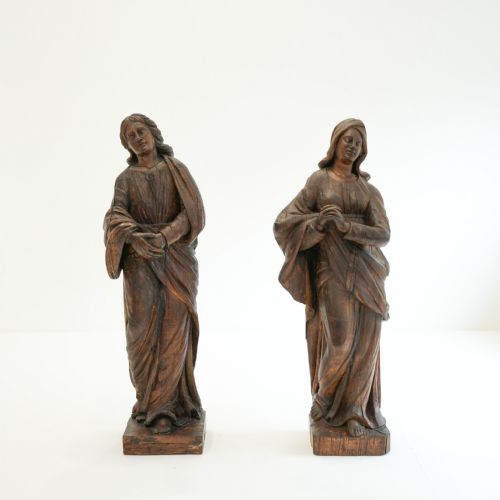


Wooden Saint Sculpture
A wooden saint sculpture brings centuries of devotion and craftsmanship into a room, offering tactile presence through carved drapery and weathered grain.
Wooden Saint Sculpture
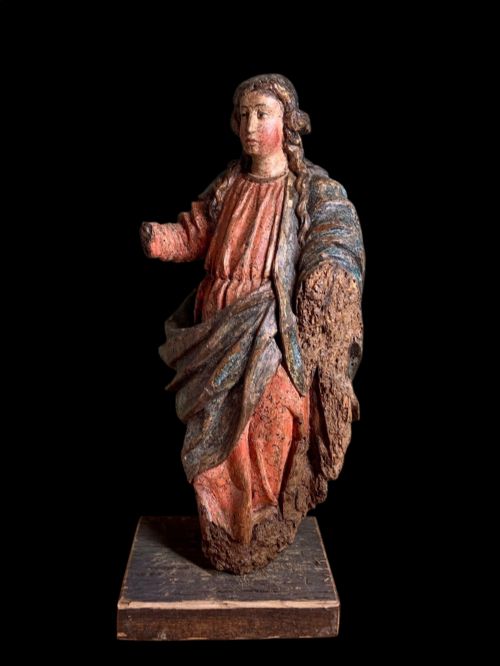
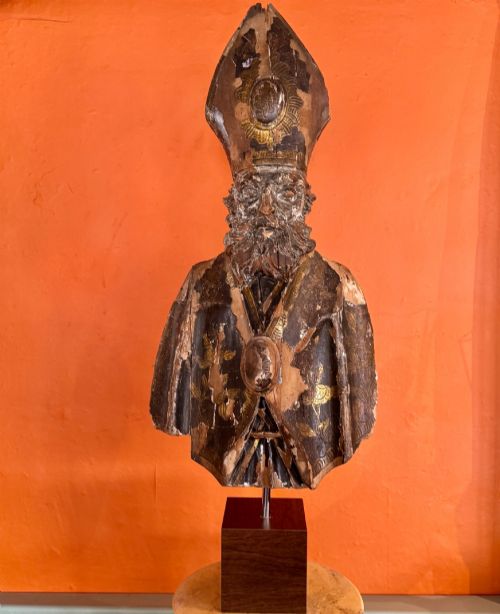
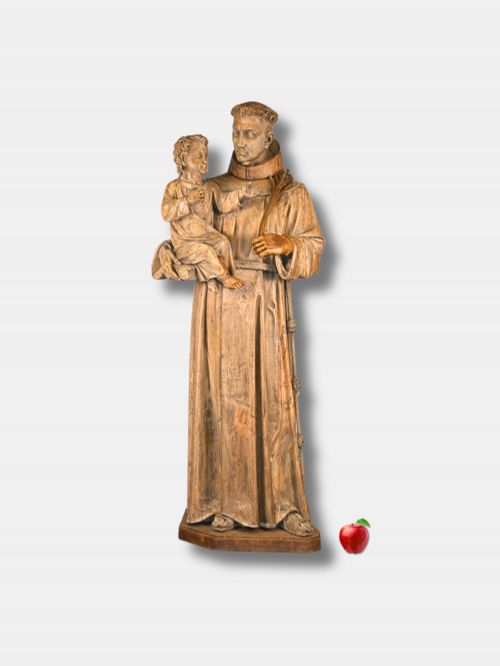
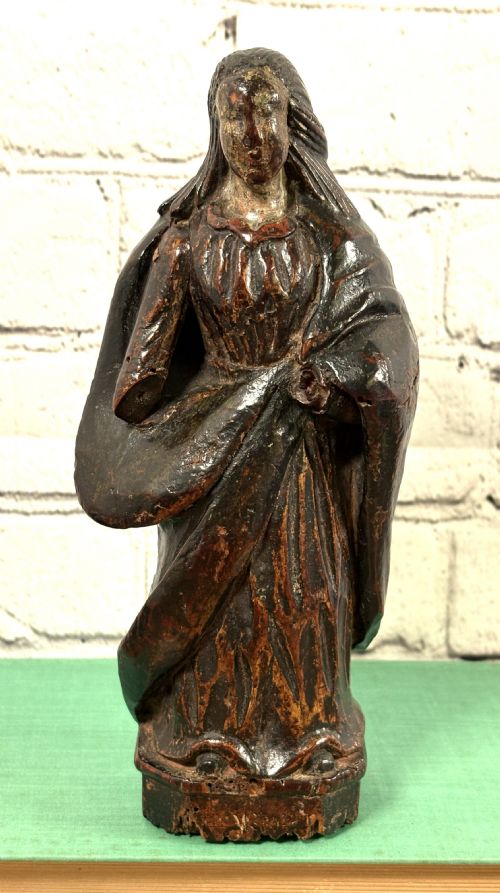
A wooden saint sculpture embodies centuries of religious devotion, originating from domestic shrines, churches, and processional floats across Europe. These pieces take the form of full-length standing figures, expressive portrait busts, and architectural fragments.
Buyers frequently encounter Continental European examples spanning from the late medieval period through the Baroque era. Oak, limewood, and applewood provide the primary foundations for these devotional carvings.
The selection ranges from austere Gothic oak figures to ornate Italian and German Baroque works finished in polychrome and gold leaf. Regional stylistic traits distinguish French, Italian, German, and Flemish interpretations of holy figures.
Materials and carving techniques
Carvers selected dense hardwoods such as oak, limewood, and applewood, which allowed for intricate detail and sustained structural integrity over centuries. Figures were often hewn from single blocks or constructed from assembled sections for larger proportions.
Surfaces frequently received a preparation of gesso, providing a smooth white ground for subsequent applications of polychrome paint and gold leaf. Pigments were bound with oil or tempera, bringing robes and flesh tones to life before natural ageing altered their hues.
Among holy bishops and apostles, a lone Saint Bernard rescue dog carved in nineteen-forty stands watch over the collection.
Distinctions in quality and execution
The capability of the hand that guided the chisel determines the vitality of the carving, particularly in the rendering of facial expression and the fall of textile folds. Superior pieces capture organic movement in stiff timber, whereas lesser works remain rigid and formulaic.
The survival of original surface treatments, including polychrome paint and gilding, elevates an example above stripped or heavily repainted surfaces. Patina accumulated through centuries of handling and environmental exposure distinguishes untouched historical depth from later interventions.
Franz Keller
The Wooden Saint Sculpture Glossary
- Gesso
- A plaster mixture applied to wood as a base for gilding or painting. It creates a smooth ground for decorative layers.
- Giltwood
- Wood that has been covered with a thin layer of gold leaf. This technique imparted heavenly radiance to ecclesiastical furnishings.
- Limewood
- A fine-grained timber favoured by carvers for its lack of prominent grain. It permits minute undercut details without splintering.
- Santos
- A carved figure representing a saint or divinity. These figures frequently served in processional or domestic religious contexts.
Wooden Saint Sculpture: Frequently Asked Questions
How were wooden saint sculptures originally used?
These figures served primarily as focal points for prayer and contemplation within churches, private chapels, and roadside shrines. Some larger statues participated in religious processions through town streets during feast days.
Over time, many migrated from sacred spaces into secular interiors as collectors began appreciating their sculptural form and historical gravity.
How do I care for antique carved wood?
Maintain stable indoor humidity and temperature to prevent the timber from drying out, cracking, or warping. Keep pieces away from direct sunlight and heat sources to protect remaining polychrome paint and gilding.
Dust gently with a soft, dry brush rather than using liquid polishes or damp cloths, which can harm fragile historical surfaces.
How can I tell Gothic pieces from Baroque ones?
Gothic figures, often carved from oak, feature linear, angular drapery and solemn expressions rooted in medieval tradition. They emphasise vertical lines and architectural integration.
Baroque sculptures display theatrical movement, dynamic poses, and voluminous drapery that swirls with theatrical energy, often rendered in limewood with rich gilding.
Why do many figures show losses or fragments?
Centuries of shifting liturgical fashions, conflicts, and secularisation led to many sculptures losing attributes like holding objects, halos, or entire limbs. Architectural elements were frequently separated from their original altarpieces.
These losses and fragments are accepted aspects of survival, testifying to the long and eventful history of each carved object.